Education, in whatever form or from any source, is recognized as a tool for reshaping and remodeling human beings to become productive assets with potential for social and economic growth in their communities. However, the approach and foundation of educational training significantly influence the ultimate impact of that education.
Recently, Jigawa State launched an initiative to integrate over 4,000 traditional Tsangaya Islamic schools into the mainstream state formal education system. This aims to curb the high rate of school dropouts, tackle the Almajiri crisis, expand educational inclusion, and reposition the system to address contemporary social, economic, and spiritual challenges.
According to a UNICEF report, there are over 700,000 out-of-school children in Jigawa State, despite numerous initiatives to tackle the problem. While past efforts have made some impact, the challenge remains immense.
However, reports confirm that a sizeable number of these school dropouts attend Tsangaya Qur’anic schools, which operate under an informal and traditional education system.
Under the Tsangaya system, Almajiri are taught how to read and write Qur’anic verses, as well as other subjects such as Arabic language, Islamic theology, and other branches of Islamic education. However, this system is not formally recognized by the Nigerian education sector.
Jigawa’s move to bring Tsangaya into the formal education fold can be seen as a scaling up of the Tsangaya model introduced by former President Goodluck Ebele Jonathan. During his administration, Jigawa State was selected for the federal government’s pilot program.
The Jonathan-era Tsangaya model provided significant insight into how the Tsangaya system could be remodeled and integrated into Universal Basic Education.
Under this former president’s model in Jigawa, dozens of Tsangaya pupils memorized the entire Qur’an or half of it and also passed examinations for entrance into science secondary schools and other conventional schools after six years of study.
This precedent led Governor Malam Umar Namadi to begin his initiative to remodel the traditional Tsangaya education system by sponsoring a bill in the state assembly to establish a Tsangaya Education Board. The bill was eventually passed and signed into law in 2025.
After extensive consultations, experts, professionals, educationists, and other critical stakeholders were assigned to produce a policy framework. This framework fully considers the norms and culture of the Jigawa people, the traditional Tsangaya system, Nigerian formal education, Universal Basic Education laws, and other mechanisms to help achieve the desired goals.
Under the new framework, a chairman was appointed to the board after satisfying all established criteria, while other members were also appointed based on merit.
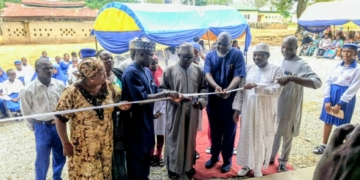
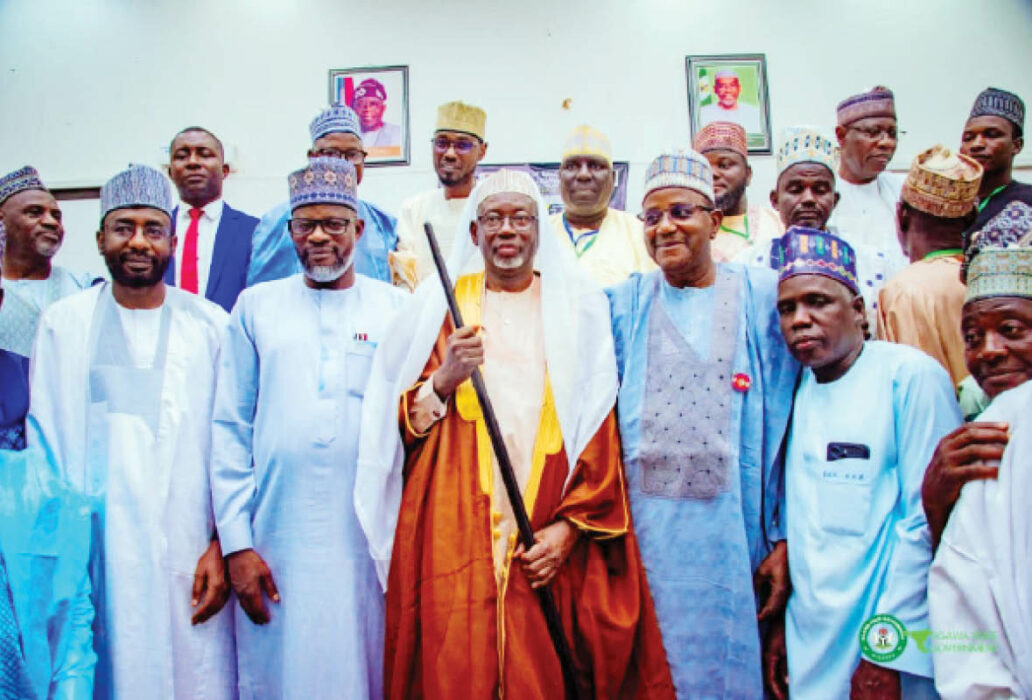
On Monday, 29th December 2025, Governor Malam Umar Namadi presided over a special session with Tsangaya school teachers drawn from across the state’s 27 local government areas and out side the state for a public hearing and interaction on the new initiative.
The program, tagged “Gwamnati Da Tsangaya” (Government Engagement with Tsangaya School Managers), was organized by the Tsangaya Education Board and aimed to deepen engagement between the government and key stakeholders in Qur’anic education.
The session provided a platform for Tsangaya teachers, renowned national Qur’anic reciters, Islamic scholars (Ulama), and other key stakeholders from across the country to share their experiences, challenges, and expectations, while also offering practical recommendations for the reforms.
Governor Namadi described the interaction as historic, noting it was the first such meeting since the board’s establishment.
He stated that Qur’anic education deserves greater attention and support than it currently receives. “That is why we established this agency in this blessed state, to reposition the system to address numerous challenges,” he said.
According to the governor Jigawa State currently has over 4,000 Tsangaya and Qur’anic schools with more than 1.3 million pupils, a figure that exceeds the number of conventional primary schools in the state.
The Governor maintained that neglecting such a vast system would amount to a major social and developmental loss. Hence, the decision to institutional Tsangaya education and make it a critical component of the state education system, with a specific annual budget to leverage the potential of every child.
“I want people to understand that an Almajiri is not an out-of-school child; an Almajiri is in school and is also a student. So we are determined to reposition the system and integrate it into formal education to align with our vision of making Jigawa State prosperous and great,” he said.
Governor Namadi added that the new initiative would also provide more avenues for educational and economic inclusion, as the targeted population would enjoy vocational training in different crafts.
Under the Jigawa Tsangaya Initiative, Qur’anic memorization, modern education, numeracy, and vocational skills will be taught side by side.
The policy stated that once a learner completes primary-level education, they will obtain a certificate. Likewise, at every stage of Qur’anic education, they will receive a certificate upon passing designated examinations.
Currently, the state is collaborating with the National Board for Arabic and Islamic Studies (NBAIS). Under this partnership, nearly 100 Qur’anic school teachers have already been trained and certified, similar to the conventional school system.
Under the new Tsangaya system, the state has made provisions in the 2026 budget to recruit 500 teachers for Tsangaya schools across the state, alongside phased training programs for Qur’anic teachers.
The policy will be implemented in batches, beginning with a specific number of Tsangaya schools in every local government as pilots. This number will continue to increase annually until all schools are integrated.
Providing more details on policy implementation, the Executive Secretary of the Jigawa State Tsangaya Education Board, Dr. Abubakar Maje Hamisu, said the framework includes establishing modern Mega Tsangaya Schools, while renovating existing model Tsangaya schools established during the Jonathan administration.
In selected Tsangaya schools, numeracy subjects and vocational training will be introduced. “Almajiri Begging-Free Zones” will be established on a large areas that can host hundreds of Almajiri children, providing learning materials, accommodation, and other necessities.
Under this project, Almajiri children will be transferred and registered with official management for inclusion in all interventions at the Free-zone.
A similar program is currently being implemented in Dutse, Kiyawa (Shuwarin), Hadejia, Kafin Hausa, Taura (Gujungu), Ringim, Kazaure, Gumel, and Maigatari, with a total of 2,000 Almajiri enrolled.
Given the existence of over 4,000 informal Tsangaya schools with over 1.3 million pupils, the Jigawa State government’s decision to integrate them into formal education is a wise one that will go a long way in addressing many social and economic challenges in the state.
As the government engaged stakeholders in the planning, it is also very important to maintain such engagement consistently at all levels for greater inclusion and public ownership.
Furthermore, as we pray for successful implementation, we also urge the government and all critical stakeholders to prioritize collective interest above any parochial political or personal sentiments. This is essential to achieve lasting solutions to the Almajiri syndrome and out-of-school problems that have plagued our society for years.
We’ve got the edge. Get real-time reports, breaking scoops, and exclusive angles delivered straight to your phone. Don’t settle for stale news. Join LEADERSHIP NEWS on WhatsApp for 24/7 updates →
Join Our WhatsApp Channel