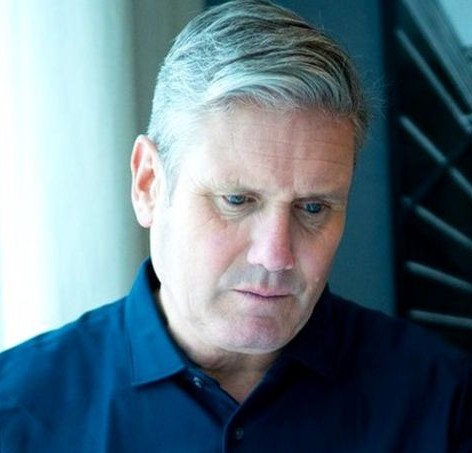
Former British Prime Minister Tony Blair has criticised the policy direction of the Labour government led by Prime Minister Keir Starmer, warning that recent economic decisions are weakening business confidence and undermining growth prospects.
In a detailed essay and subsequent media interviews, Blair argued that the current Labour administration lacks a “coherent plan” to respond to the United Kingdom’s evolving economic and political challenges.
“The principal problem is not Keir’s personality or a failure to communicate our achievements,” Blair wrote.
“It is because we don’t have a worked-out coherent plan for the country in a fast-changing world and are in the wrong political position from which we can devise one and win a second term.”
Blair, who led Labour to three consecutive general election victories during his tenure as UK prime minister from 1997 to 2007, expressed concern that a series of policy decisions were creating adverse conditions for the private sector.
He criticised measures including workers’ rights reforms, changes in energy transition policy, and above-inflation increases in the minimum wage, arguing that, taken together, they were discouraging investment.
“Taken together, these measures have given headwinds not tailwinds to British business despite the macroeconomic gains for which the chancellor is rightly praised,” he said.
Blair also pointed to the decision to raise National Insurance contributions for employers, warning that it was further straining investor sentiment and reducing confidence in the UK business environment.
Speaking on BBC Radio 4’s Today programme, Blair said Labour’s return to power had not been anchored on a clear, updated growth agenda.
“I don’t think Labour won the last general election because people read the manifesto and said, this is what we want,” he said.
He cautioned that sticking rigidly to pre-election commitments could limit the government’s ability to respond to economic realities.
“If we carry on like this with these large increases in incapacity benefit, with the triple lock on pensions, we’re going to create a situation where economically we’re not able to grow,” he warned.
The intervention comes at a politically sensitive moment for Starmer, following recent electoral setbacks and resignations within his cabinet that have intensified scrutiny of his leadership.
While Blair urged caution against internal efforts to remove the prime minister without a clear policy alternative, he insisted that Labour must rethink its strategic direction.
“Trying to force the prime minister out before we know what policy direction we’re bringing in is not a serious way of conducting ourselves,” he said.
He further argued that the government should reassess aspects of its net-zero and energy transition strategy, warning that policies prioritising higher-cost energy could harm competitiveness.
On Brexit, Blair maintained that leaving the European Union had economically weakened Britain, although he cautioned that reversing it outright was not a practical solution.
“Britain has lost from Brexit and at some point it is ripe to enter a debate about going back,” he said.
Blair urged Labour to reposition itself toward what he described as the “Radical Centre,” focused on economic reform, welfare restructuring, immigration control, and artificial intelligence-driven growth policies.
Reactions within Labour have been mixed, with Treasury minister Dan Tomlinson defending the government’s economic strategy, while other party figures described Blair’s intervention as either refreshing or outdated.
The debate adds to growing political tension within Labour as it prepares for upcoming parliamentary by-elections that could further test Starmer’s leadership and the party’s direction.
We’ve got the edge. Get real-time reports, breaking scoops, and exclusive angles delivered straight to your phone. Don’t settle for stale news. Join LEADERSHIP NEWS on WhatsApp for 24/7 updates →
Join Our WhatsApp Channel