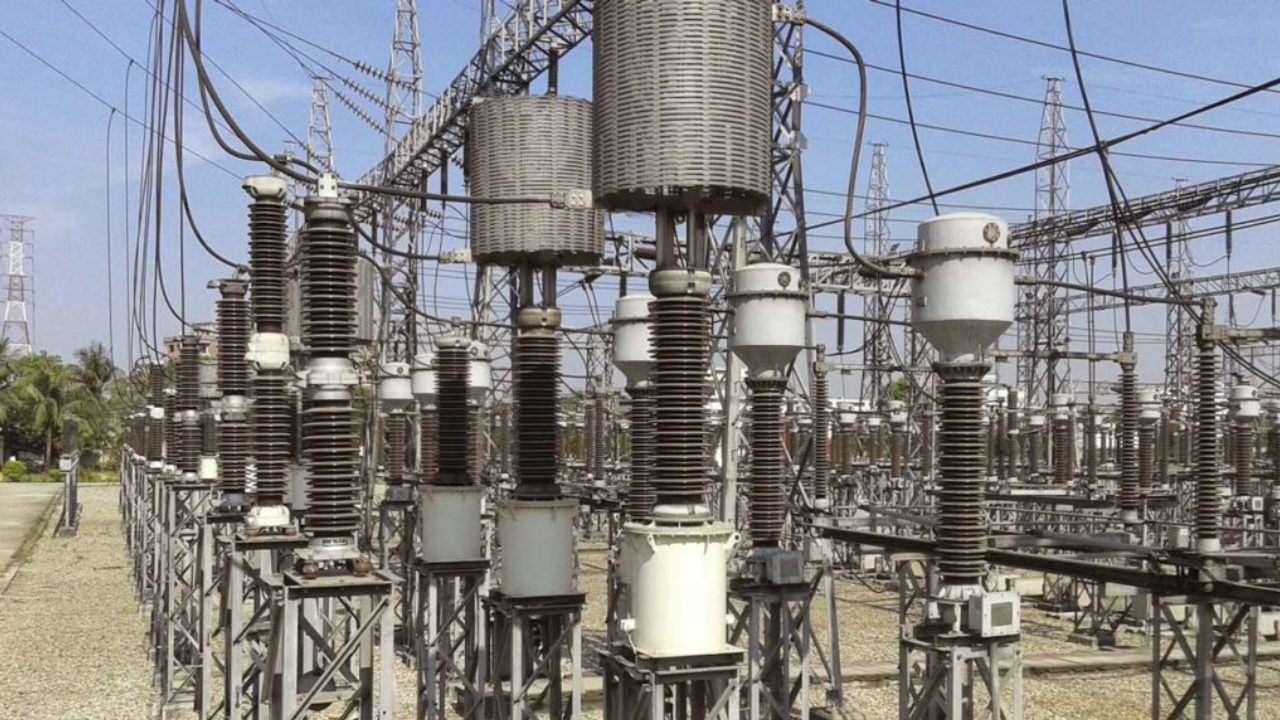
Nigeria has the highest number of people without access to electricity around the world. Over 80 million people – about 43 per cent of the country’s population – are still without access to electricity supply. Typically, grid power is sufficient for universal electricity access in advanced countries. However, Nigeria’s grid supply infrastructure faces peculiar challenges. Regrettably, the capital expenditure required to rehabilitate the system is deemed too high. Also, operators say that with the inadequate tariffs in the electricity market, revenue generation is difficult.
Despite huge government intervention in the Nigerian Electricity Supply Industry (NESI), on-grid generation of electricity has continued to hover around 4,000 megawatts making supply grossly inadequate even as the Association of Nigerian Electricity Distributors (ANED), the umbrella body of Electricity distribution companies, (DisCos) estimated that Nigeria requires 30,000 megawatts of electricity generation to meet current demand by consumers.
In 2021, the World Bank said businesses in Nigeria are losing about $29 billion yearly to epileptic power supply.
The rural areas in the country have borne the brunt of the country’s high energy deficiency as the World Bank said most poor households in Nigeria are not connected to the country’s electricity supply network.
Specially, it said only 22 per cent of the poorest of them have access to grid power.
However, the Nigeria Rural Electrification Agency (REA) has stepped in to increase electricity access to unserved and underserved Nigerians, with the implementation of Nigeria Electrification Project (NEP).
The NEP, funded through a $550 million loan facility from the World Bank and African Development Bank is targeted at providing off-grid reliable and clean electricity supply to 705,000 households, 90,000 small and medium enterprises, 100 Isolation and treatment centers and 400 Primary healthcare centers in unserved and underserved areas of Nigeria.
Access to constant power supply in educational institutions and healthcare facilities in Nigeria has been identified as a major challenge as well as a barrier to effective learning, institutional operations, student residency and access to quality healthcare.
It also targets the provision of captive solar hybrid power plants to 15 federal tertiary institutions and two teaching hospitals.
According to the managing director of REA, Ahmad-Salihijo Ahmad, the agency has completed the installation of 67 mini-grids with 995,396 solar home systems deployed and over million households electrified across Nigeria.
Ahmad explained that the $550million financing from both the World Bank ($350million) and the African Development Bank ($200million) for the implementation of the project aligned with the rural electrification strategy and implementation plan and the power sector recovery plan.
“The Nigeria Electrification Project (NEP) is an initiative of the federal government implemented by the REA to accelerate the off-grid renewable energy private sector market and bridge the overall energy access deficit.
“The NEP aims to provide electricity to households, small businesses, educational and healthcare facilities in unserved and underserved rural communities through the deployment of solar hybrid mini grids, Solar Home Systems (SHS), captive hybrid power plants and energy efficient productive use equipment/appliances,” he said.
He further said, of out of over $392 million commitment received so far, $64.8 million has been disbursed to private sector partners for the execution of the projects.
According to him, “The REA has the mandate of taking power to unserved and underserved Nigerians. How it goes about doing this depends on where the funding comes from. According to the rural electrification strategy plan, we have targets to reach Nigerians everywhere in the country and the numbers at the moment are being quoted to be as high as 80 million people,” Ahmad said.
“To achieve this, a lot of funding is required and what we are used to doing is that every year we wait and get government’s money from the budget, go to the site and then implement the projects.
“However, if you are to do this for the next 100 years, you will not be able to meet those targets hence it became important for the agency to ensure that its mandate does not end at implementation,” he said.
Speaking on the project, Anita Otubu, the head, project management unit of NEP said the World Bank’s $350 million is being implemented through five components, including Solar Hybrid Mini Grid, Standalone Solar Home Systems (SHS), Energizing Education Program Phase II (EEP II) and Technical Assistance.
Otubu said the AfDB’s $200 million is being implemented through the Solar Hybrid Mini Grid, Energy Efficient Productive Use Equipment (PUE), Energising Education Programme Phase III (EEP III) and Technical Assistance components.
We’ve got the edge. Get real-time reports, breaking scoops, and exclusive angles delivered straight to your phone. Don’t settle for stale news. Join LEADERSHIP NEWS on WhatsApp for 24/7 updates →
Join Our WhatsApp Channel