
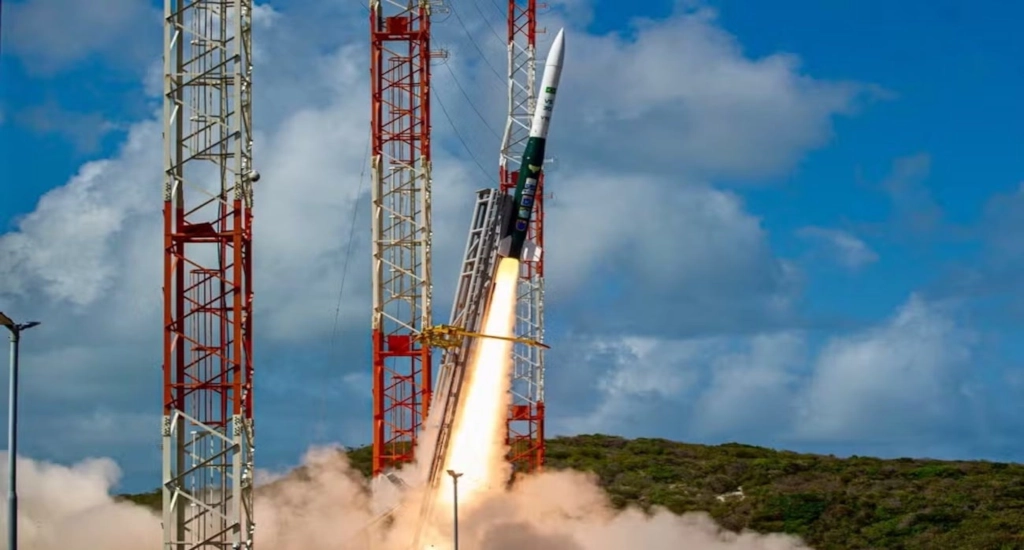
Brazil has launched a research rocket designed to carry out scientific experiments in microgravity before returning to Earth by parachute.
TV BRICS reported on Friday that the VS-30 V16 rocket was launched on September 15, 2026, from the Barreira do Inferno spaceport in Parnamirim, Brazil.
The rocket is carrying a suborbital microgravity platform that will enable researchers to conduct experiments in near-weightless conditions.
It is expected to travel to an altitude of more than 100 kilometres during the flight.
The experiments will cover biological materials, physical processes and the development of new materials.
Unlike conventional satellites, the platform will not remain in orbit after completing its mission.
At the end of the research phase, it will separate from the rocket and begin its descent to Earth. The platform is expected to re-enter the atmosphere, deploy a parachute and land in the Atlantic Ocean.
Brazilian specialists will subsequently recover the platform from the water and return it for further scientific analysis.
The rocket is also equipped with experimental modules, flight control systems and a cold gas propulsion system.
A device known as a “yo-yo” system will be used to control the rocket’s rotation before the microgravity platform separates.
The system uses small weights attached to cables or ropes. As the weights spin outward, they alter the rocket’s moment of inertia and help reduce its rotational speed.
We’ve got the edge. Get real-time reports, breaking scoops, and exclusive angles delivered straight to your phone. Don’t settle for stale news. Join LEADERSHIP NEWS on WhatsApp for 24/7 updates →
Join Our WhatsApp Channel