
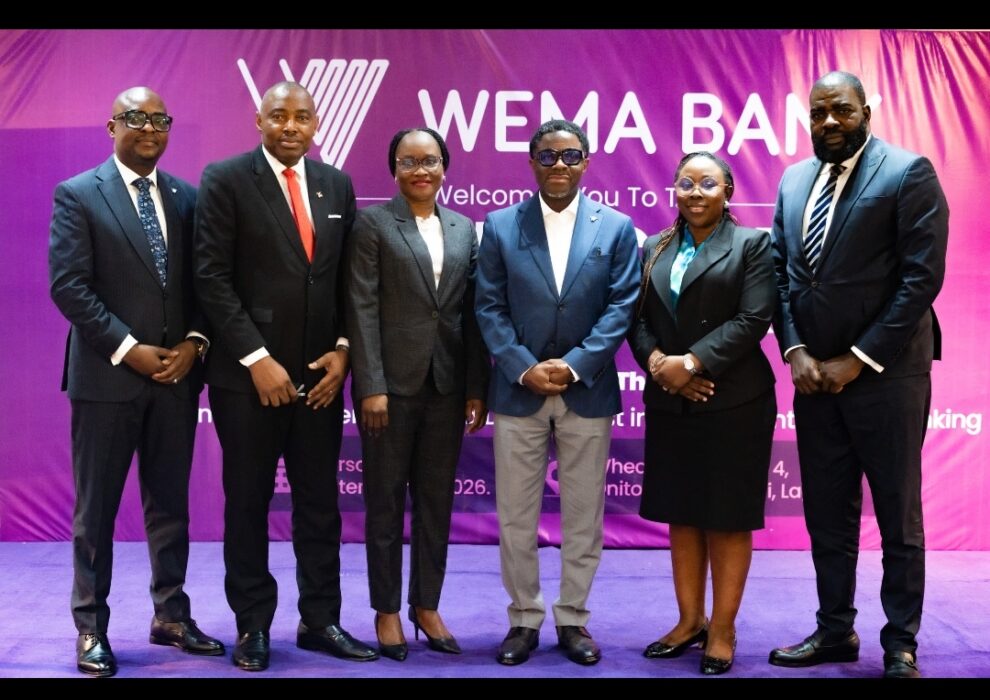
Financial experts have said internal audit functions in Nigeria’s banking sector must evolve from retrospective assurance to forward-looking, technology-enabled roles to secure the future of banking amid Artificial Intelligence disruption.
This was the consensus at the 65th Quarterly General Meeting (QGM) of the Association of Chief Audit Executives of Banks in Nigeria (ACAEBIN) held in Lagos, where stakeholders warned that AI-enabled fraud, deepfakes, cyberattacks and digital vulnerabilities now pose tangible risks to trust in the financial system.
The managing director/chief executive officer of Wema Bank Plc, Moruf Oseni called on internal audit functions in Nigeria’s banking sector to evolve to meet the demands of intelligent banking.
Oseni said the role of internal audit has become more critical as banks navigate risks brought by Artificial Intelligence, advanced analytics and digital platforms.
He noted that the theme of the meeting, “Auditing the Future: Governing AI, Cyber Risks and Digital Trust in an Era of Intelligent Banking,” reflects the profound transformation redefining how financial institutions serve customers and create value.
He noted that innovation must advance alongside governance, stressing that the industry must collectively address AI-enabled fraud, deepfakes, identity manipulation, cyberattacks, API vulnerabilities and business email compromise.
Oseni said, “technology may change the way we bank, but trust remains the currency upon which banking is built.”
He added that preservation of digital trust must become an enterprise-wide priority requiring resilient infrastructure, robust cybersecurity and sound data governance.
He said internal audit must shift from predominantly retrospective assurance to a more forward-looking, technology-enabled and insight-driven function that helps boards and management anticipate risks and make better-informed decisions.
Oseni however noted that the responsibility does not rest with audit alone, calling for stronger collaboration across boards, risk and compliance, regulators, technology partners and law enforcement.
The chairperson, Association of ACAEBIN, Mrs. Aina Amah, said “Artificial Intelligence, digitalisation, automation and interconnected platforms are redefining banking, creating unprecedented opportunities while simultaneously introducing new vulnerabilities.
Representing Amah, the first vice president, ACAEBIN, Mogbitse Atsagbede disclosed as gatekeepers of governance, Chief Audit Executives must therefore ensure innovation is accompanied by robust controls, cyber resilience and accountability.
The senior manager, IT & Control Assurance at Deloitte Nigeria, Chisom Odobeatu said, Chief Audit Executives (CAEs) must respond to risks emerging from digital banking to AI.
She listed four tests for AI governance, explainability, data integrity, accountability and human oversight, stressing that having policies is insufficient.
“Banks must inventory all AI use cases, map ownership, and embed AI checks in change management. If a regulator asks for evidence of model validation within 48 hours, can you produce it?” she queried.
Odobeatu also urged CAEs to test cyber resilience, protect digital trust, and strengthen third-party oversight through certifications, right-to-audit clauses and joint resilience testing.
We’ve got the edge. Get real-time reports, breaking scoops, and exclusive angles delivered straight to your phone. Don’t settle for stale news. Join LEADERSHIP NEWS on WhatsApp for 24/7 updates →
Join Our WhatsApp Channel