Nigerian alumni of United Kingdom institutions have been challenged to move beyond prestige and networks to deliver measurable impact that strengthens institutions and expands opportunities across the country.
The charge was delivered at the Alumni UK Nigeria Symposium 2026 held in Abuja, where speakers stressed that leadership must now be defined by contribution, discipline, and visible results.
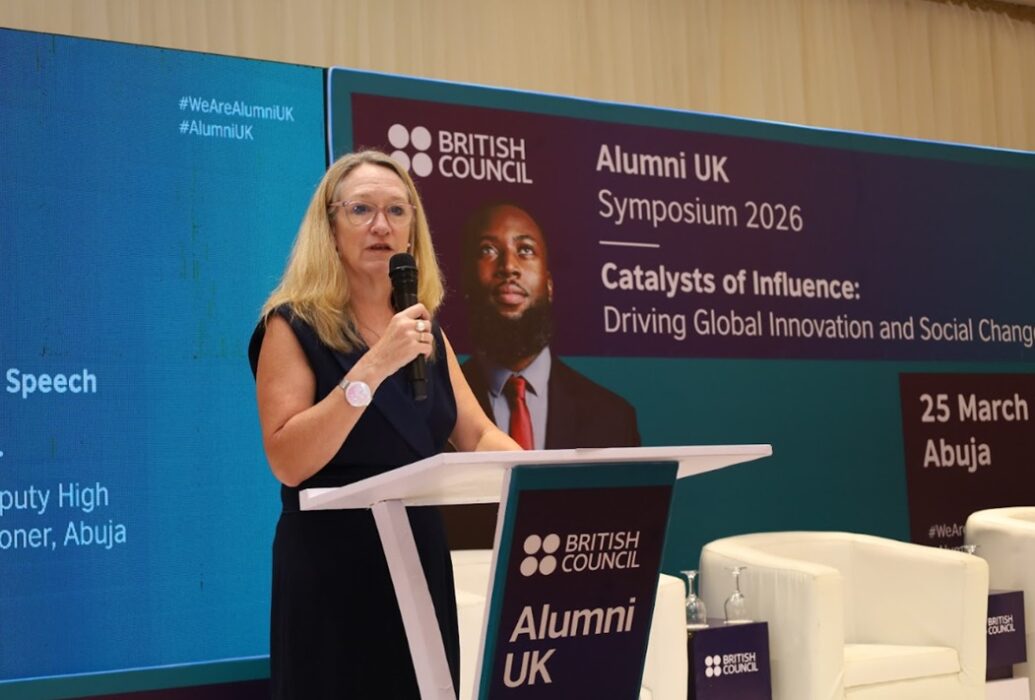
Country Director, British Council Nigeria,
Donna McGowan said the symposium was designed to deepen connections and strengthen the role of alumni in shaping Nigeria’s future.
She described the UK alumni community as a powerful network positioned to drive innovation, partnerships, and social change.
McGowan, who represents the British Council in Nigeria, announced the launch of Alumni UK Local Chapters aimed at fostering collaboration and knowledge exchange.
The symposium, themed “Catalysts of Influence: Driving Global Innovation and Social Change,” brought together professionals, policymakers, and entrepreneurs from across Nigeria.
Delivering the keynote address, Partner at Broderick Bozimo and company Isaiah Bozimo said alumni networks should not be judged by the prominence of their members but by what their influence enables others to achieve.
Bozimo said the true test of leadership lies in turning education, access, and credibility into outcomes that improve lives beyond individual circles. Bozimo warned that Nigeria’s challenges are less about lack of talent and more about weak execution, broken trust, and fragile systems.
He said strong institutions are essential for business confidence, effective public service, and fair outcomes for citizens.
“A country does not move forward on exceptional individuals alone,” he said. “It moves when good people build systems that keep working after they leave.”
He noted that too many good ideas fail at the implementation stage, while progress often depends on individuals carrying burdens that institutions should bear.
“This is not a moment for empty talk,” he said. “It is a moment for disciplined thinking and action that delivers results people can see.”
He outlined three core duties for alumni leadership: turning exposure into service, access into opportunity, and influence into stronger institutions. On exposure, Bozimo said international education must go beyond personal advancement to shape everyday practices in organisations.
“Exposure is wasted when it improves only our vocabulary and not our work,” he said, urging the alumni to embed global best practices in local institutions.
He warned that a society cannot continue to demand patience from its youth while restricting access to opportunity.
Bozimo noted that deliberate mentorship, sponsorship, and inclusion can unlock talent, create jobs, and reduce inequality
McGowan also unveiled a micro-grants framework to support alumni-led initiatives, including professional meetups and social impact projects.
She said the initiative will empower alumni to build sustainable communities of practice across sectors.
British deputy high comissioner, Abuja: Gill Lever emphasised the strategic role of alumni in strengthening Nigeria–UK relations. She described alumni as “living bridges” connecting both countries through shared knowledge, values, and collaboration.
Lever said the influence of alumni extends beyond formal diplomacy, noting that their work in business, technology, and social development contributes to deeper bilateral ties. She urged participants to leverage their networks to drive long-term solutions to Nigeria’s challenges. “The true currency of global influence is human capital and shared ideas,” she said.
Participants at the symposium engaged in discussions on innovation, public policy, entrepreneurship, and the future of work.
They also explored how global exposure can be harnessed to address local challenges, including youth unemployment, institutional inefficiencies, and economic transformation.
Speakers agreed that alumni networks must evolve from social platforms into engines of national development.
They stressed that measurable impact, not affiliation, should define leadership in a rapidly changing world.
Key focus areas of the symposium, include business and entrepreneurship, technology and innovation, and social development.
“These platforms are designed to help alumni translate global learning into local impact,” she said.
The consensus was clear: Nigeria’s future depends not just on individual success, but on the ability of its leaders to build systems that endure, expand opportunity, and deliver results for the wider society.
We’ve got the edge. Get real-time reports, breaking scoops, and exclusive angles delivered straight to your phone. Don’t settle for stale news. Join LEADERSHIP NEWS on WhatsApp for 24/7 updates →
Join Our WhatsApp Channel