President Muhammadu Buhari has called on developed and developing nations to grant duty-free and quota-free market access for products originating from the world’s 46 least-developed countries.
He said that this would ensure their integration in regional and global value chains.
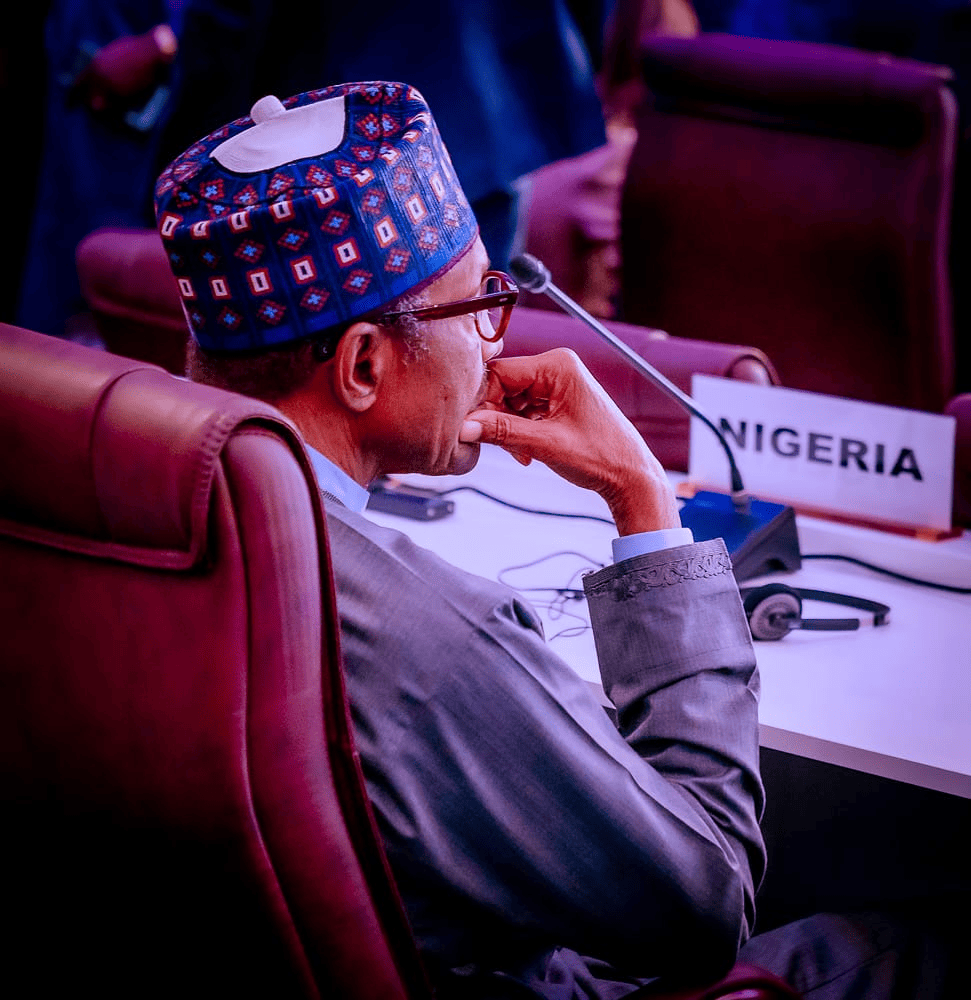
The president’s spokesman, Malam Garba Shehu, in a statement, said Buhari made the call in Doha, Qatar, at the UN Conference of Least Developed Countries.
Buhari decried the current structure of the global financial system which places an unsustainable external debt burden on the most vulnerable countries.
He warned that such debt burdens would make it extremely difficult for LDCs to meet the 2030 Agenda for Seventeen Sustainable Development Goals (SDGs).
‘‘In 2015, the world came together to endorse the 2030 Agenda for Seventeen Sustainable Development Goals.
”There was no doubt that it was highly ambitious and would require leaders around the world to be fully committed for the SDGs to be achieved within the projected timeframe.
‘‘Eight years on, the possibility of achieving the SDGs remains bleak for many countries, particularly, the Least Developed Countries.
”The difficulties in achieving the SDGs are numerous and were further compounded by the COVID-19 pandemic, the continued threat of Climate Change, and recently the Russia-Ukraine conflict.
“The Least Developed Countries are often faced with developmental vulnerabilities and challenges that are not always of their making.
“These pose huge obstacles to their development efforts, hence the need for urgent and robust assistance to help unlock their potentials and build socio-economic resilience.”
According to him, this assistance can be provided within the framework of the Doha Programme of Action which is designed to help LDCs exit their current classification.
Buhari challenged developed countries, civil society actors, the private sector, and the business community, to partner with the LDCs in order to provide necessary resources and capacity to deliver development outcomes in the economic, social, and environmental aspects of the 2030 Agenda.
He listed some measures that would help LDCs recover from COVID-19, achieve SDGs, develop and prosper over the long term.
“As a matter of urgency, there are a number of priorities we have to focus on to help achieve the SDGs in these countries and ensure their prosperity.
”First, COVID-19 has taught us that we must all work together, to ensure that diseases do not thrive in the LDCs, due to their overall negative impact on productivity and economic growth and development.
“Accordingly, policy and budgetary provisions must be made to ensure equal access to medicare and vaccines, for both the poor and the rich alike.
“We must also work with manufacturers of medical equipment and pharmaceutical companies to provide adequate equipment, test-kits, vaccines and treatments for diseases,” he said.
While expounding on the issue of rising debt burden, Buhari underscored the need for reforms of the international financial architecture that prioritizes the need of LDCs.
He aligned with the United Nations Secretary-General’s description on the global financial system as an “unfair debt architecture that not only charges poor countries much more money to borrow on the market than advanced economies, but downgrades them when they even think of restructuring their debt or applying for debt relief.”
On trade issues, the president said: ”It is important to put in place modalities to facilitate transit cooperation, transfer of technologies, and access to global e-commerce platforms, as they are critical for the integration of LDCs into the regional and global value chains and communications technology services.
“The adoption of a global coordination mechanism to systematically monitor illicit financial flows and engender support for a United Nations International convention on tax matters to eliminate base erosion and profit shifting, tax evasion, capital gains tax and other tax abuses is essential to achieving the SDGs and promoting security and economic prosperity,’’ he said.
On Nigeria’s expectation for the Conference, Buhari expressed optimism that the Doha Programme of Action would lead to the acceleration of exports from LDCs by 2031, through the facilitation of their access to foreign markets in line with World Trade Organization Facilitation Agreement.
On climate change, according to Buhari, LDCs continue to suffer disproportionately in spite of contributing least to its causes.
He added that countries must prioritize cutting global emissions and work with determination to hold warming to 1.5 degrees, thereby securing the children’s future.
‘‘We must also commit to helping build resilience in developing countries, while also providing the needed technical as well as financial support for a just transition to renewable energy,’’ he said.
According to him, climate change remains one of the biggest existential threats facing humanity today, posing challenges to lives and livelihoods, and manifesting in different negative forms, including increase in temperature, rise in sea levels, flooding, drought, and desertification.
‘‘It has also led to significant loss of biodiversity. Worst still, climate change has exacerbated conflicts and led to unplanned migration, causing untold hardship in places like the Lake Chad Basin region.
‘‘The Least Developed Countries therefore continue to suffer disproportionately from the effects of climate change, despite contributing the least to its causes.
”Deaths from climate related crises are higher in the most vulnerable countries, with projections that there will continue to be an upward trend.
‘‘We must continue to focus on how best to ensure the provision of security, education, health and other basic services to our people, in order to guarantee a prosperous future for all,’’ he said.
Buhari commended the State of Qatar for hosting the Conference and thanked Sheikh Tamim Bin Hamad Al Thani, the Emir, for inviting him.
He also expressed appreciation to the UN for its excellent organisation of the conference and its continued support for the LDCs.
The president also explained his presence at the conference in spite of the fact that Nigeria is not categorised as one of the Least Developed Countries.
‘‘Nigeria is here to show solidarity and support to the LDCs in the quest to achieve the Sustainable Development Goals, especially in this decade of action, where no one should be left behind,’’ he said.
We’ve got the edge. Get real-time reports, breaking scoops, and exclusive angles delivered straight to your phone. Don’t settle for stale news. Join LEADERSHIP NEWS on WhatsApp for 24/7 updates →
Join Our WhatsApp Channel