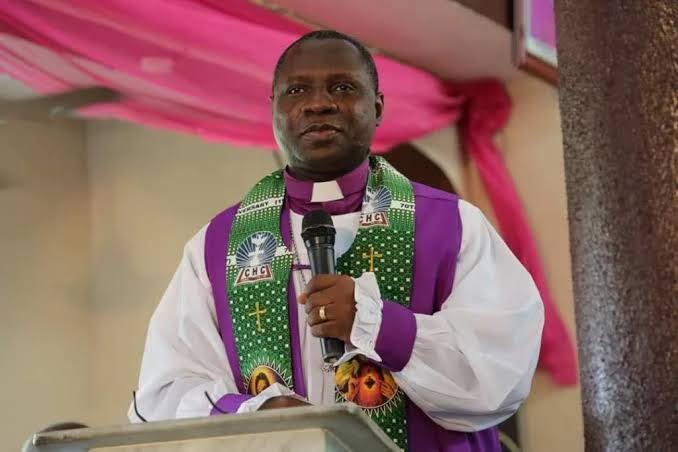
President of the Christian Association of Nigeria (CAN), Archbishop Daniel Okoh, has identified weak institutions, leadership deficit and poor management of resources as some of the major obstacles hindering the country’s progress.
Okoh spoke at the 2026 Annual National Management Conference of the Nigerian Institute of Management (Chartered), where he was invested as an Honorary Fellow of the institute.
The CAN president, who expressed appreciation for the recognition, said the award represented a greater responsibility to continue promoting leadership anchored on integrity, accountability, excellence and service to humanity.
He said Nigeria’s challenges require a renewed commitment to building institutions capable of delivering effective governance and sustainable development.
According to him, despite the country’s vast human and natural resources, youthful population and entrepreneurial strength, Nigeria continues to struggle with institutional weaknesses, corruption, insecurity, poor service delivery and declining public trust.
“The greatness of a nation is ultimately determined by the quality of its institutions and the people who manage them,” Okoh said.
He commended the institute for its 65 years of contribution to the development of professional management practice, describing the theme of the conference, “Sixty-Five Years of Management Excellence: Strengthening Institutional Governance in Nigeria,” as timely and critical to the nation’s development journey.
The cleric emphasised that effective management is not limited to corporate organisations but is essential in every institution, including religious bodies.
He noted that churches manage significant human and material resources through schools, hospitals, universities, humanitarian programmes, media platforms and community development initiatives.
“Although the Church is fundamentally a spiritual institution, it is also an institution that manages people, resources, organisations, programmes and complex networks of communities,” he said.
Okoh urged leaders and professionals to embrace the principle of stewardship, stressing that resources entrusted to individuals and institutions must be managed responsibly for the benefit of society.
Referencing the biblical Parable of the Talents, he said those entrusted with resources have a duty to develop and multiply them rather than allow them to waste away.
He further encouraged NIM to remain committed to promoting ethical management practices that would strengthen institutions and inspire confidence among Nigerians.
Accepting the Honorary Fellowship, Okoh said he received the honour on behalf of the Christian Association of Nigeria and the wider Christian community.
“I accept this recognition not merely as a personal distinction, but as a call to greater service, greater responsibility and a renewed commitment to the values of excellence, integrity and nation-building,” he said.
He urged the institute to continue producing professionals who would contribute to building institutions that are ethical, innovative, efficient and resilient.
The CAN President maintained that Nigeria’s challenge is not a shortage of resources or capable citizens, but the failure to manage available opportunities effectively.
“Nigeria does not lack resources. Nigeria does not lack intelligent people. Nigeria does not lack ideas. What we need is the discipline to manage our resources wisely, the integrity to manage them transparently, the competence to manage them efficiently, and the leadership courage to manage them in the interest of the common good,” he said.
Okoh called for stronger partnerships among professionals, religious leaders and other stakeholders to advance the cause of national transformation.
We’ve got the edge. Get real-time reports, breaking scoops, and exclusive angles delivered straight to your phone. Don’t settle for stale news. Join LEADERSHIP NEWS on WhatsApp for 24/7 updates →
Join Our WhatsApp Channel