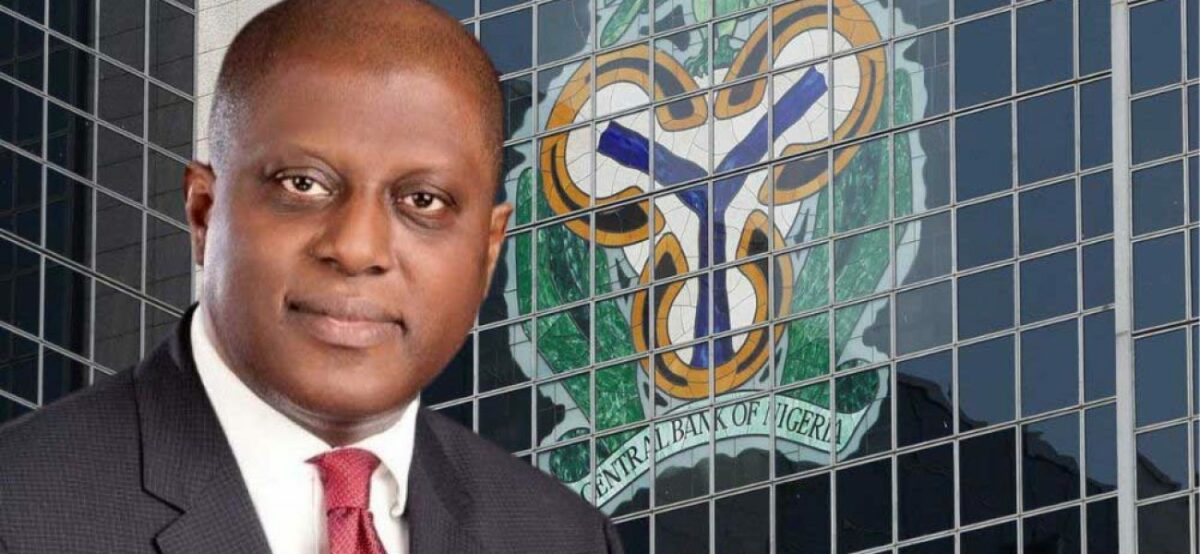
Nigeria’s economy has shed its vulnerability and is now equipped to absorb the pressures of a volatile global environment, Central Bank of Nigeria (CBN) Governor Olayemi Cardoso said on Tuesday, as he made the case to international investors that the country’s reform programme has fundamentally altered its economic trajectory.
Cardoso delivered the assessment at the Africa Capital Forum in London, an event held on the margins of President Bola Ahmed Tinubu’s state visit to the United Kingdom, where he laid out the institutional and policy changes the apex bank has pursued since taking office.
The CBN, Cardoso said, had pursued a course of disciplined monetary management and structural reforms aimed squarely at rebuilding the credibility of Nigeria’s financial system — a system that, in his view, now stands on firmer ground than it has in years.
“We have created stronger capacity to withstand shocks,” he told the gathering of investors and development partners.
Central to that effort, he explained, is a comprehensive review of the bank’s policy framework — one designed to eliminate guesswork and reduce the discretionary decisions that have historically unsettled markets.
“We are reviewing our policies with a view to developing meaningful policies and establishing a predictable policy framework to minimise discretion,” Cardoso said.
The objective, he emphasised, is to give businesses and investors the clarity they need to commit capital with confidence over the long term.
Cardoso also used the platform to announce the completion of a new Payments System Vision for Nigeria — a blueprint the CBN says will soon be unveiled and is intended to position the country as a leading hub for digital payments and cross-border transactions on the continent.
On the foreign exchange front, the governor said reforms have dramatically improved both transparency and liquidity. A newly issued forex manual has swept away a range of longstanding restrictions, lowering barriers for businesses and investors seeking to operate in and out of the Nigerian market.
Progress in the ongoing bank recapitalisation exercise, he noted, was equally encouraging. More than 30 financial institutions have already satisfied the new capital thresholds, with verification processes underway for the remaining banks.
Cardoso highlighted that roughly 28 per cent of the capital raised through the exercise came from foreign investors — a figure he presented as a concrete indicator of improving confidence in the Nigerian banking sector.
The CBN Governor noted that diaspora remittances have risen sharply. He said the remittances are now providing a vital and growing source of foreign exchange that has helped shore up Nigeria’s reserves and made them more resilient to external turbulence. “Our focus going forward is to protect the hard-earned stability we have accomplished so investors and stakeholders can plan with confidence,” Cardoso said.
The CBN chief pledged that the bank would deepen its commitment to transparency and open communication, ensuring that policy decisions are explained clearly and consistently — and that the missteps of the past are not repeated.
On the fintech front, Cardoso said the bank is working in close partnership with Nigeria’s technology-driven financial services sector to dismantle regulatory friction and unlock innovation that can extend financial inclusion across the country and, ultimately, across the wider African market.
He also made the case for tighter collaboration between monetary and fiscal policymakers, arguing that such coordination is indispensable for durable economic growth. The inclusion of fiscal authorities in the CBN Board and the Monetary Policy Committee, he said, has already improved alignment between the two arms of economic management.
Cardoso reported measurable gains on core economic indicators: inflation has retreated, exchange rate stability has been restored, and the reform programme has established conditions for stronger growth — driven by domestic investment, a revamped oil sector, and a return of global confidence in Nigeria’s economic management.
“We will continue to maintain stability, not only on inflation, but in the FX market, with more transparency and consistent reporting,” he said.
Cardoso drew a clear distinction between the current phase of Nigeria’s economic journey and the period of firefighting that preceded it. The country, he said, has moved from a defensive posture focused on stabilisation to an offensive one centred on attracting investment at scale.
He urged the global investors to view Nigeria as “an economy to watch very closely” — one whose banking system is growing stronger and whose pipeline of growth opportunities is expanding.
We’ve got the edge. Get real-time reports, breaking scoops, and exclusive angles delivered straight to your phone. Don’t settle for stale news. Join LEADERSHIP NEWS on WhatsApp for 24/7 updates →
Join Our WhatsApp Channel