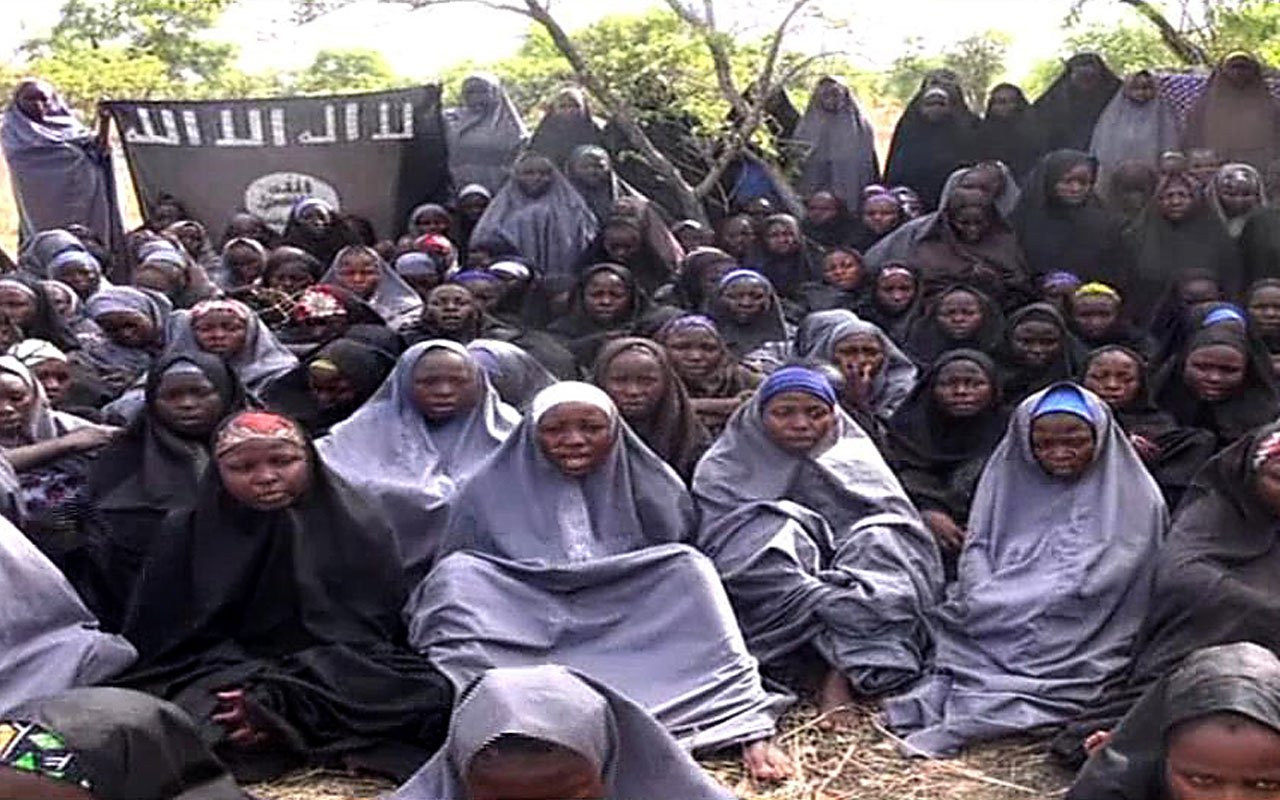
The mass abduction of teenage schoolgirls from their dormitory in the once largely unknown town of Chibok in Borno State remains etched in the memory of Nigerians and the international community.
On the night of 14 April 2014, Islamist terrorists of Jama’atu Ahlis Sunna Lidda’awati wal-Jihad—better known as Boko Haram (loosely translated as “Western education is forbidden”)—raided Government Girls’ Secondary School, Chibok. By the time they left, 276 girls aged between 16 and 18 had been taken.
Fifty-seven managed to escape in the immediate aftermath, but the majority were herded into the vast Sambisa Forest and surrounding areas.
What followed was an unprecedented wave of outrage. The abduction sparked the global #BringBackOurGirls campaign, which became one of the most recognisable advocacy movements in modern history. The movement, driven locally by the Bring Back Our Girls (BBOG) group and led by prominent figures such as former Minister of Education, Dr Oby Ezekwesili and Hadiza Bala Usman, drew global attention. Influential voices, including Michelle Obama and Malala Yousafzai, joined the call, amplifying pressure on the Nigerian government.
The initial response of the administration at the time was widely criticised as slow and inadequate. That perceived lethargy, among other factors, would later contribute significantly to the government’s loss of power in the 2015 general elections.
In response to the outrage, the federal government launched the Safe Schools Initiative (SSI), designed to protect vulnerable schools through improved security infrastructure and coordinated protection measures. However, more than a decade later, its impact remains difficult to discern. The continued vulnerability of schools across northern Nigeria suggests that the initiative exists more in policy documents than in practice.
Successive administrations made repeated promises to rescue the abducted girls. While many were eventually released in batches—21 in October 2016, 82 in May 2017, and others in smaller numbers between 2018 and 2024—about 100 of the Chibok girls remain unaccounted for. Some are feared dead, a painful symbol of unfulfilled promises.
Testimonies from those who returned revealed the horrors they endured: forced conversions, forced marriages to insurgents, and severe physical and psychological abuse. Some who attempted to escape were reportedly recaptured, tortured, or killed.
The government’s inability to swiftly resolve the Chibok crisis appeared to embolden both insurgents and criminal groups. What began as ideologically-driven abductions soon evolved into a broader, profit-driven enterprise. Armed groups increasingly targeted schools, recognising the high ransom value attached to students.
Twelve years on, there has been a grim catalogue of mass abductions.
In 2015, about 40 boys and young men were abducted in Malari, Borno State. In 2018, 110 schoolgirls were taken from Government Girls’ Science and Technical College, Dapchi, in Yobe State. Although most were later returned, Leah Sharibu—the only Christian among them—was held back for refusing to convert to Islam, sparking national and international outrage.
By 2020, the crisis had spread further. More than 500 schoolboys were kidnapped from Government Secondary School in Kankara, Katsina State, with 344 eventually released. The fate of the others remains uncertain.
The year 2021 marked a peak in the crisis. In February alone, 27 students and staff were abducted from Government Science College, Kagara, Niger State, while 317 schoolgirls were seized from Government Girls’ Science Secondary School, a boarding school in Jangebe, Zamfara State. In March, 39 students were taken from the Federal College of Forestry Mechanisation in Afaka, Kaduna State. The following month, about 20 students were abducted from Greenfield University, also in Kaduna, with some later killed. By May, another 136 students had been taken from Salihu Tanko Islamic School in Tegina, Niger State.
The pattern has persisted. In March 2024, over 312 students and staff were abducted in Kuriga, Kaduna State, comprising 187 students from Government Secondary School, Kuriga, and 125 from LEA Primary School, Kuriga.
Later that year, in November, one of the largest incidents since Chibok occurred in Papiri, Niger State, where 303 students and 12 teachers were kidnapped from St Mary’s Catholic School. That same month, 25 students were abducted from Government Girls’ Comprehensive Secondary School in Kebbi State in a pre-dawn raid that followed the withdrawal of a military detachment earlier assigned to protect the school, despite prior intelligence warnings.
Most recently, 14 candidates travelling to sit for university entrance examinations were abducted in Benue State.
Estimates suggest that more than 2,000 students have been kidnapped in Nigeria since the Chibok abduction. Between early 2024 and late 2025 alone, at least 10 major school kidnappings affected over 670 children, with dozens killed or injured.
Beyond schools, the violence has spread into communities, highways, and even places of worship, underscoring a broader breakdown of security.
Security analysts report that over 500 people were kidnapped in Zamfara State between January and April 2026 alone, while bandits have reportedly been parading more than 100 captives in their den in Kwara State.
Equally troubling are reports suggesting that some of these tragedies might have been prevented.
Amnesty International revealed that the military had advance warning of the Chibok attack but failed to act. There were also reports that foreign surveillance assets located groups of the abducted girls within weeks, yet no rescue mission followed.
More recent incidents have raised similar concerns. Allegations surrounding the use of a helicopter in a Catholic school abduction in Niger State, and the suspicious withdrawal of security personnel shortly before the Kebbi school attack, point to possible sabotage within the security architecture.
The implications of this crisis extend far beyond the immediate victims. When schools become unsafe, education suffers. Parents withdraw their children—especially girls—from classrooms. Nigeria’s out-of-school population has reportedly doubled over the past decade, rising from about 10 million to nearly 20 million.
This represents not just an education crisis, but a looming national emergency. A generation deprived of education risks becoming a generation vulnerable to poverty, exploitation, and instability.
Twelve years after Chibok, remembrance alone is not enough. Nigeria must move beyond symbolic gestures and adopt decisive, measurable action. The protection of schools must be prioritised through effective security deployment, early warning systems, and community-based intelligence. The Safe Schools Initiative must undergo a transparent and rigorous reassessment, with clear benchmarks and accountability mechanisms.
Above all, there must be renewed urgency in preventing further attacks on schools and in securing the release of those still missing, including the Chibok girls who are yet to return.
Until then, Chibok will remain not just a tragedy of the past, but a continuing indictment of the present. A nation that cannot protect its children is failing in its most fundamental duty.
We’ve got the edge. Get real-time reports, breaking scoops, and exclusive angles delivered straight to your phone. Don’t settle for stale news. Join LEADERSHIP NEWS on WhatsApp for 24/7 updates →
Join Our WhatsApp Channel