Across Nigeria, citizen-driven political movements are increasingly shaping how communities engage power. In the South-East, the City Boy Movement has emerged as a distinctive force—founded by visionary Nigerians who have deployed their personal resources, influence, and enterprise to guide their people toward pragmatic political choices capable of delivering growth, wealth creation, and sustainable development.
Unlike protest-oriented mobilisation, the City Boy Movement is grounded in interest-based politics. Its core argument is that in Nigeria’s political economy, development flows more consistently to regions that strategically engage the centre of power, negotiate inclusion, and align private enterprise with public policy.
THE PEOPLE BEHIND THE MOVEMENT
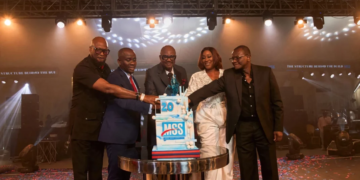
The credibility of the City Boy Movement lies in the profile and record of those associated with it. Among them is Obi Cubana, whose investments across hospitality, entertainment, logistics, and real estate in the South-East have generated thousands of jobs and strengthened local value chains. Long before political advocacy, his business ecosystem had already stimulated youth employment and regional tourism.
Also prominent is Celebrity Bar Man (Pascal Chibuike Okechukwu) whose influence in urban culture has been channelled into enterprise creation, mentorship, and economic opportunities within the hospitality and service sectors.
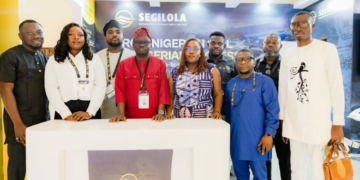
Also Cletus Uzoezie Oragwa (Zenco) has built his reputation not only as a successful entrepreneur but as a practical empowerment figure who creates real economic opportunities for Nigerians. Through his ventures such as Zenco Communications Limited, he has generated employment across the telecom distribution value chain, supported small-scale retailers with access to products and credit opportunities, and contributed to youth enterprise development. His investments in real estate and consumer goods further expand job creation and grassroots economic participation. By demonstrating that wealth can be built through enterprise, resilience, and community support, Zenco represents the spirit of the City Boy Movement—a culture that celebrates ambition, success, empowerment, and lifting others while rising.
The Movement further draws political insight from figures such as Rt. Hon. Chinedu Orji, former Speaker Abia State House of Assembly whose experience within Nigeria’s governance framework adds institutional depth to the group’s strategy. Together, these actors represent a convergence of private-sector success, youth mobilisation, and political understanding.
This is to mention just four visionary and focused South Easterners that are part of the movement.
EMPOWERMENT BEFORE POLITICS
A defining feature of the City Boy Movement is that economic empowerment preceded political advocacy. Across the South-East, associated actors have contributed to:
- employment generation in hospitality, logistics, entertainment, and allied services;
- SME growth through supply-chain expansion;
- community-level philanthropy in education and skills acquisition;
- increased tourism and urban commercial activity.
This sequencing aligns with political-economy logic: economic capacity enhances political bargaining power, not the other way round.
THE CONSTITUTIONAL REALITY
Nigeria’s constitutional structure makes strategic engagement unavoidable. While Section 14(2)(b) of the 1999 Constitution (as amended) declares that the security and welfare of the people shall be the primary purpose of government, the Exclusive Legislative List (Part I, Second Schedule) vests control over critical sectors—railways, ports, aviation, customs, policing coordination, and major infrastructure—in the Federal Government.
Furthermore, Section 162 establishes the Federation Account, from which federally collected revenues are distributed. This structure reinforces fiscal centralisation and means that access to federal power materially affects development outcomes at the state and regional levels.
FISCAL FEDERALISM: THE NUMBERS THAT MATTER
Nigeria operates a highly centralised fiscal system. Empirical data from revenue allocation patterns consistently show that:
- the Federal Government retains over 50% of federally collected revenue;
- states collectively share roughly 26–27%;
- local governments receive about 20–21%, subject to state joint accounts.
In addition, federally driven capital expenditure—rail projects, highways, ports, power transmission, and social investment programmes—constitutes a significant portion of visible development in many regions. Political economy therefore teaches that regions with strong alignment and negotiation capacity at the centre are better positioned to attract projects, appointments, and policy attention.
WHY ALIGNING WITH BOLA TINUBU’S MANDATE MATTERS
The administration of President Bola Tinubu is rooted in coalition-building, market-oriented reforms, and infrastructure-led growth. Tinubu’s record in Lagos demonstrates how deliberate partnerships between government and private enterprise can expand internally generated revenue, attract investment, and scale public infrastructure.
For the South-East, aligning with this mandate presents clear strategic benefits:
Enhanced access to federal decision-making, improving bargaining strength under Sections 5 and 147 of the Constitution;
- Greater likelihood of infrastructural inclusion, particularly in transport, energy, and logistics;
- Synergy with private-sector actors, many of whom already drive the South-East economy;
- Reduction of political isolation, replacing arguable “marginality” with negotiated inclusion.
Alignment here does not imply ideological surrender. Rather, it reflects a realistic appreciation of Nigeria’s power structure.
CONCLUSION
The City Boy Movement represents a political reawakening anchored in economic realism and constitutional awareness. Backed by individuals who have already invested materially in the South-East, it challenges the region to engage Nigeria’s political economy as it exists—not as it is wished to be.
In a federation where resources are negotiated through power and presence, the South-East stands to gain by purposeful alignment with the centre. The City Boy Movement’s message is clear: development follows strategy, inclusion, and engagement—not isolation.
This write-up therefore stands as a clarion call to the South-East to act with foresight and strategic wisdom. It urges Ndi Igbo to follow those who understand the road—those who have mastered the pathways of enterprise, negotiation, and influence within Nigeria’s constitutional framework. In a time that demands pragmatic leadership and calculated alignment, the region must choose progress over sentiment and strategy over isolation.
The moment calls not for division, but for deliberate engagement with those who have demonstrated capacity to create wealth, build networks, and open doors of opportunity.
The path to greater inclusion and prosperity lies in following those who truly know the road.
KINS EKEBUIKE (Esq); Ph.D
Dr Kins Ekebuike is an Abuja based Political Scientist, Lawyer and Public Affairs Analyst and Founder, Veraamoris Foundation (a foundation committed to promoting/extolling good governance, leadership, accountability, outstanding performance and justice.
We’ve got the edge. Get real-time reports, breaking scoops, and exclusive angles delivered straight to your phone. Don’t settle for stale news. Join LEADERSHIP NEWS on WhatsApp for 24/7 updates →
Join Our WhatsApp Channel