Nigeria’s capacity to screen for colorectal cancer remains inadequate, with the country having fewer than 200 endoscopy centres to serve its large population, health experts have warned.
According to experts, the shortage makes it impractical for Nigeria to rely entirely on colonoscopy as the first-line screening approach, urging the government and other stakeholders to develop affordable, scalable screening methods that can be deployed closer to communities.
They spoke at a scientific conference organised by the Niola Cancer Care Foundation to commemorate its 10th anniversary, with the theme, “Colorectal Cancer in Nigeria: Confronting Our Shared Realities Through Early Detection and Collective Action.”
In his keynote address, Prof. Olusegun Alatishe said the country’s limited endoscopy infrastructure could become overwhelmed if Nigerians who require screening were routinely referred for colonoscopy.
He disclosed that a screening exercise involving about 2,300 asymptomatic Nigerians aged 45 years and above across Lagos, Ogun and Osun states found about 20 per cent positive, requiring further investigation.
According to him, the finding highlights the importance of a screening system that can first identify higher-risk people before referring them for more expensive and specialised procedures.
He said researchers were also exploring a urine-based test for colorectal cancer, which showed encouraging results during a pilot study and could potentially be deployed through primary healthcare facilities, as the machine can be placed in a health centre where people just pee, and the test is seamlessly conducted on the spot.
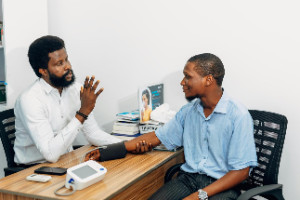
While explaining that people with abnormal results could subsequently be referred to secondary facilities for colonoscopy. The experts said expanding access to screening was particularly important because many Nigerians still present at hospitals with advanced disease.
Commenting, Prof Fatimah Abdulkareem said awareness campaigns would have limited impact if there is no system to move patients from screening to diagnosis, treatment and follow-up.
She identified failure to recognise symptoms, inappropriate referrals, high costs of investigations and delays in obtaining diagnostic results as some of the factors contributing to late presentation.
A consultant clinical and radiology oncologist, Dr Eben Adepitan Aje, said social, religious, economic and educational factors also influence health-seeking behaviour.
He noted that some Nigerians first disclose persistent symptoms to spouses, pastors, imams or traditional leaders, while others dismiss warning signs such as blood in the stool, constipation and changes in bowel habits as minor ailments.
The experts therefore called for stronger primary healthcare services, saying the system closest to communities should be equipped to recognise warning signs, provide basic screening and make timely referrals.
They also advocated greater use of Nigerian-specific data to develop screening policies, noting that disease patterns and risk factors may differ across populations.
The Founder and Executive Director of Niola Cancer Care Foundation, Eniola Akintunde, said the Foundation’s 10-year journey had focused on raising awareness, promoting early detection, supporting patients and families and advocating collective action against colorectal cancer.
“Early detection can save lives. Awareness can change attitudes. Screening can prevent cancer or detect it early,” she said.
Akintunde urged government, healthcare professionals, researchers, civil society organisations, survivors, caregivers and the media to work together to improve colorectal cancer outcomes in Nigeria. Even as experts stressed that beyond awareness, Nigeria needs a practical screening pathway that is affordable, accessible and capable of linking early detection to prompt diagnosis and treatment.
Similarly, Co-founder of the foundation, Dr Akinyele Akinremi, reaffirms the foundation’s commitment to stand as a source of succour to many in their fight and their recovery process as the group pledges to do more outreach, more support and interventions so that more lives can be touched before the disease has its last words.
We’ve got the edge. Get real-time reports, breaking scoops, and exclusive angles delivered straight to your phone. Don’t settle for stale news. Join LEADERSHIP NEWS on WhatsApp for 24/7 updates →
Join Our WhatsApp Channel