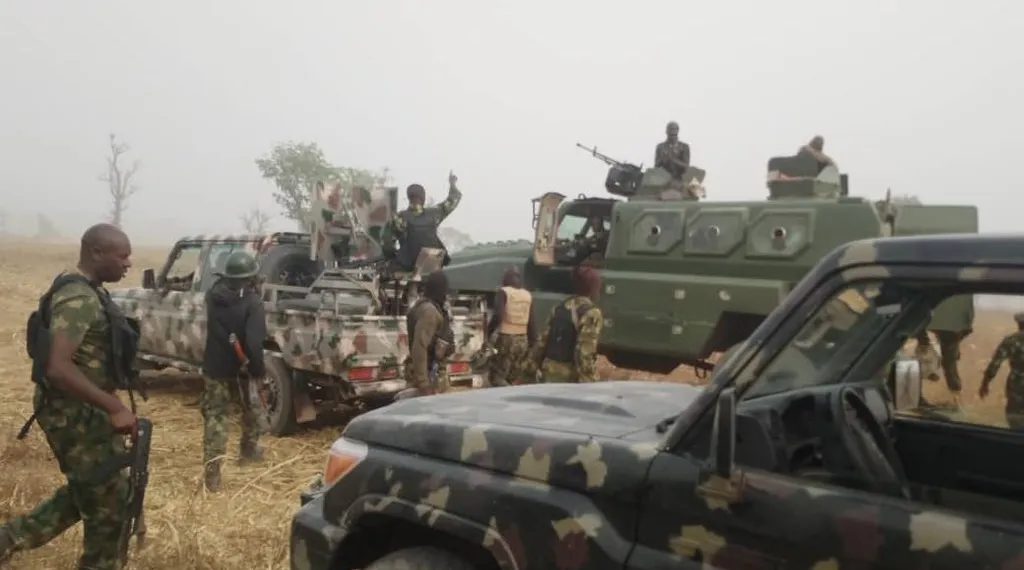
The Chief of Army Staff Lt-Gen. Waidi Shaibu, has tasked operational commanders to promote professionalism, discipline towards ensuring troops combat readiness in order to effectively curtail security threats.
At the opening of the 1st Commanding Officers Workshop 2026, organised by Army Headquarters Garrison with the theme “Enhancing Tactical-Level Leadership for Combat Readiness in a Joint and Multi-Agency Environment,” in Abuja, Shaibu urged the commanders to make officers and soldiers placed under them more professional, adaptable, combat-ready and resilient .
The COAS represented by the Chief Transformation and Innovation Army, Major General Olusegun Abai, said the workshop is part a collective effort to enhance operational and administrative effectiveness at the tactical level.
He said commanding officers occupy a position of immense responsibility as “a critical link between the operational and tactical levels of command” therefore, it is imperative that they are continually exposed to the principles of military leadership, act of command and professional excellence, all geared towards ensuring troops’ combat readiness.
He said “As Commanding Officers, you all bear the significant responsibility of executing operational directives and translating them into favourable outcomes.
“As our commanders in the field, you must be guided by my command philosophy, which is to transform the Nigerian Army into a more professional, adaptable, combat-ready and resilient force capable of decisively discharging its constitutional responsibility within the Joint and Multi-Agency Environment,”.
He continued “Your goal each day must be centred on how to make the officers and soldiers placed under you more professional, adaptable, combat-ready and resilient.
You must be constantly mindful of this profound responsibility which rests on your shoulders,”.
He urged participants to ensure they get vital takeaways from all the lectures and interactive sessions.
“As commanding officers, you are directly responsible for building a solid foundation of regimental discipline and robust junior leadership in the Nigerian Army. In essence, you must guide the young officers and soldiers who will look up to you for leadership, mentorship and direction,”.
He further tasks participants to always ask themselves some pertinent questions, individually and collectively.
“And these are, how do you leverage on this training to reflect on the performance of your units? What workable methods can you devise to further retrain your troops to be combat-ready and professionally competent? How best can you conduct realistic training for troops under you in furtherance of lay-down training directives? And lastly, how can you ingrain the ethos of mission success in your troops?
” I expect you to regularly provide answers to these and other questions as you navigate the intricacies of command. Gentlemen, it is incumbent on you to be exemplary and highly responsive in discharging your duties while ensuring that troops’ welfare issues are taken seriously. It is also essential that you adequately reward and, when necessary, sanction your personnel in your respective units,”.
He said by fulfilling their roles effectively, the Nigerian Army can take pride in having well-motivated and well-led troops capable of performing their constitutional responsibilities successfully.
He said the President’s interventions to the Nigerian Army have been crucial to the successes achieved so far in its efforts to safeguard the nation’s security and territorial integrity.
He reaffirmed the loyalty to the Commander-in-Chief and the Constitution of the Federal Republic of Nigeria.
In his remarks, the Commander AHQ Garrison Major General Maxwell Dangana said the workshop, is both timely and relevant because contemporary security landscape in Nigeria is increasingly complex and dynamic.
He said the threats are asymmetrical and transnational, requiring coordinated responses from multiple security stakeholders.
“In such an environment, tactical leadership must go beyond traditional command and control. It must be adaptive, collaborative, and mission-focused,”.
He reiterated that commanding officers,occupy a critical position in Nigeria’s Army command structure, adding that being the direct link between policy and execution, translating strategic intent into actionable plans and ensuring that directives from higher headquarters are effectively implemented at the unit level.
“The quality of leadership you provide directly affects discipline, morale, operational readiness, and mission success. Present day operations demand seamless cooperation with sister services and other security agencies.
“Whether in internal security operations, protection of critical national assets, or support to civilian authorities, success depends on unity of effort.
“Tactical commanders must therefore understand not only Army doctrine, but also the procedures, capabilities, and limitations of other services and agencies,”.
Major General Dangana said effective joint and multi-agency collaboration requires mutual respect, clear communication, and shared understanding of mission.
According to him, the workshop,provides a platform for reflection, dialogue, and shared learning and an opportunity to examine challenges at unit level and develop practical solutions.
“Let us share field experiences, identify gaps in our leadership approaches, and explore innovative ways to strengthen coordination with other stakeholders. Tactical leadership in a joint and multi-agency environment requires professional competence in tactics, administration, and logistics. Emotional intelligence to manage personalities, build trust and resolve conflicts, and decisiveness under pressure since our operating environment rarely affords all the luxury of time.Sound judgement guided by trainer experience remains critical,”.
He stressed the importance of effective communication in operational fields adding that miscommunication in joint operations can result in duplication of effort, operational gaps, or even friendly incidences.
“Commanding officers must therefore ensure clarity in orders, accurate reporting, and continuous liaison with partnering agencies. Regular coordination meetings and open channels of communication will enhance operational synergy. Accountability and ethical leadership must also remain central,”.
He noted that in a joint and multi-agency environment, the conduct of our personnel reflects not only on Nigerian Army, but on armed forces as a whole.
“We must uphold the highest standards of discipline, professionalism, to inspire confidence among our partners and civil population we are mandated to protect,”.
We’ve got the edge. Get real-time reports, breaking scoops, and exclusive angles delivered straight to your phone. Don’t settle for stale news. Join LEADERSHIP NEWS on WhatsApp for 24/7 updates →
Join Our WhatsApp Channel