
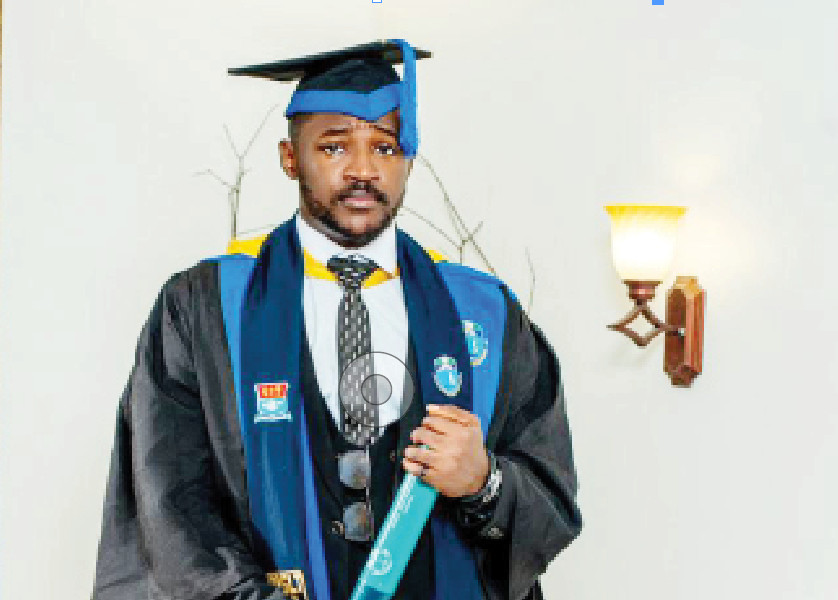
Nnamani Michael Ikenna, a first-class graduate from the Department of Industrial Chemical/Petrochemical Technology at the University of Port Harcourt, shares his journey in an exclusive interview with ANAYO ONUKWUGHA. Born in Enugu and fluent in multiple languages, including English, Chinese, Igbo, and some Yoruba, Nnamani opens up about how hard work, determination, and unwavering focus helped him overcome obstacles and achieve academic excellence.
What drove your motivation and focus throughout your academic journey?
What kept me going was a strong sense of purpose. I knew I wasn’t just studying for grades. I was building a future in engineering and positioning myself for global opportunities. Coming from an average Nigerian home, I also felt a responsibility to represent excellence and make the most of every opportunity my parents had provided me. That mindset helped me stay disciplined, even when the challenges felt overwhelming.
Which study habits or routines were most effective in helping you excel academically?
Consistency and time management were my greatest advantages. I didn’t rely on last-minute cramming. Instead, I studied daily, reviewed lecture notes early, and practiced problems repeatedly, especially for technical courses like Engineering Mathematics and Reaction Engineering. I also made it a habit to teach others, explaining concepts to someone else helped me understand them more deeply
How did you approach and overcome particularly challenging subjects or topics?
I approached difficult topics by breaking them down into smaller, manageable parts. For complex subjects like Process Design or Reaction Engineering, I combined theoretical understanding with practical tools such as Aspen HYSYS and Aspen Plus. I also asked questions of lecturers, classmates, or through online resources, until everything became clear. I made it a point never to let confusion accumulate.
How did you effectively balance your academics with extracurricular activities and other responsibilities?
I learned early on the importance of prioritisation. I served as a course representative, tutored fellow students, and was once a member of the SUG Senate. To manage it all, I structured my time carefully, creating a schedule that kept academics as my top priority while still allowing room for leadership roles and personal development.
Did you have a support system that aided your academic journey?
Yes, I did. I was fortunate to have supportive lecturers, collaborative classmates, and friends who shared similar academic goals. I also embraced peer learning, and discussing challenging topics together made a significant difference in my understanding and progress
What is the most important insight you gained about yourself during your studies?
I discovered that I am far more resilient than I had imagined. I say this deliberately, because I managed to learn a new language! Mandarin Chinese, while still graduating with a first-class degree. There were moments of overwhelm, but I learned to push through pressure, remain consistent, and trust the process. That resilience is a quality I will carry forward throughout my life.
In what ways did your teachers or mentors influence your academic success?
My lecturers were instrumental in my success, particularly Dr. Elechi. He didn’t just teach; he challenged me to think critically and extend my learning beyond the classroom. Several of my mentors also recognised my potential early on and encouraged me to aim higher, especially in areas like research and development.
How do you intend to apply the lessons from your undergraduate experience to your future endeavors?
The discipline, problem-solving skills, and technical knowledge I developed during my undergraduate studies will form the foundation of my future work. I plan to leverage them in advanced studies, particularly in chemical process engineering and data-driven optimisation and ultimately contribute to addressing energy and industrial challenges.
What advice would you give to students who are facing academic challenges?
Never give up on yourself. Struggling doesn’t mean you lack ability; it often signals the need for a different approach. Stay consistent, seek help when needed, and prioritise understanding over memorisation. Small, consistent daily improvements can lead to significant results over time.
Was there a defining moment that reinforced your determination to excel academically?
Yes. During my early years, I realized just how competitive and demanding my field is, especially for those without a godfather in the energy industry. That awareness pushed me to take my studies more seriously and commit fully to excellence. From that point onward, I became very intentional about setting and achieving my goals.
What are your next steps following graduation?
I am currently serving my country through the NYSC. Afterward, I plan to pursue one of two strategic paths. The first is to secure a graduate trainee position in the oil and gas industry, where I can gain hands-on experience and deepen my practical understanding of engineering operations. The second is to pursue a fully funded master’s scholarship in chemical engineering.
Whichever path I take, my long-term goal remains the same: to specialize in process systems engineering and energy optimisation, and to leverage data science and machine learning to solve real-world engineering challenges.
We’ve got the edge. Get real-time reports, breaking scoops, and exclusive angles delivered straight to your phone. Don’t settle for stale news. Join LEADERSHIP NEWS on WhatsApp for 24/7 updates →
Join Our WhatsApp Channel