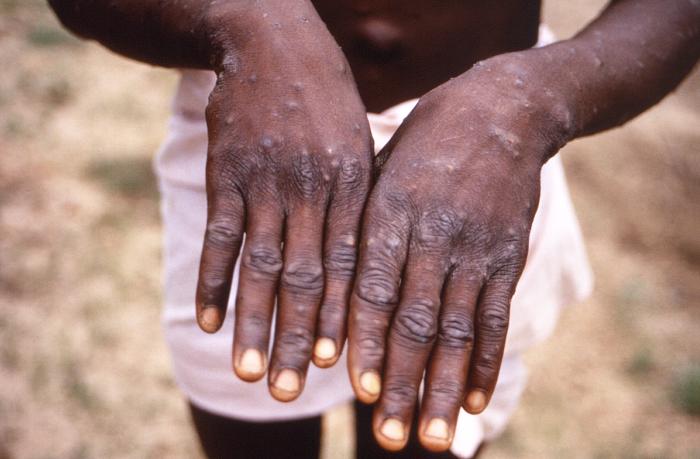
The Mpox outbreak, formerly known as Monkeypox, is no longer a distant threat. On Friday, the Nigeria Centre for Disease Control and Prevention (NCDC) announced that the country had recorded a total of 40 confirmed cases of Mpox out of 830 suspected cases.
According to the NCDC, the 40 cases reported in the country are distributed across 12 or 13 states. Many cases are in the South-South and South-East, with some in Lagos, Ogun, and other northern areas.
Despite the Ministry of Health requiring travellers to submit health declarations due to the Mpox outbreak across Africa, it is now undeniable that the virus has breached our borders.
While some African nations have grappled with this virus since late last year, the situation has escalated. Earlier this month, Africa’s Centre for Disease Control and Prevention (Africa CDC) declared Mpox a public health emergency.
This declaration, as Dr. Jean Kaseya, the centre’s director general, emphasised, is more than a procedural step—it is a call to arms. “We can no longer afford to be reactive,” Dr. Kaseya warned. “We must be proactive and aggressive in our efforts to contain and eliminate this threat.”
It is worth noting that South Africa has recorded at least 24 cases, and as of August 4th, CDC data reveals that since January 2022, Mpox has infected 38,465 people across Africa, claiming 1,456 lives. Central and Eastern Africa, particularly the Democratic Republic of Congo, have borne the brunt, with over 17,000 infections and more than 500 deaths in 2024 alone.
As Mpox continues to spread, not only within Africa but also internationally, the World Health Organization (WHO) last week issued a global health emergency for the second time in as many years.
Mpox, part of the same viral family as smallpox, was first identified in 1958 when it was discovered in monkeys—hence the original name, which has since been changed to avoid stigmatisation. While monkeys are not the source of the virus, Mpox can be transmitted from animals to humans and between humans through physical contact.
The virus has two types, or clades: Clade I, endemic to Central Africa, and Clade II, found in West Africa. A new variant of Clade I, dubbed Ib, appears to spread more easily. Symptoms typically include a skin rash or mucosal lesions lasting two to four weeks, along with fever, headache, muscle pain, back pain, fatigue, and swollen lymph nodes.
Despite efforts to prevent Mpox from spreading, containment remains a challenge. Previous global epidemics have demonstrated that even the best-laid plans are susceptible to failure.
Mpox is treated with supportive care. Vaccines and therapeutics developed for smallpox and approved for use in some countries can be used for Mpox in certain circumstances.
Mpox can be prevented by avoiding physical contact with someone who has the disease. Vaccination can also help prevent infection for those at risk.
Clearly, preventing such a disease from entering our country would be almost futile, as we have seen with previous global epidemics. Yet, our preparation has always been questionable, to say the least.
Of course, it is expected—or assumed—that statutory protocols would kick in to prevent the spread of such diseases, avoiding yet another crisis. However, the swift coordination of these protocols is another matter entirely.
It’s concerning that we have barely emerged from the cholera epidemic—a depressing situation, considering that this disease often reflects the deep poverty in our system.
If it’s any consolation, we have combated two major health scares in the past: Ebola and COVID-19. This should have provided us with a template to tackle fast-spreading diseases like Mpox.
However, so far, the Ministry of Health and our CDC need to do more. As it stands, the quality of public enlightenment on this disease is far below expectations—far too low.
While panic is never a solution, neither is complacency. Public health campaigns, delivered in local languages and targeted at diverse communities, should have already been in full swing. Yet the response has been woefully inadequate.
In our view, the deeper issue lies in the state of Nigeria’s health sector. For years, it has been plagued by underfunding and a mass exodus of healthcare professionals. Many have left the country, frustrated by the government’s failure to invest in the system and ensure that it can handle outbreaks like Mpox.
The Africa CDC recently stated that the continent needs over 10 million doses of vaccines to control the ongoing Mpox outbreak, which has spread to 13 countries across the continent.
However, the centre also noted that only about 200,000 doses of the vaccine are available, leaving a deficit of 9.8 million doses.
It is gratifying to note that the WHO Nigeria Country Office disclosed that Nigeria would be receiving doses of the Mpox vaccine through a donation from the United States Government.
Ultimately, the government’s primary responsibility remains the welfare and security of its citizens. That mandate is now being tested in real-time.
We’ve got the edge. Get real-time reports, breaking scoops, and exclusive angles delivered straight to your phone. Don’t settle for stale news. Join LEADERSHIP NEWS on WhatsApp for 24/7 updates →
Join Our WhatsApp Channel