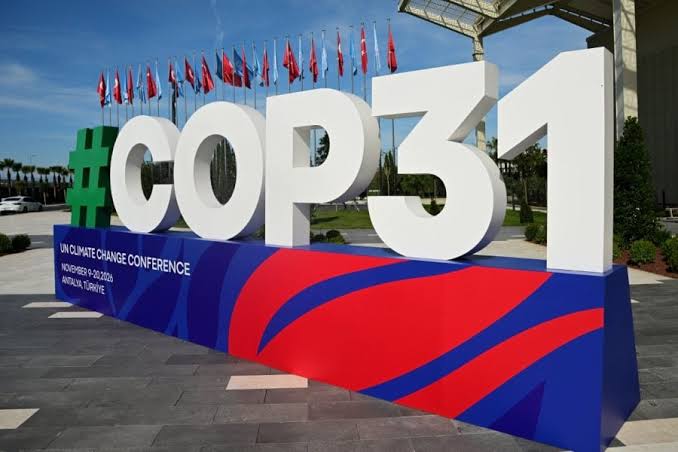
Yet again, the annual Conference of the Parties (COP 31) is underway in Antalya, Türkiye. It is the highest-level global climate summit held under the United Nations Framework Convention on Climate Change (UNFCCC), which was adopted in 1992.
This summit brings together heads of state, ministers, scientists, business leaders, and civil society representatives from around the world. It serves as the primary platform for negotiating and advancing collective action to combat climate change.
The session in Turkiye is the 31st in the series. Hopefully, it will unlock the climate-action potential of waste management through scalable circular-economy solutions, protect marine ecosystems, unlock blue carbon for climate resilience, and advance the global transition toward sustainable and resilient food systems.
The session is also expected to unlock the climate-action potential of waste management through scalable circular-economy solutions.
Core focus areas of COP31 include preventing food waste.
It is expected that at the end of the talks, it will prioritise practical solutions to reduce food loss and waste across the entire value chain, from production to consumption. It aims to convene countries and the private sector around measurable commitments to prevent losses at source.
Also, COP31 intends to support the scaling of circular economy policies that turn waste into a resource. It will promote regulatory and financial instruments that strengthen reuse, recycling and circular-by-design principles.
COP31 focuses on encouraging the integration of waste-related methane reduction opportunities into updated Nationally Determined Contributions (NDCs). It aims to help countries embed waste-sector methane in their climate plans through measurable targets and implementation roadmaps.
It is estimated that oceans absorb approximately 25 per cent of human-produced carbon dioxide and regulate global climate systems. Yet rising emissions are driving ocean acidification, marine heatwaves, and coastal ecosystem degradation.
It is the expectation of the international community that COP31 will strengthen ocean-climate action through enhanced observation, data sharing, and regional cooperation.
Similarly, it is hoped that COP31 will encourage the integration of blue carbon ecosystems, such as seagrass meadows, salt marshes, and mangroves, into national climate strategies and nationally determined contributions. This brings the carbon sequestration capacity of coastal ecosystems into formal climate accounting and target setting.
Even more strategically, there is a desire that COP31 will support the development of shared resilience frameworks to protect and restore coastal and marine ecosystems. These frameworks aim to reduce the impacts of ocean acidification and marine heatwaves on vulnerable ecosystems.
This session of international collaboration will, if sustained, advance enhanced ocean observation systems and open data-sharing partnerships. It is estimated that consistent, accessible data will underpin evidence-based ocean-climate policy and early-warning capacity.
Again, it promises, at least in theory, to prioritise resilience support for coastal communities facing sea-level rise and coastal erosion. In this process, it will safeguard livelihoods and strengthen adaptive capacity.
As is to be expected, food security theme focuses on addressing the acute food insecurity faced by approximately 318 million people due to climate shocks. It also aims to transform food systems — which are responsible for one-third of global emissions yet receive only four per cent of climate finance. To bridge this gap, COP31 hopes to drive transformation through these key priorities:
In the same vein, deliberations at COP31 promise to treat food, water and climate not as siloed agendas but as a single interdependent system. To this extent, women farmers are known to form the backbone of global food production
yet face disproportionate barriers in accessing climate finance. The ongoing session pledges to champion targeted financing instruments that lower these barriers and strengthen women’s resilience on the front lines of climate change.
Through the Youth for Food and Climate Action initiative, COP31 places younger generations at the heart of sustainable food systems. The initiative will support green jobs, skills development and youth leadership across the agricultural value chain.
COP 31 promises climate-resilient agriculture
that prioritises building resilient systems that protect producers against drought, flooding and shifting climate conditions.
Also, there will be climate-resilient cities to ensure that places are liveable for everyone.
In the opinion of this newspaper, this list of to-dos by COP31 is attainable under normal circumstances, with all countries putting their hands on deck.
The major chunk of ozone depletion is traceable to the industrialised nations. They have consistently paid lip service to ameliorating the scourge, even in the face of the devastation it has caused, especially in developing countries.
The two largest economies in the world, the United States of America and China, are not fully aligned with the climate change agenda.
At COP31, the United States is not participating, as President Donald Trump did not send a delegation. China sent a low-level representation. We recall that the USA had earlier repudiated the Kyoto Protocol on this all-important matter.
The Kyoto Protocol is an international treaty adopted in December 1997 in Kyoto, Japan, and came into force on 16 February 2005. It was established under the United Nations Framework Convention on Climate Change (UNFCCC) with the primary aim of reducing greenhouse gas emissions to combat global warming.
The industrialised countries pledged to offset the financial cost of combating climate change in developing countries. That has remained a pledge lacking in commitment.
But we are persuaded to argue that the urgency of climate change provides jobs for everyone. The governments must set standards and commit to enforcing them. The private sector, corporate bodies and individuals, have their own roles to play in this collective effort to save the world and humanity.
Regrettably, in Nigeria, the desertification occasioned by near criminal level deforestation ongoing in the north does not bother the government. Neither is flood and erosion scourges in the south. Even worse is gas flares in the nation’s oilfields that are exacerbating acid rains and greenhouse effects in the areas affected.
With all these the Nigerian government thinks it is business as usual. But it is not. We are persuaded ,therefore, to urge the international community to make good their pledges to provide the financial enablements required to address the challenges posed by climate change in developing countries.The time to act is now
We’ve got the edge. Get real-time reports, breaking scoops, and exclusive angles delivered straight to your phone. Don’t settle for stale news. Join LEADERSHIP NEWS on WhatsApp for 24/7 updates →
Join Our WhatsApp Channel