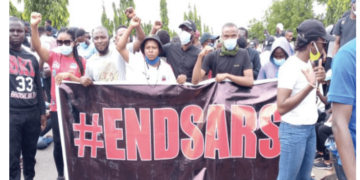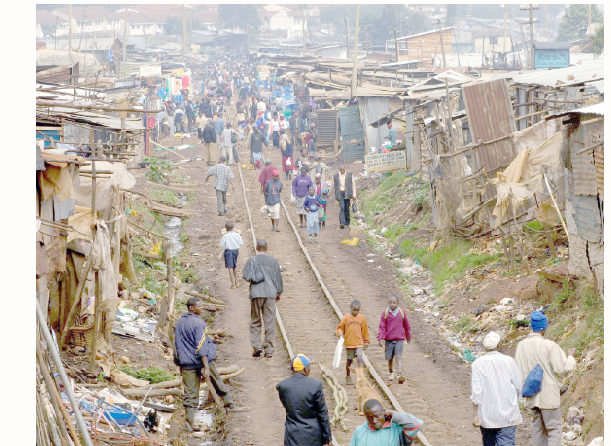
The rising cost of living has become the defining social and economic reality for the average Nigerian family. It is no longer a distant policy concern discussed only in government offices, economic forums, or newspaper headlines. It has become a daily struggle – in homes, markets, motor parks, workplaces, and classrooms. For millions of Nigerians, survival has become the central preoccupation of life.
At the centre of this crisis is the rising cost of fuel – a problem that has evolved over the past decade, from gradual price increases to the dramatic “subsidy is gone” declaration, and now worsened by the US-Israel war with Iran, which continue to exert pressure on global energy markets.
In any economy, energy influences both production and consumption. In Nigeria, however, fuel does much more. It powers transportation, drives electricity generation through private generators, sustains small businesses, farm irrigation and enables the movement of goods and people across the country. Fuel is the bloodstream of Nigeria’s economic activity. Once fuel prices rise, the effects spread rapidly across every sector of national life. This is precisely what Nigerians are experiencing today.
Since the removal of fuel subsidy, the government has consistently defended deregulation as a necessary economic reform. An argument that becomes familiar especially in government circles is that; subsidy was unsustainable, fiscally damaging, and vulnerable to corruption. Few disagree with the need for the reform when these arguments were advanced. The challenge, however, lies not simply in the reform itself, but in its consequences for the everyday lives of ordinary Nigerians.
The first and most visible impact has been on transportation. Across major cities, workers realized they spend an alarming proportion of their income simply getting to work or fuelingtheir vehicles. In many households, transportation costs have doubled or tripled within a short period. A teacher, civil servant, trader, or young professional who once budgeted modestly for commuting now finds that transport alone consumes a disproportionate share of monthly earnings. Transport is not a luxury; it is a basic enabler of productivity. When citizens spend half their income moving from one place to another, the economy begins to malfunction. Workers arrive at their offices exhausted. Parents cut spending in other essential areas. Students struggle to attend school consistently. Small businesses lose customers because mobility has become too expensive.
The second impact is on food prices. Nigeria’s food supply chain depends heavily on road transportation. Once transportation costs rise, food prices inevitably follow. This explains why market prices have become painfully unstable. The average Nigerian household now buys less food for more money. Protein consumption is declining. Families are reducing the number of meals they eat.
The third – and perhaps most troubling – effect is the expansion of poverty. Traditionally, poverty in Nigeria was often discussed as a rural problem or an issue affecting the unemployed. That assumption no longer holds. Today, poverty is increasingly urban and increasingly affects the working population. This is the rise of the new poor – citizens who are employed, productive, and educated, yet increasingly unable to sustain basic living standards. This phenomenon carries profound social consequences. When the lower middle class begins to collapse, national stability is threatened. Economic frustration often translates into rising petty crime, mounting mental health pressures, declining workplace productivity, and deepening distrust in public institutions. Social peace becomes harder to sustain when citizens feel they are working harder yet living worse.
This is why the current conversation must move beyond whether subsidy removal was right or wrong. That debate is largely settled. The more urgent question is this: what happened to the proceeds of subsidy removal – the funds that were supposed to support quality education, healthcare, and other essential services that could ease the burden on ordinary Nigerians?
Economic reforms are often necessary. But reforms that fail to account for human suffering risk losing public legitimacy. No government can sustain public confidence indefinitely if households continue to slide deeper into distress.
The Nigerian people have shown extraordinary resilience. They have adjusted, endured, improvised, and persevered through more than four decades of economic uncertainty. But resilience must not be mistaken for limitless tolerance. There is a threshold beyond which hardship becomes instability.
The cost-of-living crisis is not just about inflation figures or macroeconomic indicators. It is about the trader who cannot restock. The worker who cannot commute. The parent who cannot feed a family. The student who cannot afford transportation to school.
Government must do all it takes to urgently close that gap.
We’ve got the edge. Get real-time reports, breaking scoops, and exclusive angles delivered straight to your phone. Don’t settle for stale news. Join LEADERSHIP NEWS on WhatsApp for 24/7 updates →
Join Our WhatsApp Channel