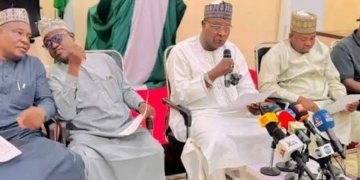
Twenty civil society organisations and rights groups have declared their opposition to the planned resumption of oil production in Ogoniland, Rivers State, under the present conditions.
The groups, which made the declaration while addressing journalists in Port Harcourt, also warned against the opening of new oil wells in the Niger Delta region.
On behalf of the groups, the executive director of Miiderkor Environmental Development Initiative (MEDI), Celestine Akpobari, said the process of the resumption of oil exploration and production in Ogoniland was moving faster than the truth, faster than the cleanup exercise.
Akpobari stated that the execution of Ken Saro-Wiwa and the eight other Ogoni leaders on 10th November 1995 was not an isolated tragedy. It was the public climax of a two-year military campaign of repression against the Ogoni people.
“We, the undersigned civil society organisations, environmental justice groups, community-based organisations and allies, stand today in solidarity with the people of Ogoniland to say clearly and without apology: there must be no resumption of oil production in Ogoniland under the present conditions neither should any new oil well be opend in the Niger Delta.
“This is not a statement against dialogue. It is not a statement against development. It is a statement against a process that is moving faster than the truth, faster than the cleanup, and faster than the consent of the people whose land, water and lives are at stake.
“This pattern is not unique to Ogoni. It is the standard state response when Niger Delta communities insist on their rights.
In November 1999, after the killing of police officers in Odi, Bayelsa State, the Federal Government under President Olusegun Obasanjo ordered a military invasion that flattened the town. Independent estimates put the civilian death toll between several hundred and as high as 2,500.
“Almost every building except a bank, a church and a health centre were destroyed. The same logic of collective punishment has been applied, in varying degrees, in other communities that have challenged extractive injustice including the famous Umuechem in 1990 where the king, his children, and the people that were involved in the peaceful protest were murdered and thrown into the river.The injustices surrounding Ken Saro-Wiwa himself did not end with his hanging.
“The Ken Saro-Wiwa Living Memorial, a sculpted bus created by artist Sokari Douglas Camp and donated to the Ogoni people, has been held by the Nigeria Customs Service in Lagos since September 2015.
“Despite a directive from the National Assembly and a 2023 Federal High Court ruling for its release, the memorial remains confiscated. More recently, the grant of a presidential “pardon” to Ken Saro-Wiwa and the Ogoni Eight treated them as convicted criminals rather than as victims of a stage-managed military tribunal.
“What the Ogoni people and the wider justice movement have demanded is not clemency but full exoneration and a formal admission that the trial was a miscarriage of justice. Treating the dead as convicts who required mercy is a continuing injury to their memory and to the communities that still seek closure.
“Oil production in Ogoniland stopped in 1993 because the Ogoni people said enough was enough. Their demands, set out in the 1990 Ogoni Bill of Rights, called for those who own the land to benefit from their God-given resources and for those who destroy and devastate the environment to be held accountable for the harm done.
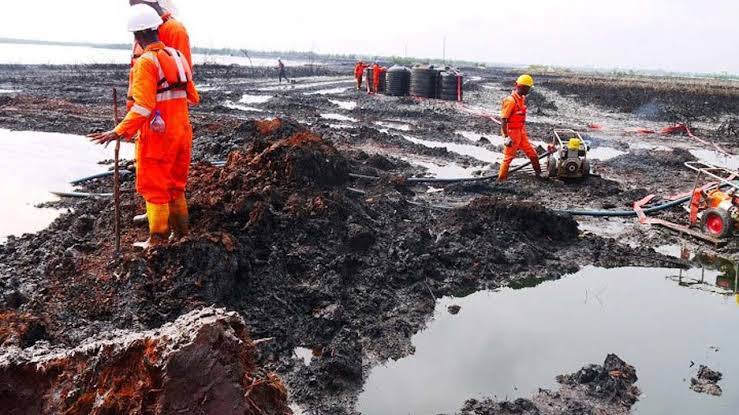
“The United Nations Environment Programme (UNEP) confirmed the Ogoni people’s case in their assessment report in 2011. Its Environmental Assessment of Ogoniland documented contaminated soil, polluted creeks and drinking water, and communities exposed to hydrocarbons for decades.’
We’ve got the edge. Get real-time reports, breaking scoops, and exclusive angles delivered straight to your phone. Don’t settle for stale news. Join LEADERSHIP NEWS on WhatsApp for 24/7 updates →
Join Our WhatsApp Channel