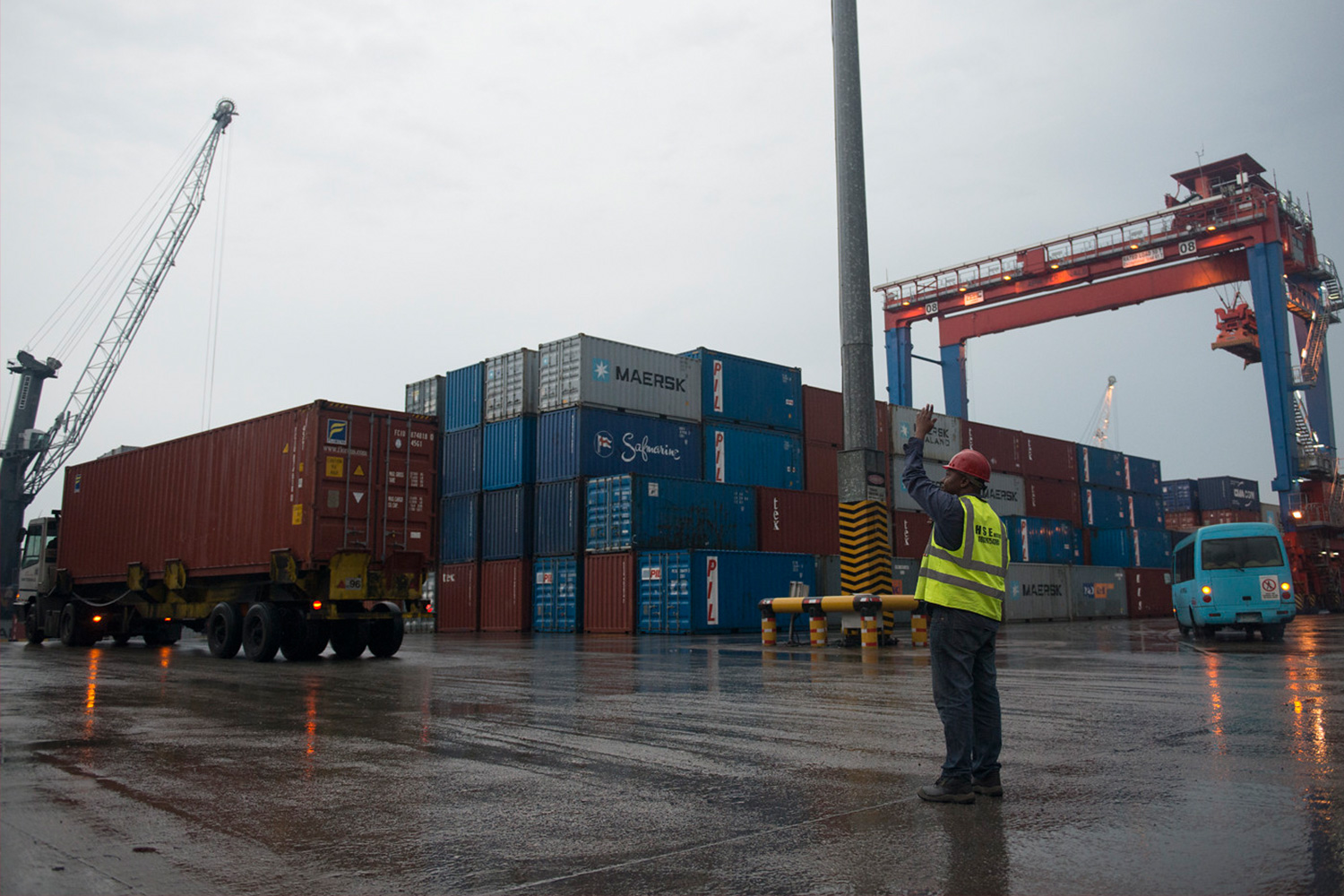
The principal consultant, International Trade Advisory Services Ltd., Okey Ibeke, on Monday, said the Nigeria Customs Service (NCS), has intensified its trade facilitation reforms with new operational innovations that are significantly reducing demurrage charges and shortening supply chains across Eastern Nigeria.
The reforms, which he said was midwifed by the Comptroller-General of the service, Bashir Adewale Adeniyi, aligned with President Bola Tinubu’s Renewed Hope and economic reform agenda.
According to Ibeke, the reforms are reshaping cargo movement and clearance processes in the South-East by decentralising Customs operations and bringing trade services closer to importers and manufacturers.
Central to the development is the activation of inland logistics infrastructure, particularly the operationalisation of the Onitsha River Port as a functional Customs clearance point.
The facility now enables cargoes to be moved by barge from Lagos and Port Harcourt ports directly into Anambra State, where full Customs procedures, including examination, valuation, and duty payments, are conducted.
This shift has significantly reduced the traditional reliance on long-distance road haulage from seaports to the South-East, a process often associated with congestion, multiple checkpoints, insecurity risks, and prolonged demurrage at port terminals.
With the new system, containers destined for markets such as Onitsha, Aba, and Nnewi are now cleared closer to their final destinations, cutting delivery timelines from weeks to as little as 48 -72 hours in some cases. Importers also benefit from reduced storage costs as goods spend less time idle at congested seaports.
According to Customs officials, the initiative is part of a broader strategy to decongest Nigeria’s busiest ports and improve efficiency in cargo evacuation.
The service has also expanded the licensing of bonded warehouses and terminals across Abia, Anambra, Enugu, Imo, and Ebonyi States, allowing goods to be stored and cleared within the region under Customs supervision.
Under the bonded warehouse regime, importers can transfer goods from ports of entry to approved inland facilities without immediate payment of duties, paying only when goods are sold or released into the market.
This has eased financial pressure on traders and improved liquidity for small and medium-scale importers.
Industry stakeholders say the combined impact of inland clearance centres and bonded terminals is already visible in reduced logistics costs, faster supply cycles, and improved price stability in key commercial hubs such as Onitsha Main Market and Ariaria International Market in Aba.
Manufacturers in Nnewi’s industrial cluster have also reported improved access to raw materials, with reduced lead times allowing for better production planning and inventory control.
Customs officials note that the reforms are also strengthening compliance by reducing incentives for smuggling and under-declaration, as physical examination and valuation now occur closer to end users within structured trade environments.
However, stakeholders have pointed out that the sustainability of these gains will depend on supporting infrastructure, particularly the dredging of the River Niger, improved barge operations, and better road connectivity from inland terminals to markets.
There are also calls for stronger inter-agency coordination among the Nigerian Inland Waterways Authority, Nigerian Ports Authority, and relevant security agencies to ensure seamless cargo movement and prevent operational bottlenecks.
We’ve got the edge. Get real-time reports, breaking scoops, and exclusive angles delivered straight to your phone. Don’t settle for stale news. Join LEADERSHIP NEWS on WhatsApp for 24/7 updates →
Join Our WhatsApp Channel