The Nigeria Customs Service (NCS), in partnership with the Presidential Enabling Business Environment Council (PEBEC), has intensified efforts to reform port operations in a bid to speed up cargo clearance processes and reduce the cost of doing business in Nigeria.
The reform drive was unveiled at the opening of a three-day operational workshop held in Apapa, Lagos, themed “Customs Leadership in Port Efficiency, Inspection Reform and Clearance Timeline.”
The initiative brings together key stakeholders in the trade and regulatory ecosystem to align on practical steps toward improving port efficiency.
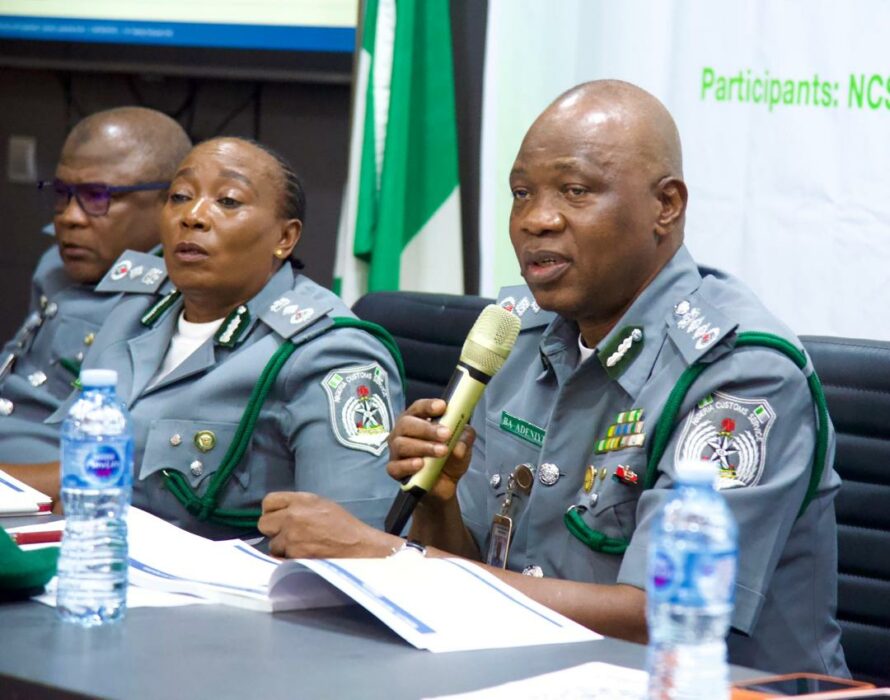
Speaking at the event, the Comptroller-General of Customs (CGC), Adewale Adeniyi, said the Service was shifting focus from policy formulation to execution, stressing that reforms must translate into measurable operational improvements at the ports.
According to him, the new agenda is anchored on five key pillars: joint inspections, risk-based cargo clearance, optimisation of scanning infrastructure, strict enforcement of service timelines, and stronger inter-agency coordination.
“This workshop is about closing the gap between knowing and doing,” Adeniyi said. “The Service must now focus on translating established best practices into consistent operational outcomes.”
He explained that the reforms would prioritise intelligence-led cargo processing, supported by expanded digital systems and scanning technologies aimed at reducing bottlenecks and improving transparency in clearance procedures.
Adeniyi further disclosed that the workshop would produce a reform execution matrix to guide implementation across commands, adding that performance would be closely monitored.
“The reform implementation matrix will not end up in a filing cabinet. It will be actively monitored, and I will personally follow the progress reports,” he said.
Also speaking, the Director-General of PEBEC, Zahrah Mustapha-Audu, emphasised the need for a shift toward risk-based inspection systems, noting that excessive cargo checks contribute significantly to delays and higher trade costs.
“We must move from inspecting everything to inspecting the right thing,” she said, adding that efficient border processes remain critical to improving Nigeria’s trade competitiveness and ease of doing business ranking.
PEBEC said the collaboration with Customs was designed to ensure that regulatory efficiency aligns with economic growth objectives, particularly in reducing clearance timelines and improving predictability for importers and exporters.
In her remarks, the Deputy Comptroller-General in charge of Tariff and Trade, Caroline Niagwan, said the evolving mandate of Customs places it at the centre of Nigeria’s economic transformation agenda, adding that operational efficiency must be reflected uniformly across all commands.
Meanwhile, the Customs leadership and PEBEC delegation also visited the National Single Window facility, where they engaged with stakeholders, including the Chairman of the Nigeria Revenue Service, Zacch Adedeji, to review ongoing progress and identify operational gaps affecting trade facilitation.
The reform initiative is expected to strengthen coordination among agencies, enhance transparency, and ultimately reduce delays and costs associated with cargo clearance at Nigerian ports.
We’ve got the edge. Get real-time reports, breaking scoops, and exclusive angles delivered straight to your phone. Don’t settle for stale news. Join LEADERSHIP NEWS on WhatsApp for 24/7 updates →
Join Our WhatsApp Channel