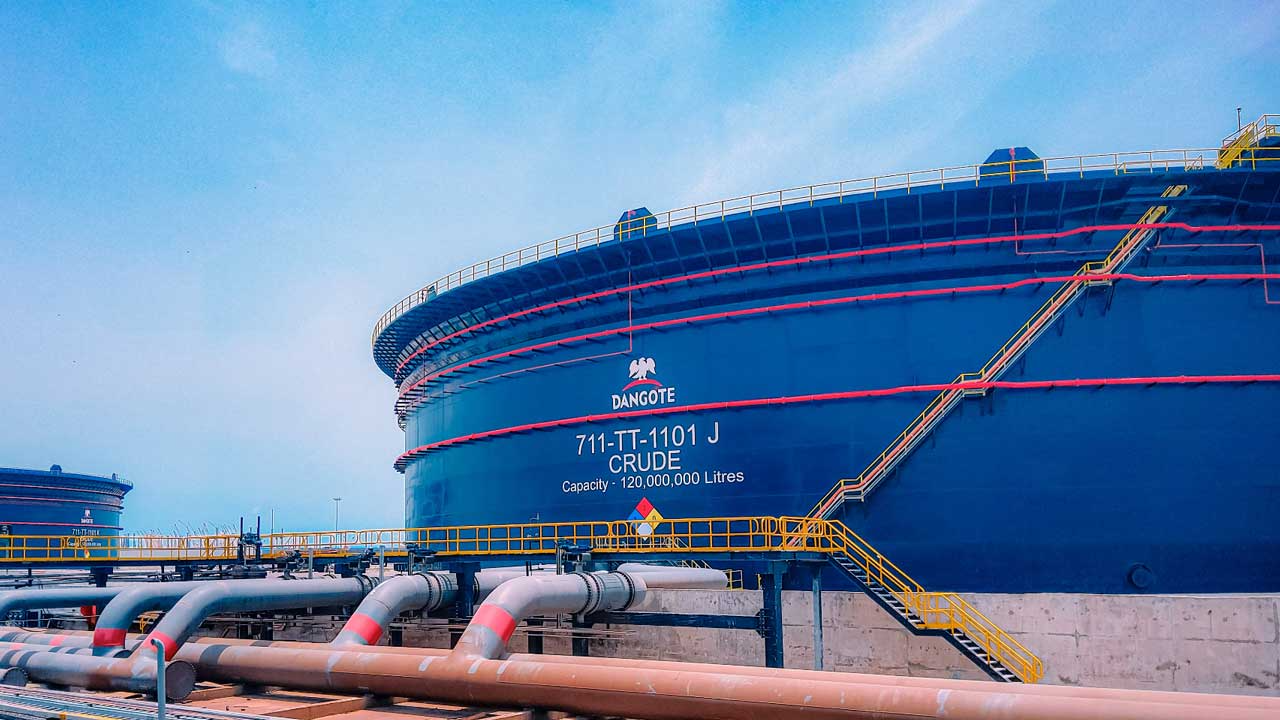
Nigeria’s energy sector is entering a transformation long dismissed as unattainable, yet now defining the nation’s future. With the Dangote Refinery now operational, the country has, for the first time in decades, a real chance at energy self-sufficiency and long-term stability.
This is no ordinary industrial project. By its sheer size and scale, the refinery has the potential to be catalytic for the domestic economy. It is designed to produce not just petrol and diesel, but also critical by-products such as sulphur, carbon black, polypropylene, and butane. These derivatives are the building blocks for industries ranging from tyre and ink manufacturing to fertilizer, plastics, and packaging. The multiplier effect is clear: the refinery is not only solving an energy problem, it is creating a pathway for Nigeria to expand its industrial base across multiple value chains, generate employment, and retain billions of dollars that previously leaked out through imports.
Yet, as history has often shown, entrenched interests rarely yield easily. Calls for new committees and oversight structures, often dressed in the language of accountability, risk becoming instruments for those who once thrived on inefficiency. Nigeria must resist this old pattern. The refinery should be protected, not politicised.
For decades, the country’s fuel supply chain was shaped by import dependency, a regime that bred subsidy abuses, rent-seeking and distortions. Depot operators and the powerful DAPPMAN lobby built their model around this system. At its height, it enabled billions of dollars in questionable subsidy claims while leaving ordinary Nigerians with unreliable supply, endless queues, and inflated prices. Some continue to argue that depots are vital for jobs, but the truth is sobering: a typical depot employs a handful of workers, while a single filling station sustains dozens. The argument for clinging to the old system is weak at best, self-serving at worst.
The economics are shifting quickly. Nigeria already has more than four million metric tons of storage capacity, much of it sitting idle. With a domestic refinery now producing at scale, the old import-and-store model is not just inefficient, it is redundant. Globally, the same pattern has played out: depots in Amsterdam or Houston were designed for export economies, not for countries refining and consuming locally. The lesson is simple, when local production rises, import-reliant infrastructure becomes obsolete.
Nigeria’s cement industry offers a close parallel. Once local cement production scaled up, the bulk carriers that had dominated imports were scrapped or sold off. An entire ecosystem that profited from imports disappeared, while a stronger domestic industry emerged. The fuel business is moving in the same direction, and resisting this shift only delays the inevitable.
Importantly, the Dangote Refinery promises more than energy independence. It is modernising the downstream chain itself. Investments in a new fleet of fuel-efficient trucks are already underway to replace the rickety, polluting tankers that have long defined Nigeria’s roads. This upgrade is critical for both efficiency and the ecosystem. It signals that this project is not just about filling tanks, but about retooling an entire logistics ecosystem, making supply chains safer, cleaner, and more reliable.
There will always be those who seek to frustrate progress, cabals whose influence depends on imports, subsidies, or opaque privileges. But Nigeria cannot afford another cycle of rent-seeking. The nation has lost too many opportunities because vested interests strangled reform at birth. If depot owners and old operators wish to remain relevant, they must adapt. They should redirect investments into retail outlets, petrochemicals, or emerging value chains such as lubricants, plastics, or renewable energy. Some may even consider acquiring and rehabilitating dormant state refineries if they believe in true competition. What they cannot do is freeze the clock on change or attempt to cripple a facility that holds so much promise for the wider economy.
The Dangote Refinery is not the problem; it is part of the solution. It represents a chance to anchor industrial growth, create jobs across new sectors, and finally insulate Nigeria from the volatility of international fuel markets. It also strengthens the country’s fiscal position by reducing the outflow of scarce foreign exchange, while opening space for exports into West Africa. The regional implications are just as important: a strong Nigeria with energy stability benefits its neighbours and reinforces its leadership role on the continent.
For ordinary Nigerians, the benefits are tangible: stable supply at the pumps, potential reduction in the long-term cost of fuel, and new industries springing up from by-products that will create jobs for thousands. This is what energy security should mean: not just the absence of scarcity, but the presence of opportunity.
To undermine such an asset through politics, sabotage, or misguided regulation would not only squander private capital but also sabotage national progress. The Dangote Refinery has come at great cost and risk, but it has also come at the right time. Nigeria cannot afford to let cynicism and vested interests derail what is arguably its biggest industrial breakthrough in a generation.
The country has delayed too many opportunities in the past, for example, Iron and steel industry development opportunities, aluminium smelting, the petrochemical industry and textile. This one must not be lost. Protecting the refinery is not just about safeguarding Dangote’s investment; it is about securing Nigeria’s energy future, rebuilding its industrial base, and ensuring that the promise of self-sufficiency finally becomes reality.
We’ve got the edge. Get real-time reports, breaking scoops, and exclusive angles delivered straight to your phone. Don’t settle for stale news. Join LEADERSHIP NEWS on WhatsApp for 24/7 updates →
Join Our WhatsApp Channel