The year 2025 will be remembered as a pivotal period in global and Nigerian defence history, marked by intensifying conflicts, strategic realignments, and a series of security crises that tested military readiness and cooperation both at home and abroad.
From major international military forums and defence policy recalibrations to escalating insurgency battles and unprecedented foreign military strikes on Nigerian soil, the defence landscape was reshaped by events that highlighted emerging threats and strategic responses. In Nigeria, the security situation remained front and center, with deadly jihadist attacks across the North‑West and North‑East, devastating suicide bombings in Borno State, and a dramatic U.S.‑backed air campaign against Islamic State‑linked militants in Sokoto — underlining the urgent urgency for stronger counter‑terrorism cooperation and robust national defence reform.
The year 2025 began in violence, with attacks targeting both communities and military formations. By year’s end, the crisis escalated into the mass abduction of schoolchildren, highlighting the growing security threats. In the first half alone, terrorism claimed over 600 lives, underscoring the urgent need for stronger defence and counter‑terrorism measures.
Determined to reverse the alarming security trends, President Bola Ahmed Tinubu took a bold step on 16 December 2024 by signing the new HTACOS for the Armed Forces. This landmark document lays out clear guidelines on military traditions, entitlements, and operational conditions, ensuring that personnel are supported not just during service but even after retirement.
Despite these reforms, 2025 began with a series of violent attacks that tested the resilience of Nigeria’s armed forces. On 7 January, terrorists attacked a military base in Borno, killing six soldiers and destroying vehicles and other critical equipment. Later, on 27 January, suicide bombers infiltrated military barracks in Malam Fatori, claiming the lives of several soldiers.
The attacks continued in the following months. On 8 March, terrorists launched an assault on another military base in Borno but were successfully repelled, demonstrating improved operational readiness. However, the 4 May attack on a military base in Yobe proved deadlier, with 11 soldiers killed and equipment destroyed, highlighting the ongoing threats facing the armed forces despite reforms.
The security landscape of 2025 remained turbulent, with communities and military formations repeatedly targeted across Nigeria. In June 2025, armed men attacked Yelwata, a community in Benue State, killing over 100 residents in one of the deadliest attacks of the year. The massacre sent shockwaves across the country and underscored the persistent threat posed by armed groups in the region.
Oreke‑Okeigbo Attack (4 June 2025) — Gunmen attacked a marble mining site in Kwara State, killing two police officers and abducting workers, including a Chinese national.
Still in June, Maiduguri Suicide Bombing (20 June 2025) — A suspected female suicide bomber detonated an IED at a busy area in Konduga, Borno State, killing and injuring dozens.
Kwallajiya Village Attack (1 July 2025) — Militants linked to Islamic State‑Sahel Province attacked a Sokoto State village, killing around 15–17 civilians and burning property.
Roadside IED Bombings in Borno State — Multiple improvised explosive devices planted along routes in northeastern Nigeria killed at least 26 passengers; ISWAP claimed responsibility.
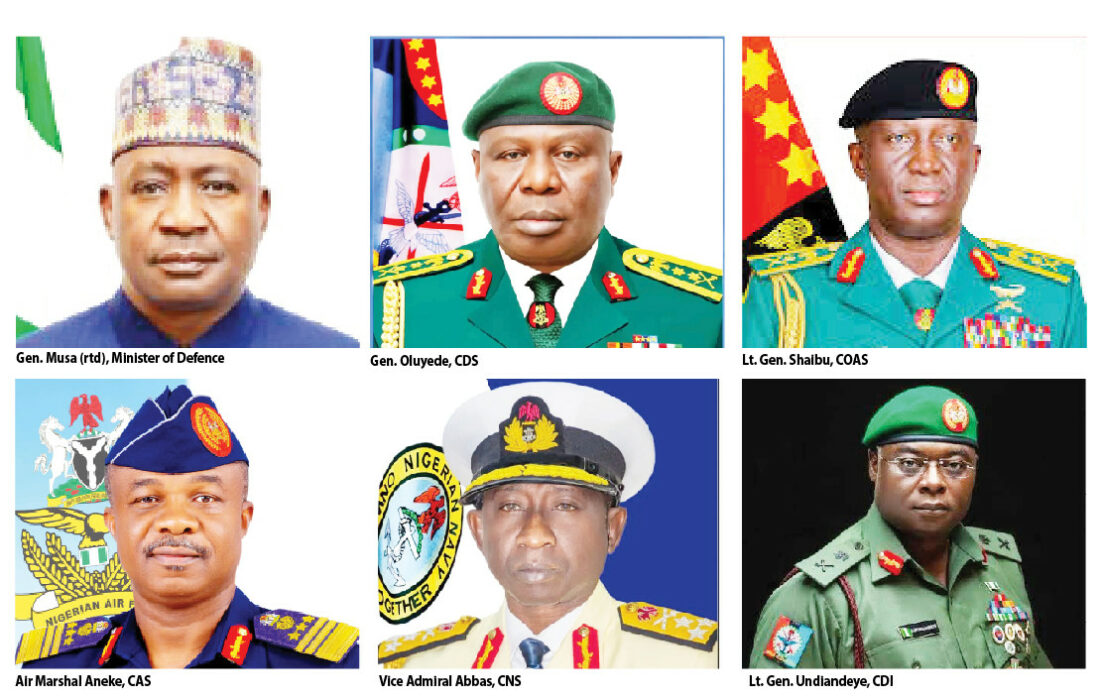
In response to the ongoing security challenges and as part of efforts to strengthen military leadership, President Bola Ahmed Tinubu reshuffled the nation’s top military hierarchy on 24 October 2025. He appointed new Service Chiefs, retiring those he had appointed in 2023, while retaining the Chief of Defence Staff, General Olufemi Oluyede. Among those he retired included General Christopher Musa, Air Marshal Hasan Bala Abubakar, and Vice Admiral Emmanuel Ogalla, signaling a strategic shift aimed at boosting operational efficiency and counter-terrorism effectiveness.
The attacks did not relent. In November 2025, terrorists abducted 25 schoolgirls from Maga Comprehensive Girls’ Secondary School in the Danko/Wasagu local government area of Kebbi State, North-west Nigeria, and killed two teachers in the assault. The incident highlighted the continuing vulnerability of educational institutions in high-risk regions and intensified calls for stronger security measures to protect civilians and students.
Within the same month, terrorists attacked St Mary’s School, a Catholic-owned institution in Papiri community, Agwara Local Government Area of Niger State, north-central Nigeria and abducted 265 students and staff members.
Battle of Lake Chad (Nov 5–8, 2025) Rival Islamist factions, including Boko Haram and ISWAP, fought over control of islands in Lake Chad, resulting in heavy casualties and territorial changes in Borno State.
Government & Military Responses:
Regional Anti‑Terrorism Advocacy (Sept 22, 2025)
The former Minister of Defence, Minister Badaru Abubakar called for stronger regional cooperation to combat terror across ECOWAS and the Sahel, reflecting strategic policy focus.
- Large‑Scale Military Neutralisations (2025) — The Defence Headquarters reported thousands of terrorists killed and suspects arrested across various operations including Fansan Yamma, Enduring Peace, and Whirl‑Stroke, with hundreds of hostages rescued.
As the year drew to a close, Nigeria’s defence sector witnessed significant leadership changes and critical operational events. On 2 December 2025, President Bola Ahmed Tinubu nominated former Chief of Defence Staff, General Christopher Musa (Rtd), as the new Minister of Defence, following the resignation of Alhaji Badaru Abubakar. The appointment was widely seen as a strategic move to leverage Musa’s extensive military experience in strengthening Nigeria’s defence policy and counter-terrorism strategies.
Shortly after, on 6 December, a Nigerian Air Force (NAF) Alpha Jet crashed in Niger State. Fortunately, the pilots successfully ejected from the ill-fated aircraft, avoiding casualties, though the incident raised concerns about aircraft maintenance and operational safety.
Nigeria’s defence forces were also engaged beyond its borders in December 2025, reflecting the country’s regional security responsibilities. On 7 December, the Nigerian military deployed fighter jets and later ground troops to Benin Republic to assist in quelling a coup attempt, demonstrating Nigeria’s commitment to supporting stability in the West African region.
The following day, 8 December, a Nigerian Air Force C-130 aircraft en route to Portugal for maintenance was grounded by the military junta in Burkina Faso after a precautionary landing. While the crew was unharmed, the incident highlighted the risks of regional instability affecting Nigerian military operations abroad.
Together, these events in December underscored the dynamic challenges faced by Nigeria’s armed forces, ranging from leadership transitions and internal security incidents to regional military engagements, reflecting a year of both trials and strategic action.
We’ve got the edge. Get real-time reports, breaking scoops, and exclusive angles delivered straight to your phone. Don’t settle for stale news. Join LEADERSHIP NEWS on WhatsApp for 24/7 updates →
Join Our WhatsApp Channel