BY BUKOLA ARO-LAMBO AND DEBORAH BELLO, Lagos
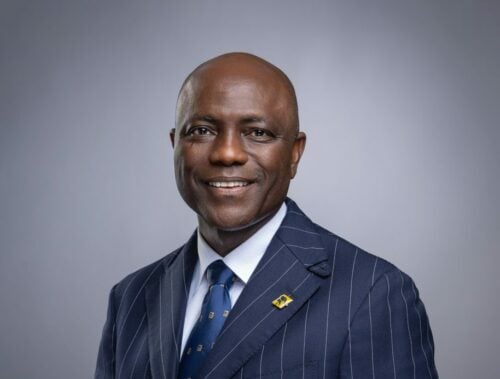
The Chief Executive Officer of FirstBank Group, Olusegun Alebiosu, has called on Nigerian businesses to sustain investments in environmental, social and governance (ESG) initiatives despite mounting economic pressures, including inflation, currency volatility, tightening capital and declining global appetite for ESG investments.
Alebiosu, who spoke on the theme, “The Adaptive Enterprise: Sustainability Strategies for Challenging Times,” at the inaugural Annual Sustainability Conference of the Sustainability Professionals Institute of Nigeria (SPIN) in Lagos, said the difficult operating environment should make sustainability more central to business strategy rather than treating it as a discretionary expenditure.
Represented by FirstBank’s Executive Director, Risk Management, Adebiyi Olagbami, the FirstBank CEO said the economic challenges confronting Nigerian businesses had underscored the need for organisations to embed sustainability into their core operations.
He said “Challenging times” were no longer an abstraction for Nigerian businesses, particularly in the banking sector, as currency volatility, inflation, capital tightening, and a global pullback in ESG appetite were exerting simultaneous pressure on balance sheets.
According to him, the tendency to suspend sustainability investments during periods of economic difficulty could expose businesses to greater risks and undermine their long-term growth prospects.
“The temptation in moments like this is to treat sustainability as a discretionary cost centre, something to pause until conditions improve. Our experience at FirstBank has been the opposite: the harder the environment, the more sustainability strategy earns its place as a core risk and growth discipline, not an add-on,” he said.
Alebiosu said FirstBank’s experience had demonstrated that resilience and sustainability could be pursued simultaneously, noting that the bank recorded gross earnings of N3.4 trillion in 2025 despite the challenging operating environment.
He explained that an effective sustainability strategy should not merely address environmental concerns but also strengthen business resilience, unlock new revenue opportunities and build stakeholder confidence.
“A credible sustainability strategy in this climate must do three things simultaneously: protect the institution from emerging environmental and social risk, open genuinely new sources of revenue, and hold the trust of customers, regulators, and communities who are increasingly sceptical of green claims that do not translate into action,” he said.
Also speaking at the conference, the Managing Director and Chief Executive Officer of the Nigeria Sovereign Investment Authority (NSIA), Aminu Umar Sadiq, said sustainability could no longer be treated as a peripheral consideration in corporate decision-making.
Sadiq, who was represented by the NSIA’s Executive Director and Chief Investment Officer, Kolawole Owodunni, said organisations must place sustainability at the centre of their strategies if they were to remain resilient and competitive.
“Sustainability can no longer sit at the margins. It belongs at the centre of how organisations make decisions,” he said.
He said the NSIA’s strategy was focused on strengthening the institution, scaling sustainable investments and developing partnerships capable of mobilising capital for national development.
According to him, the authority’s performance in the 2026 Global Sovereign Wealth Fund’s Governance, Sustainability and Resilience Scoreboard reflected the strength of its governance, sustainability and resilience practices.
Sadiq also described sustainable finance as an emerging competitive advantage for African businesses, stressing that it was increasingly becoming an important tool for directing capital towards productive and resilient investments.
“Sustainable finance is ultimately about using capital in a more intelligent way,” he said.
He added that NSIA’s accreditation by the Green Climate Fund had opened opportunities for the institution to develop and scale climate-finance investments.
Meanwhile, Marilyn Obasa Osula, Partner and Head, ESG, Sustainability and Climate Change at PwC, identified inadequate sustainability knowledge as one of the major constraints to effective ESG adoption among businesses and professionals.
Speaking during a panel session titled “Sustainable Finance as a Catalyst for Resilient Growth,” Osula said organisations required stronger professional capacity and structured knowledge to effectively integrate sustainability into their operations.
She disclosed that PwC had established a Sustainability Academy to address the knowledge gap and equip professionals with the skills required to navigate the evolving sustainability landscape.
“Structured knowledge is the real issue that distinguishes those that know and those that don’t know,” she said.
Osula noted that sustainability remained inadequately covered in many traditional academic programmes, stressing the need for more specialised training as businesses increasingly come under pressure to demonstrate credible ESG practices.
On his part, the Special Adviser to the President on Climate Finance and Stakeholder Engagement, Ibrahim Shelleng, said Nigeria had developed several policies to promote sustainability but needed to strengthen their implementation.
Shelleng called for greater support for private-sector players investing in the transition towards a low-carbon economy, noting that policy frameworks alone would not deliver the desired results without effective implementation and increased investment.
The Conference Chairman and Director of Advocacy and Stakeholders Relations at SPIN, Ismail Omamegbe, said the establishment of the institute and the inaugural conference reflected the growing importance of sustainability professionals in Nigeria.
He described the development of SPIN as challenging but said the institute remained committed to advancing sustainability practice and professional capacity in the country.
“Sustainability is a journey, it’s not a destination,” Omamegbe said, adding that the conference demonstrated the institute’s commitment to strengthening the sustainability ecosystem.
The conference brought together sustainability professionals, business leaders, policymakers and other stakeholders to examine strategies for strengthening corporate resilience, deepening sustainable finance and accelerating the adoption of sustainable business practices amid Nigeria’s economic challenges.
We’ve got the edge. Get real-time reports, breaking scoops, and exclusive angles delivered straight to your phone. Don’t settle for stale news. Join LEADERSHIP NEWS on WhatsApp for 24/7 updates →
Join Our WhatsApp Channel