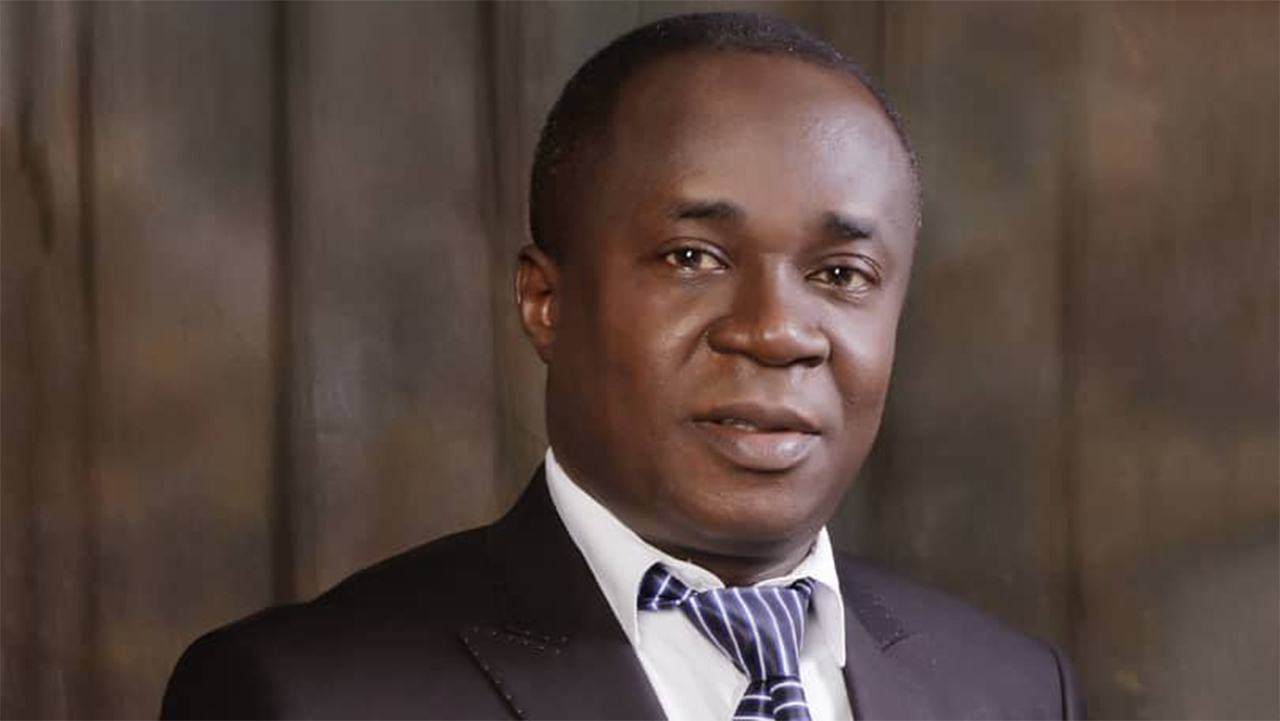
Nigeria’s first Professor of Capital Market, Uche Uwaleke has said for the country to diversify its debt portfolio and enhance debt sustainability properly, borrowing plans should be linked more to debt service ceilings than other debt indicators such as GDP.
“In order to optimally diversify the country’s debt portfolio, other external funding windows such as the growing renminbi (RMB) market should be explored with the overarching objective of securing the best deals that reduce borrowing costs,” Professor Uwaleke stated yesterday while delivering the 50th inaugural lecture of Nasarawa State University, Keffi with the theme “Unlocking Wealth And Leveraging Entrepreneurial Knowledge Ecosystem: Understanding Capital Harnessing Essentials.”
The university don also said that much as the Nigerian capital market has recorded remarkable improvements in the last decade, a number of challenges inhibit the realization of its potential. He said less than 15% of Nigeria’s GDP, the current size of the capital market constraints its role in national economic development.
“Also, the issuer base is not diversified with the NGX dominated by a few companies which leaves the market vulnerable to shocks. This is demonstrated by the fact that only 10 (out of 151 listed companies) account for over 60% of equities market capitalisation,” he stated.
Uwaleke said borrowing plans should be matched to debt service and not debt to GDP, adding that Nigeria’s consistency with the Financial Report Act 2007 and given the country’s huge debt burden, ‘governments should borrow only to fund projects that are self-liquidating’.
In 2025, Nigeria’s debt is projected to reach N187.79 trillion, which is equivalent to a debt-to-GDP ratio closer to 40%. This is due to rising borrowing costs, naira depreciation, and aggressive government borrowing.
The national 2025 budget allocated N16.3 trillion for debt servicing, which is a 96.75% increase from the previous year.
In his lecture, Uwaleke argued that the country’s immense idle resources can be unlocked by mobilizing funds from the capital market to develop the requisite skills and supportive environment, which he collectively referred to as “the Entrepreneurial Knowledge ecosystem.”
Professor Uwaleke identified weak domestic output, huge infrastructure gap, over-reliance on traditional borrowing instruments and reliance on the international debt capital market as major fiscal barriers to wealth creation in Nigeria.
Over the years, there is evidence to suggest that money raised from the debt capital market for capital projects ended up being used to meet recurrent needs in breach of the FRA 2007, a situation strongly criticised as misalliance. “This funding mismatch has worked against any effort to harness the country’s idle resources,” Uwaleke stated.
He also said that universities should be funded based on a formula which factor-in individual peculiarities and a desire to promote programmes in agriculture, medicine, ICT and Engineering with huge potential to positively transform Nigeria’s socio-economic landscape.
He said the government can provide incentives for universities to access long-term funding with a focus on supporting their entrepreneurial knowledge ecosystem.
Minister of Women Affairs, Imaan Suleiman-Ibrahim who represented Vice President Kashim Shettima said the federal government has adopted a practical approach to deepening market participation and positioning Nigeria as a prime destination for global investment. He said the implementation of the revised Capital Market Master Plan is restoring investor confidence and attracting new listings, including major entities like NNPC, Dangote Refinery, and LNG.
He said Professor Uwaleke’s contributions to the development of the capital market “exemplify the intellectual rigour required to enhance our capital market. His research, policies, and advocacy are instrumental in shaping its trajectory,” adding that “We must join him in reflecting on our shared responsibility to sustain and deepen the market and to strengthen collaboration between the government, private sector players, and academia.”
Vice chancellor of the university, Professor Sa’adatu Hassan Liman said the lecture is a testament to the university’s commitment to fostering academic excellence, innovation and contributing to the body of knowledge. She urged other professors that are yet to deliver their inaugural lectures to do so “for them to be fully established on their chairs.”
Chairman of the Presidential Committee on Fiscal Policy and Tax Reforms, Taiwo Oyedele said the lecture is critical in today’s Nigerian economic landscape. “This is a testament to the school’s commitment to innovation and knowledge building,” he said.
Chairman, Senate committee on Capital Market, Osita Izunaso said the federal lawmakers would be engaging with various stakeholders, including the university on capital market development. “We will partner with Nasarawa State University in the development of the capital market.”
We’ve got the edge. Get real-time reports, breaking scoops, and exclusive angles delivered straight to your phone. Don’t settle for stale news. Join LEADERSHIP NEWS on WhatsApp for 24/7 updates →
Join Our WhatsApp Channel