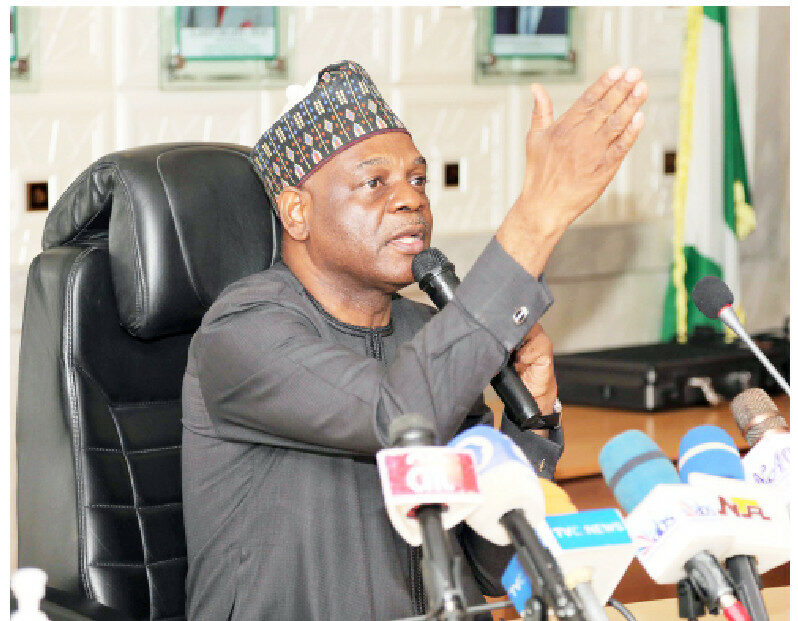
The 2025 edition of the Tertiary Education Trust Fund (TETFund) National Town Hall in Lagos offered a vivid showcase of Nigeria’s evolving higher education landscape.
Bringing together administrators, academic leaders, policymakers, and students, the gathering, held recently showed TETFund’s pivotal role in driving reforms, enhancing infrastructure, and fostering research and innovation across tertiary institutions.
Discussions and presentations also showed both the achievements of the fund and the collective vision for a more dynamic, globally competitive education sector.
At the heart of the town hall was a shared commitment to nurturing excellence in teaching, research, and learning.
Key sessions focused on the strides TETFund has made in supporting academic projects, strengthening institutional governance, and facilitating collaborations with international partners.
Attendees were not only witnesses to TETFund’s accomplishments but also active participants in shaping policies and programmes that will define the future of Nigeria’s tertiary education.
Chaired by Hon. Aminu Bello Masari, Chairman of the Board of Trustees, the event showcased not only TETFund’s achievements but also its evolving vision for the nation’s tertiary education landscape.
Speaking, Masari said the forum reflects its commitment to openness, accountability, and inclusive governance.
The Lagos edition followed the inaugural meeting in Abuja last month, signalling a deliberate effort by TETFund to extend its reach and dialogue nationwide.
“Tertiary education flourishes best when all stakeholders engage in a shared conversation about its direction, challenges, and potentials,” he said.
Masari also stressed the imperative of digital transformation in education. Through the TETFund Education Resource and Administration System (TERAS), administrative processes have been digitised, accountability improved, and project monitoring enhanced.
he platform also supports e-learning and digital literacy, vital tools for modern education, ensuring that Nigerian tertiary institutions remain competitive in a rapidly changing global landscape.
According to him, healthcare education has not been left behind. Eighteen Colleges of Medicine have received upgrades, with eight Medical Simulation Centres in the pipeline, providing students with globally recognised training.
He added that energy challenges are also being addressed, with N70 billion allocated in 2025 for sustainable mini-grid solutions across campuses, an initiative aimed at reducing operational costs, improving research output, and creating conducive learning environments.
Speaking on transparency and accountability, Masari emphasised that they are central to TETFund’s operations.
“The allocation of funds is structured to ensure fairness: 5% for administration, 4% automatically deducted by the Nigeria Revenue Service, and the remaining 91% allocated to direct disbursements and special interventions, including high-impact projects, zonal interventions, and disaster recovery.
“Such meticulous oversight ensures equitable coverage and maintains public trust in the Fund’s stewardship.”
Beyond infrastructure and funding, Masari restated the importance of shared responsibility.
He said institutions, host communities, industry partners, alumni, and civil society must collectively safeguard facilities, utilise them effectively, and cultivate a culture of maintenance.
“Tertiary education is not merely a sector; it is the engine that drives national transformation.”
The Board of Trustees, he noted, remains committed to enhancing collaboration, innovation, and shared purpose to realise this vision.
Reflecting on TETFund’s broader relevance, Anthony Kila, Jean Monnet Professor of Strategy and Development at the Commonwealth Institute for Advanced and Professional Studies, noted that Nigeria’s tertiary education system faces structural challenges, including inadequate and unstable funding, low research output, infrastructure gaps, and misalignment with national development needs.
“These challenges form the primary context within which TETFund operates. They shape the framework within which the Fund must be thoughtfully evaluated and appreciated.
Kila argued that TETFund’s relevance extends far beyond the construction of lecture halls and laboratories, saying that it must evolve into a strategic driver of knowledge, research, and innovation, focusing on research commercialisation, national research missions, private sector engagement, and accountability for tangible outcomes.
“Such an evolution, he suggested, would transform TETFund from a funder of projects into a cultivator of minds, a generator of ideas, and a catalyst for national competitiveness.
“To achieve this, stakeholders across the education ecosystem must adapt. Administrators must prioritise outcomes over mere infrastructure; academic and student unions must advocate constructively; civil society organisations must rigorously monitor projects; and media institutions must report on successes and inspire discourse around innovation and research”
Kila emphasised the need for a measurable national framework for research, performance-based funding, decentralised disbursement, robust digital infrastructure, and competitive research clusters, alongside faculty welfare initiatives and reconsideration of the Fund’s engagement with private institutions.
Also speaking, Dr Reuben Abati, said TETFund has emerged as a vital engine for the country’s higher education, significantly enhancing infrastructure, research, and human capital development.
Abati underscored TETFund’s pivotal role in strengthening universities, polytechnics, and colleges of education.
“No country rises above the quality of its education, nor can any system surpass the strength of its funding,” he said.
He described TETFund as central to Nigeria’s knowledge economy, providing not only buildings and ICT centres but also research funding, postgraduate sponsorships, staff training, and international exposure for lecturers.
Abati highlighted the Fund’s multidimensional impact from thousands of lecture halls, laboratories, and libraries have been renovated or built, while modern digital resources and ICT platforms have enhanced learning.
“The National Research Fund supports applied research across agriculture, health, technology, and social sciences, enabling innovation and informing national development policies. Scholarships, fellowships, and international training for lecturers strengthen academic quality, while equitable funding across institutions reduces historical inequalities.”
Despite these achievements, Abati acknowledged challenges, including bureaucratic delays, limited resources, political interference, and gaps in institutional capacity.
He said misconceptions about the Fund’s role, particularly expectations that it should replace government funding, have created pressures and shaped public perception.
He stressed the need for proactive communication, transparency, and stakeholder engagement to reinforce trust.
Looking ahead, Abati called for reforms to future-proof TETFund while advocating for digital dashboards, open contracting, stronger research design, commercialisation of research outputs, capacity-building for institutions, strategic investment in emerging technologies, and international collaborations.
“TETFund may not be perfect, but it is indispensable. Its strength, transparency, efficiency, and forward-looking approach are crucial if Nigerian universities are to compete globally and generate solutions for national challenges,” he said.
We’ve got the edge. Get real-time reports, breaking scoops, and exclusive angles delivered straight to your phone. Don’t settle for stale news. Join LEADERSHIP NEWS on WhatsApp for 24/7 updates →
Join Our WhatsApp Channel