I attended a birthday celebration last week hosted by a friend in Nigeria’s oil and gas sector. The room was filled with people whose work depends on crude prices—industry experts, executives, and familiar faces from my time in petroleum policy and public service. The evening was meant to be light, yet one subject kept returning: Venezuela.
Not the Venezuela of postcards, but Venezuela as a warning—a nation with vast oil reserves crippled by overdependence and poor planning. My peers debated contracts and risks. Yet the bigger worry, overshadowing technical talk, was clear: could Nigeria, facing the same vulnerabilities, be headed toward similar turmoil for its people?
The Ripple Effect of Market Instability
When oil markets wobble, it is households—not balance sheets—that feel the pain first. Leadership errors and optimistic budgeting translate into real costs: food exceeding wages, transport fares absorbing income, medicine turning scarce or costly, and school fees becoming an emergency. Crisis rarely arrives loudly. It seeps in, one price increase at a time, until families find themselves on the edge.
Venezuela’s story, therefore, felt less like distant news and more like a practical lesson in crisis leadership. Storms rarely begin with sirens. They start as faint rumbles: a foreign headline, a diplomatic flare-up, a market adjustment we treat as “not our problem.” Then the distance collapses. The storm becomes the exchange rate, the price of bread, the job that disappears, the budget that unravels.
Nigeria’s Budget Optimism
Until recently, Nigeria ended the year with cautious optimism. The numbers reflected it. At least 14 states—Akwa Ibom, Kano, Gombe, Bayelsa, Edo, Sokoto, Delta, Osun, Enugu, Imo, Ogun, Abia, Rivers, and Lagos—prepared budgets totalling more than 1 trillion naira. Nationally, the 2026 budget rose to about N58.18 trillion, built on a crude benchmark of $64.85 per barrel and a production target of about 1.84 million barrels per day—roughly 672 to 673 million barrels for the year—expected to bring in around $40.6 billion before deductions. Even when the National Assembly floated a lower benchmark of $60 per barrel, the working assumption remained that prices would hold steady.
But since January 3, 2026, Venezuela stands as stark evidence that oil markets are indifferent to Nigeria’s hopes. The core issue is not Venezuela alone; it is Nigeria’s risky habit of assuming best-case scenarios. If oil drops to $50 per barrel, Nigeria’s budget faces a $10.24 billion shortfall—a clear sign that optimism alone cannot shield us from real consequences for salaries, projects, and debt control.
Venezuela as Mirror of our Exposure
This is worrying because our fiscal space is already tight. Debt servicing and deficits are high, straining credibility even before new shocks. Add acknowledged revenue shortfalls, and it’s hard to ignore our vulnerability. Venezuela mirrors our exposure.
Yet trillions and billions can sound like distant mathematics. So we must translate them into lived experience. When oil earnings weaken, fewer dollars flow into Nigeria’s foreign exchange system. Scarcity rises, pressure on the naira intensifies, and purchasing power shrinks. For most Nigerians, a weaker currency is not a policy debate; it is higher prices for essentials—food, medicine, transport, and school fees. The same salary buys less, and small businesses that rely on imported inputs struggle to restock, plan, and price goods.
Inflation is never just a number. It is the slow erosion of dignity. Families cut back. People delay healthcare. Young Nigerians postpone training, relocation, and entrepreneurship because instability makes every step feel risky. When enough households tighten their spending, markets slow, informal workers earn less, and opportunities narrow.
Then comes investment, often with brutal speed. Global capital is unsentimental. It does not fall in love with countries; it follows risk-adjusted returns. If Venezuela becomes “derisked”—if sanctions ease, compliance concerns reduce, and Western service providers, insurers, and financiers regain comfort—capital will move. It is not wickedness; it is the logic of finance. But if capital runs to Venezuela, it does not leave Nigeria a consolation prize. It leaves us with fewer options.
Those options matter because investment is not only about foreign exchange comfort; it is about jobs. When the private sector pauses expansion and tightens hiring, the consequences land first on young Nigerians already trying to build adult lives in an economy where employment feels scarce.
Government spending—often the loudest domestic engine—also shrinks when revenue tightens. Cutbacks do not only affect large contractors. They reduce work for artisans, suppliers, transporters, and the many small businesses that orbit public projects. Less government activity means less circulation of money in communities.
All of this is unfolding while Nigeria’s oil sector is already battling internal weaknesses: underinvestment, theft, vandalism, operational inefficiency, and ageing fields with declining output. We have struggled to meet production targets even before external shocks appear. The larger danger is not only falling prices, but falling prices meeting a weak foundation—plans built on hope while the base is compromised.
And there is a political complication we cannot ignore: 2027. As elections draw near, fiscal pressure typically rises. Demand for foreign exchange intensifies. Spending becomes more politicised. The temptation to postpone hard decisions grows, and the instinct to promise more than the treasury can sustain becomes stronger. In such a season, discipline is most needed—and discipline is often the first casualty.
Venezuela and Key Lessons for Nigeria
So what are the key lessons for leadership while the warning is still only an echo?
It demands conservative budgeting: in a volatile oil market, prudence is governance, not pessimism. It demands speed with truth, because citizens endure hardship better than surprise, and markets respond better to candour than denial. It demands protection for the vulnerable and treats social stability as an asset worth defending.
It also demands smarter non-oil revenue—fair, credible reforms that people can trust—because taxation without visible public value feels like punishment. And it demands value addition: breaking the absurd cycle of exporting crude and importing refined products at a higher cost. When foreign exchange tightens, domestic processing is not a slogan; it is a strategic shield.
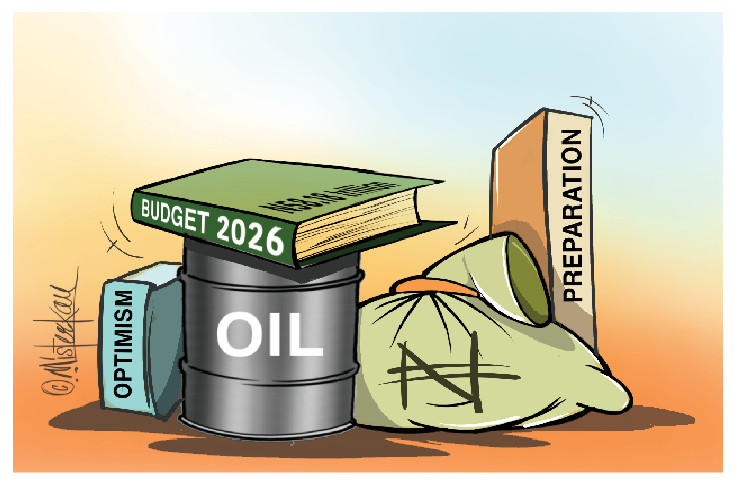
Above all, leaders must treat optimism and preparation as separate actions: confidence does not replace the need for a real plan. The main takeaway is that seriousness about fiscal discipline and clear-eyed planning is essential for Nigeria to avoid Venezuela’s fate.
That night, even as the celebration went on, I noticed how often Venezuela returned to the conversation, as if everyone was scanning the horizon for the next sign. It reminded me that national crises do not always begin in Abuja. They often start far away, in markets that do not care about our feelings. But the difference between countries that survive storms and those that collapse is rarely luck. It is preparation.
These echoes are urgent warnings. Nigeria does not have to repeat Venezuela’s fate, but if we ignore the lessons—clinging to overdependence and letting politics trump economics—we invite instability. This is the real threat: instability that infiltrates homes and lives silently. The time to prepare is now, before echoes become crises.
w
We’ve got the edge. Get real-time reports, breaking scoops, and exclusive angles delivered straight to your phone. Don’t settle for stale news. Join LEADERSHIP NEWS on WhatsApp for 24/7 updates →
Join Our WhatsApp Channel