The European Union (EU) has said education remains one of its top priorities in Nigeria, especially in addressing the challenge of out-of-school children and improving access to quality learning.
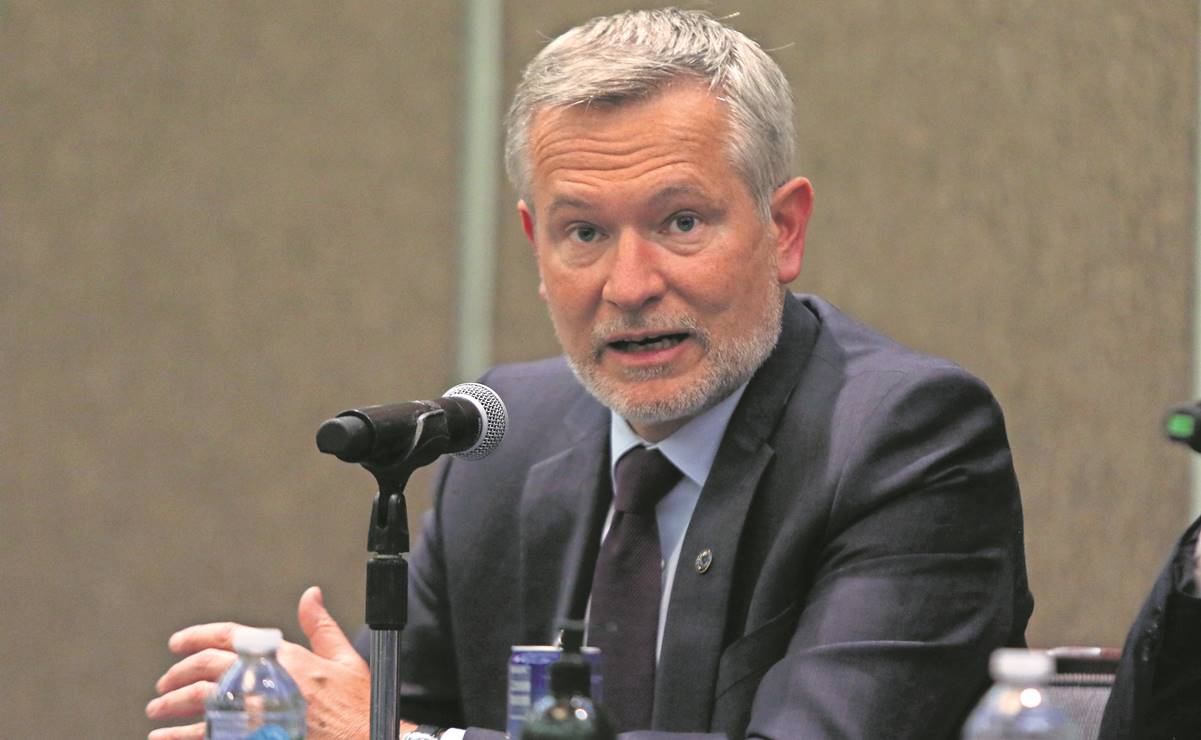
EU Ambassador to Nigeria and the Economic Community of West African States (ECOWAS), Gautier Mignot, stated this during a visit to the Tsangayar Ma’ahad Gwani Dan Birni Qur’anic Centre in Kano.
The visit was part of the ambassador’s tour of education intervention projects supported by the EU through the Education and Youth Empowerment Programme in Northwest Nigeria (EYEPINN), implemented by the United Nations Children’s Fund (UNICEF) and other partners.
Mignot, who led a delegation of EU member states ambassadors, said the organisation was committed to supporting Nigeria’s development through strategic investment in education in order to ensure that children who are outside the formal school system are given opportunities to access learning.
“Education is one of our top priorities to help out-of-school children integrate into schools in Nigeria,” Mignot said.
He explained that the intervention at the Qur’anic centre was designed to combine Islamic education with basic literacy, mathematics and language studies to provide children with a broader learning experience.
According to him, education remains a key tool for development, adding that the EU would continue to support programmes that create opportunities for children and young people.
“We have many ties with Nigeria and West Africa — human, historical and cultural ties. We want Nigeria and the region to do well, and education is a powerful tool to achieve that,” he said.
The ambassador added that the EU was also supporting Technical and Vocational Education and Training (TVET) programmes to equip young people with practical skills for self-reliance, noting that, beyond increasing school enrolment, the quality of education provided to children was equally important.
The UNICEF Representative in Nigeria, Wafaa Saeed, said the education programme supported by the EU was designed to reach about 1.2 million children through different interventions across several states.
She said the partnership was aimed at supporting government efforts by developing sustainable education models that could be replicated using public resources.
“We are looking at models that the government of Nigeria and the people of Nigeria can replicate. We are supporting government efforts,” Saeed said.
Meanwhile about 350 pupils were said to be currently enrolled under the integrated learning programme at the facility.
A former student of the school, Aisha Mohammed Tahir, who is now a teacher, said the programme had changed her life by giving her access to both Qur’anic and western education.
Tahir said the combination of both systems helped her acquire knowledge and skills, which later enabled her to study education at university and return to contribute to the development of other learners.
We’ve got the edge. Get real-time reports, breaking scoops, and exclusive angles delivered straight to your phone. Don’t settle for stale news. Join LEADERSHIP NEWS on WhatsApp for 24/7 updates →
Join Our WhatsApp Channel