
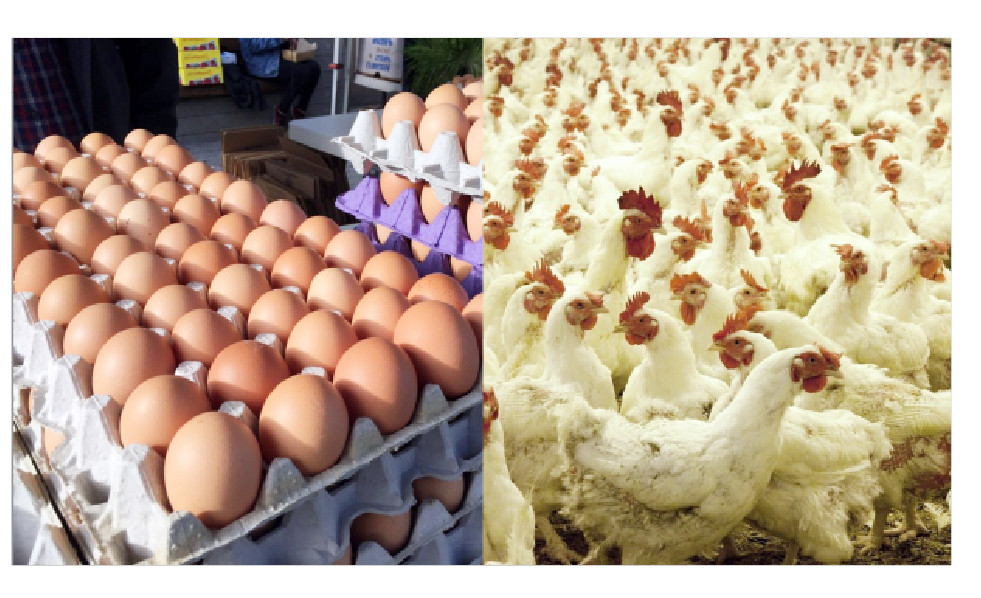
Nigeria faces egg shortage in the coming weeks as rising temperatures, high feed costs, and a shortage of day-old chicks are disrupting poultry production across the country with farmers warning that the situation could push egg prices higher and tighten supply in the coming months.
These factors are undermining poultry farms’ ability to maintain laying‑flock numbers.
Traders and farmers warn that dwindling supplies could push retail egg prices higher again, compounding the strain on low‑income households already grappling with food inflation.
Industry reports show day‑old chick prices have surged by about 67 per cent within the first three months of 2026, with some chicks now selling for as much as N1,800–N2,000 compared with N400–N600 a year ago.
Poultry farmers say this makes it harder to restock farms, especially for small‑scale producers, forcing many to cut back laying‑hen numbers and delay expansion plans.
At the same time, many farms are grappling with higher temperatures and erratic power supply, which reduce hens’ feed‑conversion efficiency and increase mortality.
Heat stress shortens laying cycles and can push operational costs up, further squeezing margins and discouraging fresh investment in egg‑oriented poultry.
Findings by LEADERSHIP show that many poultry operators are struggling to restock their farms, while others report declining output due to heat stress and rising input costs.
Across major markets such as Lagos, Kano, and Abuja, traders report tightening egg flows and occasional spot shortages, with average crate prices climbing above recent lows.
While some regional associations argue that “structural” scarcity is not yet nationwide, they acknowledge that patchy supply and price spikes in certain cities are making eggs less affordable for many families.
With the Easter season demand and the upcoming back‑to‑school period on the horizon, farmers and retailers expect demand to outstrip the constrained supply, especially if chick availability does not improve.
A staff member at Bill Farm Agro Allied Ventures, Paul Emmanuel, said the surge in the cost of day-old chicks had made it difficult for farmers to maintain previous production levels.
“The increase in the price of day-old chicks has affected our production. We are not producing at the level we used to.
“When we sell off old birds, it is difficult to replace them immediately because the chicks are costly and not always available,” he said.
Emmanuel also identified feed cost as a major burden on poultry farmers, noting that prices have risen sharply in recent months.
“Feed remains a major challenge. The cost has increased significantly, and it is affecting our operations,” he said.
At Pedro S. Farm House Ltd, the manager, John Wakawa, told LEADERSHIP Friday that heat stress is further worsening the situation by reducing egg production.
“Heat is a major issue. When the temperature is too high, it affects the birds and reduces their egg production.
“High cost of feed does not stop birds from laying eggs, but if they are not properly fed or are stressed or sick, production will drop,” he said.
The situation has pushed the cost of eggs higher in 2026, with many markets now seeing crate prices at or above recent peaks and individual eggs often in the N250 to N300 range in major cities.
In Kano, for example, a single egg now sells for about N250, up from roughly N200 in recent weeks, while the cost of a crate has climbed from a pre‑Ramadan price of about N6,000/N6,500 to about N8,500.
In Lagos and other urban centres, traders and consumers report that crates commonly move between N5,500 and N6,500, with some locations exceeding these levels as supply tightens.
Wakawa noted that egg prices had already increased compared to last year, rising from about N4,500 per crate to over N6,500 in many areas.
“We are operating at a high cost. If we don’t adjust prices, we will run at a loss,” Wakawa added.
A market survey by LEADERSHIP Friday shows that egg prices have continued to climb in recent months. As of December 2025, a crate sold for between N5,300 and N5,500 in many markets.
However, current checks indicate prices now range from about N6000 to as high as N7,500, depending on size and location.
A small-scale seller, Aisha Immukurusum, said she previously bought a crate at N5,300 and sold eggs at N200 each.
“Now I buy at about N6,000 and sell at N250 per egg,” she said.
Another trader, Mercy Kaduri, said prices have risen even higher in some cases.
“In December, it was around N5,500 per crate, but now it is between N6,500 and N6,800 depending on the size,” she said.
Catherine Jack also confirmed supply delays, noting that eggs are no longer as readily available as before.
“It is not as easy to get as before. Sometimes you have to wait before suppliers bring eggs,” she said.
Adding another perspective, Fatima Abubakar, a major egg distributor in Abuja, said rising production costs are being passed down the value chain.
“Farmers have no choice but to increase prices. This affects the market, retailers, and eventually consumers. We expect egg prices to keep rising if the government doesn’t intervene,” she said.
Meanwhile, veterinary consultant, Dr Kenneth Adamu, highlighted health management as a critical factor in sustaining production.
“Birds under heat stress are more susceptible to disease, and many farmers lack adequate veterinary support. Poor management, combined with high feed costs, creates a perfect storm for reduced production,” he said.
From rural areas, small-scale farmer Chinedu Okeke, who runs a 300-bird farm in Tudunwada, Lugbe, said the shortage of chicks has hit local farmers hard.
“Sometimes we wait weeks before we can get day-old chicks. When they arrive, the prices are too high for small farmers. Many of us are thinking of cutting down our stock because it’s no longer sustainable,” he said.
Another smallholder in Kuchingoro Airport Road, Abuja, Aisha Sule, said she had already reduced her flock size due to the high costs of feed and medication.
“It is heartbreaking to reduce my birds, but I can’t afford to feed them properly,” she said. “If things don’t improve, eggs will become too expensive for ordinary people.”
Providing an industry-wide perspective, the president of the Poultry Association of Nigeria (PAN), Muhammad Magaji Gettado, said the cost and availability of day-old chicks are largely driven by feed prices, demand, and hatchery booking patterns.
“Day-old chicks’ availability and price increases are influenced by feed costs, demand, and advance bookings from hatcheries within the industry,” he said.
Gettado noted that recent government policies allowing the importation of grains have helped reduce feed costs by lowering the prices of locally produced maize and other inputs.
“Government policy permitting grain imports has helped crash the prices of locally cultivated grains, thereby reducing feed costs and encouraging poultry farmers who previously exited the business to return,” he said.
He, however, called for sustained intervention, particularly in crop production, to stabilise the poultry sector.
“The government should subsidise fertiliser for farmers to encourage the cultivation of maize and soya at lower production costs. This is vital to sustaining affordable feed prices and ensuring that poultry farmers remain in business,” he added.
According to him, strengthening the value chain would help guarantee sufficient supply of chicken and eggs, contributing to Nigeria’s food security.
Economist and agriculture analyst, Dr. Samuel Eze, warned that the current challenges could have wider implications.
“The poultry sector is crucial for protein supply in Nigeria. If restocking remains difficult and feed prices keep rising, we could see a national spike in egg prices. Government support and policy interventions are urgently needed to stabilise the sector,” he said.
Farmers warn that without urgent intervention to support feed costs, improve access to day-old chicks, and promote heat-resilient poultry practices, egg prices could soar further.
We’ve got the edge. Get real-time reports, breaking scoops, and exclusive angles delivered straight to your phone. Don’t settle for stale news. Join LEADERSHIP NEWS on WhatsApp for 24/7 updates →
Join Our WhatsApp Channel