In 44 BC, Julius Caesar fell not only to the swords of senators but to betrayal and the exposure of confidential intentions. Letters were leaked, whispers amplified, and confidences broken, and the Roman Republic watched helplessly as history was reshaped. Across the centuries, from the courts of Renaissance Europe to the corridors of Tudor England, the mismanagement of secrets determined careers, reputations, and the survival of entire regimes. Even during the Cold War, the interception of a single conversation could provoke crises that spanned continents and decide the fate of nations.
Nigeria, for all its modern institutions, participates in this historical continuum, but with a twist. Here, leaks and breaches rarely topple careers, rarely provoke sustained investigation, and rarely threaten governments. Instead, they are absorbed, tolerated, sometimes even rewarded. The repeated astonishment at each new disclosure is less a reflection of novelty and more of selective memory. We are shocked not because breaches are extraordinary, but because we have perfected the art of forgetting what history has already taught us.
Alleged NSA Interception: El-Rufai Speaks
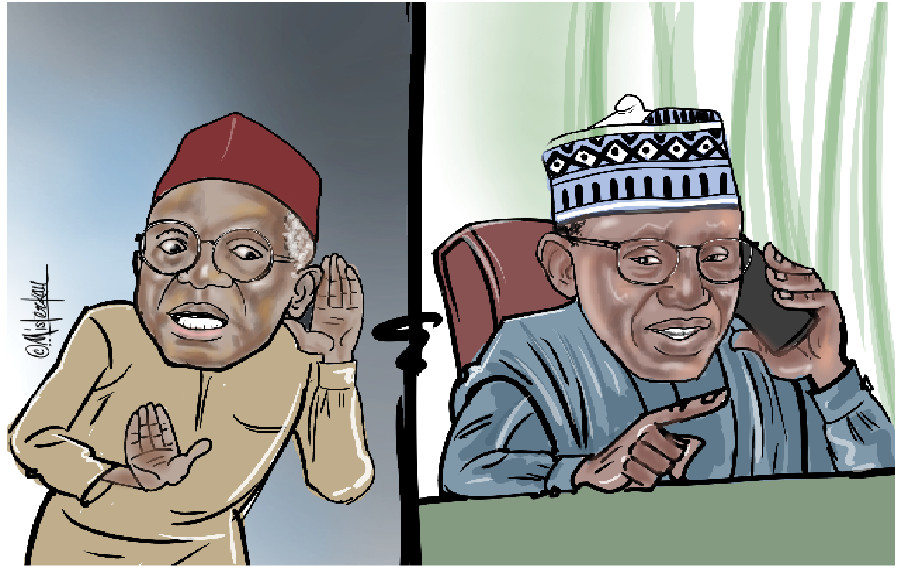
Last week, Nasir El-Rufai told the nation on television that he had allegedly listened to a phone conversation involving Nuhu Ribadu. According to him, Ribadu had instructed security operatives to effect his arrest. El-Rufai admitted that the act was illegal, but delivered the confession with such calm detachment that it resembled the casual reporting of a weather forecast rather than a claim implicating the nation’s top security apparatus.
Whether true or not, the allegation is deeply troubling. If the NSA’s communications can be intercepted, the very foundation of Nigeria’s national security is called into question. Yet, at the time of writing this piece, no technical audit, no independent verification, and no counterintelligence report have been produced or made public. The questions that ought to dominate public discourse are urgent: who controls sensitive information? How robust are systems protecting state secrets? Why do we continue to respond with spectacle rather than disciplined institutional inquiry?
In most functioning democracies, such a confession would trigger forensic review, parliamentary oversight, and judicial scrutiny. In Nigeria, it has generated fragmented outrage, social media commentary, and collective resignation. The audacity is extraordinary, but familiarity has dulled the shock.
The Villa Documents That Never Saw Justice
This alleged interception or leak is not the first time sensitive information has moved with alarming ease in Nigeria. In his memoir, The Accidental Public Servant, El-Rufai recounts that during his self-imposed exile following a political dispute with the then Nigerian president. Umar Musa Yar’adua, a woman inside the Presidential Villa allegedly sent him copies of classified documents. These were official and sensitive documents intended to remain strictly within the Villa.
Yet the episode to the best of my knowledge produced no investigation, no prosecution, and no effort to secure the office. The woman vanished without consequence. The state’s silence spoke volumes. Breaches could occur, and when politically convenient, they would be tolerated. Historical parallels are instructive. In Tudor England, the misuse of confidential information could result in imprisonment, exile, or execution. During the Cold War, leaks of sensitive intelligence could provoke crises. In Nigeria, they became anecdotal, absorbed into memoirs, and circulated quietly in political circles. The audacity was extraordinary, yet the response negligible.
This history of tolerance explains the public shock over the alleged phone tapping. Precedent exists, yet collective memory behaves as if each revelation is unprecedented.
NICON, Jimoh Ibrahim, and Segun Adeniyi’s Account
If the Villa episode reads like a ghost story, the NICON Insurance saga reads like political theatre, complete with timing, influence, and audacity. According to Segun Adeniyi, in his book Power, Politics and Death, a presidential meeting was convened to discuss the sale of NICON Insurance to Jimoh Ibrahim. The meeting ended, and not more than ten minutes later, Ibrahim called to express his displeasure at Adeniyi’s account, complaining that it did not reflect the fact that they were friends.
Consider the implications. A highly confidential discussion, attended by fewer than ten participants, produces an immediate response from a private beneficiary. The breach is instantaneous, unmistakable, and entirely unaddressed. Jimoh Ibrahim went on to become a senator and is now an ambassador-designate. The state tolerated the breach, absorbed it, and the beneficiary prospered.
History offers striking parallels. In the courts of Louis XIV, misuse of privileged information could exile ministers; in Elizabethan England, a single leak could end careers or reputations. Even in contemporary democracies, breaches of official deliberations carry consequences, including resignations, inquiries, or legal sanctions. Nigeria, by contrast, converts breaches into anecdotes, tolerates them when convenient, and only displays selective shock when the public spectacle demands it.
The lesson is clear. Access to information, rather than legality or ethics, often dictates consequence in Nigerian politics. The audacity becomes normalized, while the public astonishment becomes performative.
The Pattern of Predictable Breaches
Taken together, the Villa documents, the NICON affair, and the alleged NSA phone interception reveal a persistent pattern. Sensitive information leaks. Accountability is inconsistent. Political careers remain unscathed. Institutions absorb the breaches. The public reacts with gasp, commentary, and occasional humour—but the underlying vulnerability persists.
Historical analogies abound. Roman senators, Renaissance courtiers, Tudor ministers, and Cold War intelligence officers all suffered when information was mishandled, secrets exposed, and accountability enforced. Nigeria’s leaks are not fatal; they are performative. The audacity is extraordinary, the spectacle entertaining, and the public reacts with amusement and indignation. Yet structural fragility remains.
These episodes raise pressing questions. Have internal audits been conducted at the NSA? Were independent investigations commissioned? Are the lines of communication genuinely secure? Why do some breaches provoke inquiry while others are tolerated? And most importantly, why do citizens act astonished at outcomes that political experience, precedent, and history predict?
Between Confession and Amnesia
There is a dark humour to Nigeria’s politics. Citizens and officials are repeatedly shocked by breaches that are entirely predictable. The Villa documents, the NICON deliberations, and the alleged NSA interception are neither isolated nor unprecedented. They are structural features of governance, tolerated because enforcement is selective, consequences uneven, and political advantage prioritized over institutional integrity.
Until systemic reforms are applied—audits conducted, independent verification mandated, and accountability enforced—this cycle of revelation, shock, and forgetting will continue. El-Rufai’s alleged confession, like the Villa documents and the NICON episode, is both a warning and a mirror: a warning about the fragility of information control, a mirror reflecting the tolerance of breaches, and a reminder that spectacle is not reform.
Nigeria will continue to gasp, comment, circulate memes, and move on. The leaks will persist, the listening will quietly continue, and the audacity of political actors will remain undiminished. The question is whether citizens will finally insist upon disciplined institutions, transparent processes, and consistent accountability—or remain trapped in a theatre of repeated astonishment.
The nation must reflect: can we afford the luxury of surprise in a system that has made breaches a predictable part of governance? Can institutions continue to function effectively if sensitive communications, discussions of national assets, and the highest levels of strategic planning are vulnerable to interception, gossip, and opportunistic advantage? Until we demand enforcement, transparency, and accountability regardless of status, the theatre will continue, and the cycle of astonishment will repeat itself endlessly.
We’ve got the edge. Get real-time reports, breaking scoops, and exclusive angles delivered straight to your phone. Don’t settle for stale news. Join LEADERSHIP NEWS on WhatsApp for 24/7 updates →
Join Our WhatsApp Channel