The Centre for the Promotion of Private Enterprise (CPPE) has warned that persistent challenges in electricity supply, logistics, insecurity and high interest rates could undermine Nigeria’s next phase of economic growth, urging the Federal Government to shift the focus of its reforms from macroeconomic stabilisation to productivity.
The Centre said that although recent reforms had delivered improvements in macroeconomic stability, foreign exchange market conditions, government revenue and investor confidence, productive sectors of the economy remained constrained by high operating costs and structural bottlenecks.
The CPPE made the assessment while reacting to the 11-point economic reform scorecard released in Abuja on August 19, 2026, by the Minister of Finance and Coordinating Minister of the Economy, Prof. Taiwo Oyedele.
The scorecard, which assessed the performance of the administration’s economic reforms between May 2023 and December 2025, highlighted changes in government revenue, inflation, the cost of living and other key economic indicators.
In a statement, CPPE Director-General, Dr. Muda Yusuf, commended the Minister for presenting the reform scorecard, describing the initiative as important for transparency and credibility in the reform process.
Yusuf said, “The Minister of Finance should present a reform scorecard and provide clarity on fiscal and macroeconomic outcomes. The Centre described the transparency as critical to reform credibility.”
According to him, government revenue had strengthened, the foreign exchange market had stabilised, external reserves had improved, and investor confidence had recovered.
He also noted that real Gross Domestic Product (GDP) growth rose to 3.89 per cent in the first quarter of 2026, compared with 3.13 per cent recorded in the corresponding quarter of 2025.
However, the CPPE DG warned that the improvements in macroeconomic indicators had yet to translate into sufficient relief for businesses operating in productive sectors.
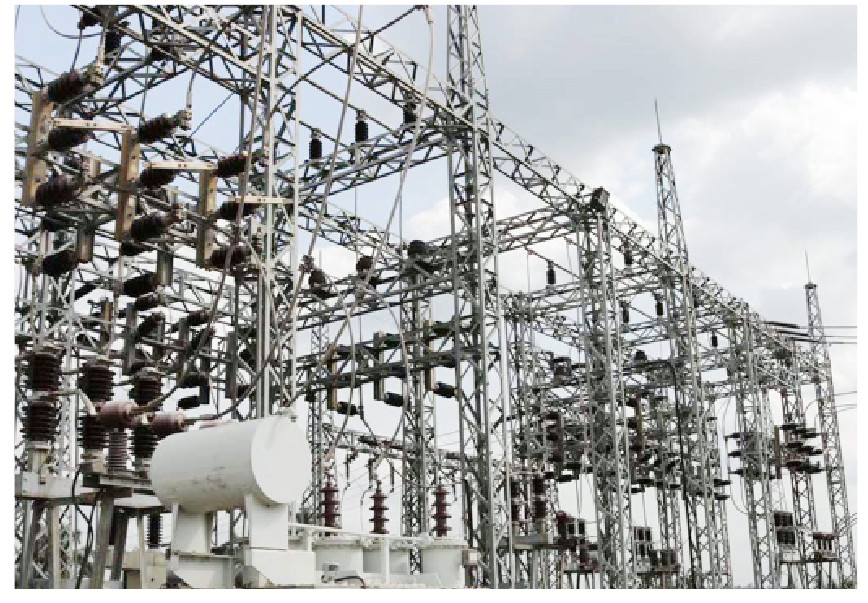
Despite the gains, Yusuf said, “The supply side of the economy remains under pressure. The electricity sector contracted by 15.3 per cent in Q1 2026, while manufacturing grew by 3.29 per cent and agriculture by 3.15 per cent.”
He identified electricity, logistics, insecurity, agricultural productivity, infrastructure, regulatory costs and the cost of capital as the major structural constraints confronting the economy.
He stated that, “Nigeria’s major constraints are increasingly structural: electricity, logistics, insecurity, agricultural productivity, infrastructure, regulatory costs and the cost of capital.”
He stressed that tackling these constraints would be critical to sustaining economic expansion, noting that high operating costs continued to undermine the competitiveness of Nigerian businesses.
He explained that “accelerating productive-sector growth requires a decisive reduction in these structural costs.”
On trade policy, Yusuf called for measures that would protect domestic productive capacity without denying businesses access to essential inputs.
He said industries and agricultural producers with credible local capacity should receive calibrated protection against unfair import competition, while manufacturers should continue to have access to critical inputs that were not adequately available locally.
The Centre also raised concerns over the prevailing high-interest-rate environment, which it said was placing significant pressure on businesses and limiting access to affordable capital for investment and expansion.
Yusuf therefore urged stronger coordination between fiscal and monetary authorities to create room for a gradual reduction in interest rates as inflation moderates.
He, however, cautioned that any easing of monetary conditions must be carefully managed to avoid undermining macroeconomic stability.
According to him, the government must sustain the current reform trajectory rather than reverse policies that had begun to improve confidence in the economy.
The CPPE warned that reversing the reforms could undermine investor confidence, weaken fiscal stability and reintroduce distortions into the economy.
It therefore advised the government to sustain the reform momentum while continuously recalibrating policies based on evidence and their impact on businesses and households.
The Centre said the next phase of reforms must move beyond stabilising macroeconomic indicators to addressing the structural constraints that directly affect production, investment, employment and competitiveness.
Yusuf said the focus should now be on creating an environment in which businesses can operate with lower energy, logistics, and financing costs, enabling the productive sectors to contribute more significantly to sustainable economic growth.
We’ve got the edge. Get real-time reports, breaking scoops, and exclusive angles delivered straight to your phone. Don’t settle for stale news. Join LEADERSHIP NEWS on WhatsApp for 24/7 updates →
Join Our WhatsApp Channel