More than 262,000 young African entrepreneurs who applied for funding from the Tony Elumelu Foundation (TEF) in 2026 were unsuccessful, highlighting the financing gap confronting businesses across the continent.
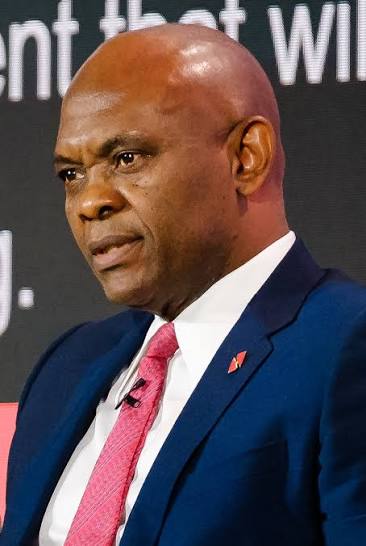
The group chairman of Heirs Holdings and Founder of the Tony Elumelu Foundation, Tony Elumelu, disclosed this while delivering the keynote address at the 25th WIMBIZ Annual Conference in Lagos.
Elumelu said the foundation received 265,529 applications from young Africans seeking support for their businesses but could only fund 3,200, representing approximately one in every 83 applicants.
He described the figures as evidence that Africa’s challenge was not a shortage of entrepreneurial talent but inadequate capital to support businesses capable of creating jobs and driving economic growth. “This is not a shortage of entrepreneurial talent; it is a shortage of capital,” he said.
He called on African pension funds, insurance companies, banks and family offices to increase investments in local businesses, arguing that the continent must mobilise domestic capital to finance its development rather than depend on foreign aid.
“The most important thing Africa needs to build in the next decade is African capital that invests in Africa,” he said, adding that declining foreign aid budgets have reinforced the need for African countries to develop sustainable sources of funding for businesses and productive investments. “Aid at its best kept people alive. It rarely made them owners. The future is investment and trade, not aid,” he said.
Elumelu also identified unreliable electricity, inadequate value addition and limited access to capital as major obstacles preventing Africa from translating its natural resources into economic prosperity.
He said industrialisation would remain difficult without reliable electricity to support manufacturing, healthcare, education and emerging technologies. “Factories cannot run without it. Hospitals and schools cannot function without it. And the AI economy everyone is talking about has two basic ingredients: power and connectivity,” he said.
On value addition, he urged African countries to move away from exporting raw commodities and importing finished products, insisting that more economic value must be created within the continent.
“Why ship raw lithium, raw cocoa, raw crude out of this continent? Refine it. Process it. Brand it. Then sell it to the world,” he said as he called for stronger intra-African trade, disclosing that less than 20 per cent of the continent’s trade takes place among African countries.
Elumelu lamented that moving goods from Lagos to Liverpool was easier than transporting them from Lagos to Luanda, attributing the situation to inadequate infrastructure, inefficient customs procedures and regulatory barriers.
He said the African Continental Free Trade Area (AfCFTA) would remain largely theoretical without investments in roads, railways, ports, payment systems and efficient customs procedures. “We cannot build a continental market merely by signing documents,” he said.
On women’s economic participation, Elumelu disclosed that he and his wife, Dr Awele Elumelu, had invested more than $120 million in 24,633 entrepreneurs across all 54 African countries through the foundation over 15 years.
He said women accounted for 48 per cent of the beneficiaries, whose businesses had collectively created more than 1.5 million jobs and generated over $4.2 billion in revenue. He noted that women entrepreneurs recorded strong business performance, particularly in reinvestment and employment generation.
Elumelu also disclosed that women occupied 80 per cent of senior management positions at Transcorp, while eight women served as chairpersons or chief executives across businesses within Heirs Holdings.
He urged corporate leaders to promote qualified women into leadership positions, insisting that women’s economic participation was essential to competitiveness. “Women’s economic leadership is not a concession to fairness. It is a requirement for competitiveness,” he said.
On attracting investments, Elumelu said Africa must strengthen its institutions, ensure policy consistency and protect investors’ interests, noting that capital would only flow into economies where businesses could operate with confidence.
He urged governments to strengthen accountability and ensure contracts were honoured, while calling on private sector operators to promote transparency, proper tax compliance and good corporate governance
Elumelu said Africa’s growing working-age population, mineral resources and expanding consumer market presented enormous commercial opportunities, but warned that these advantages would not automatically translate into prosperity without deliberate investments.
We’ve got the edge. Get real-time reports, breaking scoops, and exclusive angles delivered straight to your phone. Don’t settle for stale news. Join LEADERSHIP NEWS on WhatsApp for 24/7 updates →
Join Our WhatsApp Channel