All 11 local government areas in Gombe State recorded relatively low scores in a primary healthcare performance assessment, with the council ranked highest, scoring just 38.3 per cent, raising questions about local government leadership, supervision, and accountability in managing grassroots healthcare services.
The assessment ranked Gombe LGA first with 38.3 per cent, followed by Billiri with 35.8 per cent and Kaltungo with 35.2 per cent.
Yamaltu-Deba scored 34.6 per cent, Funakaye 32.1 per cent, while Shongom recorded 31.8 per cent, according to findings presented at the 2026 third-quarter review meeting of the Gombe State Taskforce on Primary Healthcare. The results indicate that none of the six highest-ranked LGAs achieved 40 per cent.
The poor scores come despite years of government interventions aimed at strengthening primary healthcare delivery, including facility revitalisation, recruitment of health workers and investments in health information systems.
At the recent review meeting, Deputy Governor Manassah Jatau, who chaired the state taskforce, expressed concern over the generally low performance and urged local government chairmen to take greater responsibility for improving healthcare delivery.
He called on council chairmen to undertake regular visits to primary healthcare facilities, strengthen supervision, motivate health workers and ensure accountability in the management of healthcare services.
Jatau also stressed the importance of documenting official activities, resolutions and follow-up actions, noting that monitoring efforts must be supported by verifiable records.
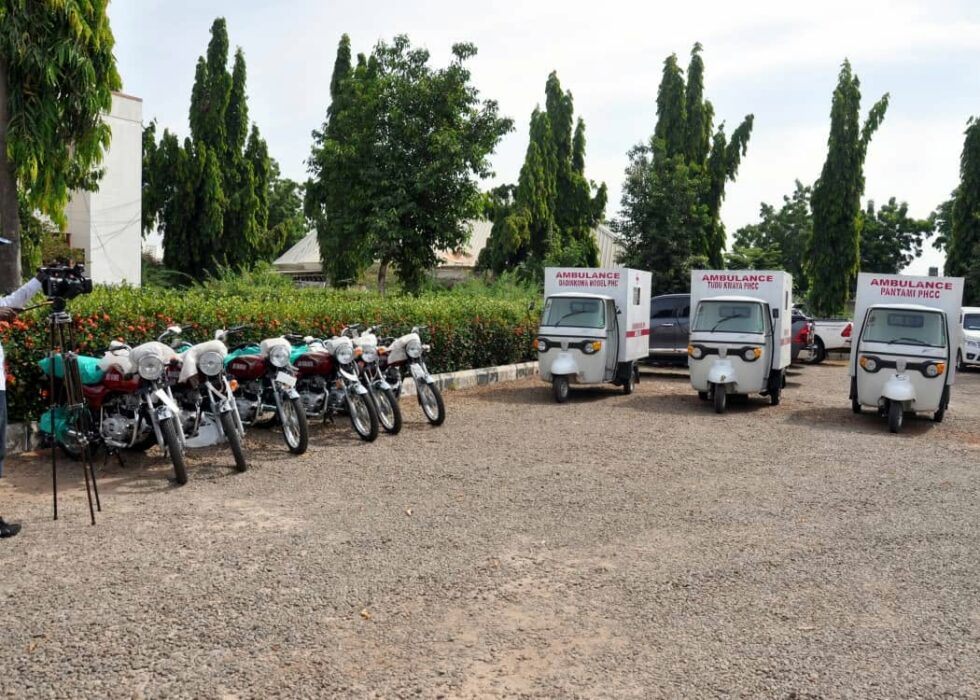
At the review meeting, the state government also announced the provision of three tricycle ambulances, one for each senatorial district, alongside six motorcycles and three laptop computers for Gombe, Billiri and Kaltungo LGAs to strengthen emergency referrals, field supervision and data management.
The state also announced the approval of N46 million in counterpart funding for the November and December 2026 immunisation rounds and maternal, newborn and child health interventions.
The Executive Secretary of the Gombe State Primary Health Care Development Agency, Dr Abdulrahman Shaibu, said the state had attained 97 per cent preparedness for the forthcoming immunisation exercise.
There are Challenges
The concerns reflect broader institutional challenges identified in a January 2026 study published in the Pan African Medical Journal, titled Transforming the health system in Gombe State: Accomplishments, Challenges and the Next Frontier.
The study, which documented discussions at the state’s October 2025 health summit, identified inadequate health personnel in rural communities, uneven distribution of workers, weak local government capacity in planning and budgeting, and gaps in supervision as persistent constraints to effective healthcare delivery.
It also identified shortages of equipment, unreliable electricity and connectivity, and periodic stock-outs of essential medicines and medical consumables in some revitalised primary healthcare facilities.
These challenges raise questions about whether investments in infrastructure and personnel are being matched by effective management and oversight at the local government level.
A separate 2025 public expenditure tracking survey conducted by the Gombe State Government in partnership with UNICEF also identified weaknesses in the flow and documentation of primary healthcare funds.
The survey, which covered 114 health facilities across the state’s 11 LGAs, found a 47 per cent decline in routine immunisation funding between the central and local levels.
It also identified an 88.4 per cent discrepancy between funds reported as disbursed by the State Primary Healthcare Development Agency and amounts reported as received by local government authorities.
The study further documented delays of between four and 35 days in fund transfers, as well as differences in routine immunisation visits reported at LGA and health facility levels.
Although the findings do not establish the causes of the latest leadership challenge scores, they point to longstanding concerns around financial management, documentation and the monitoring of healthcare activities.
The state government, however, has reported considerable investments in the sector. At its August 2026 Joint Annual Review, the government said it had revitalised more than 100 primary healthcare centres and recruited over 1,200 health professionals.
It also reported that routine immunisation coverage had exceeded 85 per cent in several local government areas, while digital health information systems were being deployed to improve planning and decision-making.
However, the same review identified declining routine immunisation, shortages of essential tuberculosis commodities, inadequate domestic financing, weak commodity security and data management challenges as areas requiring further attention.
There are media reports that documented deteriorating conditions in some rural health posts across the state, including inadequate equipment, electricity and water supply. Some reports highlighted how residents in some communities relied on makeshift healthcare arrangements, while others travelled several kilometres to access functioning facilities.
Gombe State emerged second in the North-East in the 2023/2024 and 2025 editions of the national PHC Leadership Challenge, receiving $400,000 in each edition. It also won the 2023/2024 Most Innovative State in Primary Healthcare award, with its biometric programme recognised among its notable innovations.
However, the latest state-level assessment presents a different picture of primary healthcare administration across its local governments.
The PHC Leadership Challenge is an initiative coordinated by Nigeria Governors’ Forum (NGF) in collaboration with the Federal Ministry of Health and Social Welfare, National Primary Health Care Development Agency (NPHCDA), and UNICEF, with support from Gates Foundation and Aliko Dangote Foundation.
It aims to motivate states to improve governance, financing, service quality, sustainability and health outcomes in their primary healthcare systems, in line with the Seattle Declaration commitments jointly adopted by all 36 state governors in 2019.
We’ve got the edge. Get real-time reports, breaking scoops, and exclusive angles delivered straight to your phone. Don’t settle for stale news. Join LEADERSHIP NEWS on WhatsApp for 24/7 updates →
Join Our WhatsApp Channel