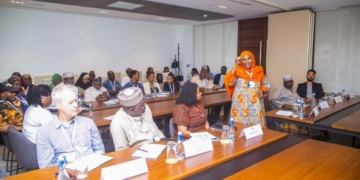
The European Union (EU) has committed €1 million to Nigeria’s transition to climate-smart agriculture under a new twinning project aimed at strengthening food security, resilience and value-chain development.
The 12-month initiative, with an additional three-month extension window, is being implemented in collaboration with the Federal Ministry of Agriculture and Food Security and a consortium led by Latvia, alongside the Czech Republic and Austria.
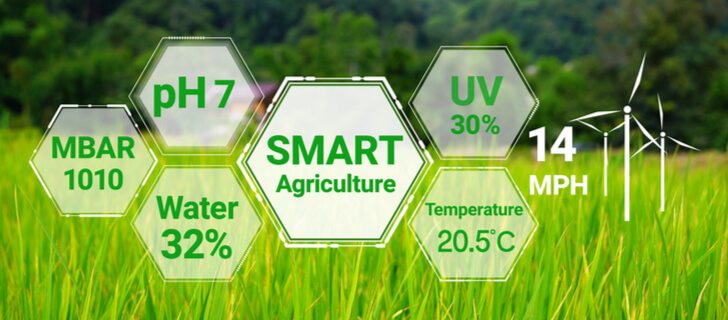
It is designed to review and strengthen Nigeria’s National Agricultural Resilience Framework (NARF) and align climate-smart agriculture (CSA) policies with international standards.
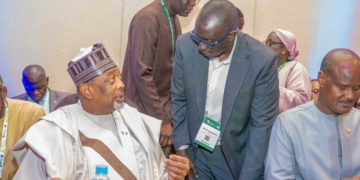
Speaking at the launch in Abuja, the minister of state for agriculture and food security, Aliyu Sabi Abdullahi said the initiative came at a critical time as Nigeria grapples with the effects of climate change, including erratic rainfall, floods, droughts, land degradation and rising pest threats, all of which continue to undermine agricultural productivity and farmer livelihoods.
He noted that agriculture remains central to Nigeria’s economy, employing a large segment of the population and serving as a key driver of food security, poverty reduction and economic growth.
He added that the project aligns with the federal government’s broader agenda to strengthen resilience, boost productivity and modernise farming systems through climate-smart innovations.
“It is with great pleasure that I welcome you all to this important occasion marking the official launch of the EU–Nigeria Twinning Project on improving food security and food systems using climate-smart technologies.
This project represents another important milestone in the long-standing cooperation between Nigeria and the European Union, particularly as it marks the first twinning project of its kind in the country.
Agriculture remains the backbone of Nigeria’s economy, but the sector faces increasing challenges arising from climate change, including variability in rainfall, droughts, floods and emerging pests and diseases,” the minister said.
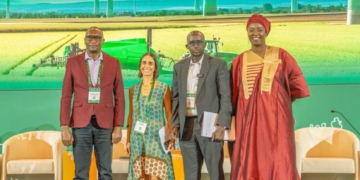
The EU ambassador to Nigeria and ECOWAS, Gautier Mignot, said the programme would provide technical expertise and policy support to bridge existing gaps in Nigeria’s agricultural framework, ensuring that policies translate into tangible benefits for farmers and agribusinesses.
Mignot said, “This project responds directly to the need for stronger institutions and well-implemented policies, and will support a comprehensive review of Nigeria’s agricultural resilience framework to deliver practical improvements for farmers and communities.”
The project is also expected to enhance institutional coordination, promote evidence-based policymaking, and create a pathway for mainstreaming climate-smart agriculture across Nigeria’s food systems, while improving competitiveness and sustainability in the sector.
It will focus on policy review, institutional strengthening and the deployment of climate-smart technical solutions. These include improved soil data systems, sustainable nutrient management, integrated pest management, seed certification aligned with OECD standards, and enhanced pest surveillance mechanisms.
Twinning will also support training programmes and study tours for Nigerian experts to deepen capacity and promote peer learning.
We’ve got the edge. Get real-time reports, breaking scoops, and exclusive angles delivered straight to your phone. Don’t settle for stale news. Join LEADERSHIP NEWS on WhatsApp for 24/7 updates →
Join Our WhatsApp Channel