The European Union and Nigeria have agreed to explore deeper collaboration in critical raw materials, investment, trade, and cybersecurity, as both sides move to strengthen ties amid what the EU described as a “very serious” global security environment.
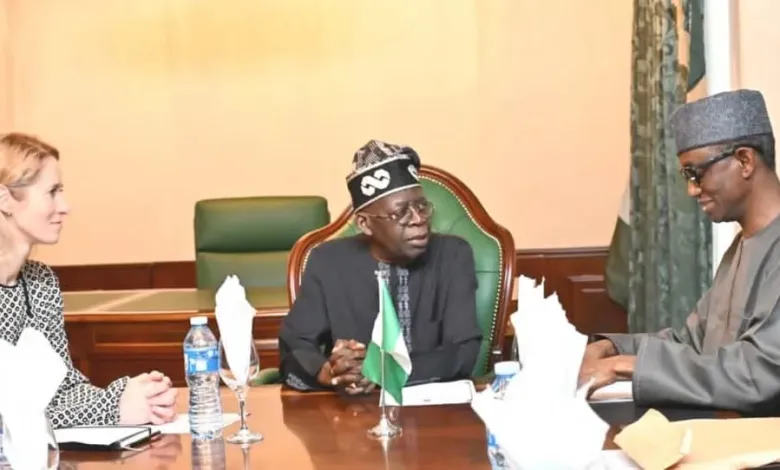
The EU High Representative for Foreign Affairs and Security Policy, Kaja Kallas, disclosed this on Monday after meeting with President Bola Tinubu at his Lagos residence.
Special Adviser to the President on Information and Strategy, Bayo Onanuga, confirmed the meeting in a statement, noting that both parties reaffirmed their commitment to expanding bilateral cooperation.
Kallas, who led the EU delegation, said discussions focused on security, trade, and commodities, with both sides identifying fresh opportunities for partnership.
“We are very like-minded partners, the European Union and Nigeria. And today we explored new ways to collaborate. The global security situation is very serious, as the geopolitical picture shows,” she stated.
She stressed the importance of unity among nations that uphold the international rules-based order, particularly in a period of heightened global uncertainty.
“That’s why those countries that value the international rules-based system must stick together,” Kallas said.
The EU official highlighted key sectors for deeper engagement, including investment, trade, critical raw materials, as well as security and cybersecurity.
“We talked today with the ministers about different topics. On issues of investment and trade, and there could be more. The second is critical raw materials.
“We are looking for different cooperation, but also in terms of security and cybersecurity issues, where we can cooperate even more,” she added.
Kallas assumed office in December 2024, succeeding Josep Borrell, and has since been engaging with key partner countries.
President Tinubu, in his remarks, reiterated Nigeria’s readiness to deepen relations with the EU and expressed appreciation for its continued support.
Also present at the meeting were the National Security Adviser, Nuhu Ribadu, and the Minister of Budget and National Planning, Abubakar Atiku Bagudu.
The meeting comes at a time of intensifying global competition for critical minerals used in technology, renewable energy, and manufacturing. Nigeria is known to possess substantial reserves of lithium, cobalt, rare earth elements, and other strategic resources.
The EU, on its part, is seeking to diversify supply chains for these materials in a bid to reduce reliance on major suppliers such as China, especially for inputs used in electric vehicle batteries, solar panels, and digital infrastructure.
We’ve got the edge. Get real-time reports, breaking scoops, and exclusive angles delivered straight to your phone. Don’t settle for stale news. Join LEADERSHIP NEWS on WhatsApp for 24/7 updates →
Join Our WhatsApp Channel