Global development experts have called for a fundamental shift in the design and financing of development programmes.
They asked governments, donors and development partners to embrace community-led solutions, diversify funding sources and build trust as the foundation for sustainable social change.
The call was made at the end of the 2026 International Social and Behaviour Change Communication (SBCC) Summit, the world’s largest gathering on social and behaviour change communication, held in Panama City from 22 June to 26.
The summit, themed “The Power of Connection: Reimagining Knowledge, Action and Equity in a Changing SBCC Landscape,” brought together experts from 125 countries to examine how strategic communication can address global challenges, including public health, climate change, governance and inequality.
A major outcome of the Summit was a consensus that development programmes should move away from externally driven interventions towards approaches that empower communities to design, implement and evaluate solutions based on local knowledge, lived experiences and cultural identity.
Participants also called for a comprehensive review of funding models for social and behaviour change programmes, advocating stronger domestic financing, increased private-sector participation and closer collaboration among governments, civil society organisations, academic institutions and philanthropic bodies in response to declining international donor support.
Delegates identified trust as one of the world’s most valuable development assets, stressing that communication should extend beyond information dissemination to fostering dialogue, transparency and stronger relationships between institutions and communities.
Artificial intelligence featured prominently during the Summit, with participants agreeing that while AI offers significant opportunities for audience research, programme design, monitoring and content creation, its application must remain ethical, inclusive and centred on human needs.
The Summit also reaffirmed the need to amplify the voices of historically underrepresented groups, including Indigenous communities, young leaders, and practitioners from low- and middle-income countries, in shaping global development policies and knowledge.
The event was co-chaired by the Centre for Communication and Social Impact (CCSI) and the Johns Hopkins Centre for Communication Programs alongside global partners.
As co-chair, CCSI led several technical sessions, moderated panel discussions, and presented evidence from programmes across Africa on strategic communication, health systems, governance, nutrition, gender, artificial intelligence, and community engagement.
One of the highlights of the Summit was the unveiling of the PEBIC Evaluation Criteria, a proprietary framework developed by CCSI to assess the quality of responses from radio programme resource persons and to improve radio’s effectiveness as a platform for social and behaviour change communication.
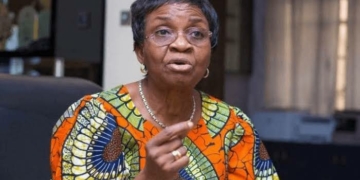
Speaking at the opening of the Summit, CCSI Executive Director and Summit Co-chair, Babafunke Fagbemi, said the strong global participation reflected continued confidence in the power of communication to transform lives despite shrinking development funding.
She disclosed that the Summit received about 1,970 abstracts submitted across seven presentation formats, with Africa accounting for 36 per cent of participants, while youth and emerging leaders represented 25 per cent of attendees.
“These numbers tell an important story. They remind us that the future of social and behaviour change is increasingly global, increasingly diverse, and increasingly shaped by voices that have too often been underrepresented,” Fagbemi said.
“Your presence here in Panama is itself a powerful statement. It is a statement that we continue to believe in the power of communication, community and collective action to improve lives.”
She, however, observed that changing global priorities have made it increasingly difficult to sustain investments in social and behaviour change programmes, despite their growing importance in promoting public health, equity and resilience.
Also speaking, Executive Director of the Centre for Communication Programs at Johns Hopkins University and Summit Co-chair, Débora López, said the gathering had become even more significant at a time characterised by misinformation, declining public trust and rapidly evolving technologies.
“Connection is at the heart of social and behaviour change. It is also at the heart of this Summit,” López said, noting that collaboration has become indispensable as the world confronts conflict, climate change, artificial intelligence and the spread of misinformation.
Throughout the week-long event, delegates examined issues including artificial intelligence, trust and misinformation, Indigenous knowledge systems, participatory research, youth leadership, climate resilience and stronger health systems.
The Summit concluded with participants reaffirming that lasting social change will depend on locally led solutions, innovation, stronger partnerships and communication strategies that place people at the centre of development while deepening collaboration among governments, academia, civil society and development partners.
We’ve got the edge. Get real-time reports, breaking scoops, and exclusive angles delivered straight to your phone. Don’t settle for stale news. Join LEADERSHIP NEWS on WhatsApp for 24/7 updates →
Join Our WhatsApp Channel