An opinion research organisation, NOIPolls, has engaged media stakeholders on strengthening collaboration between research institutions and the media to promote evidence-based reporting.
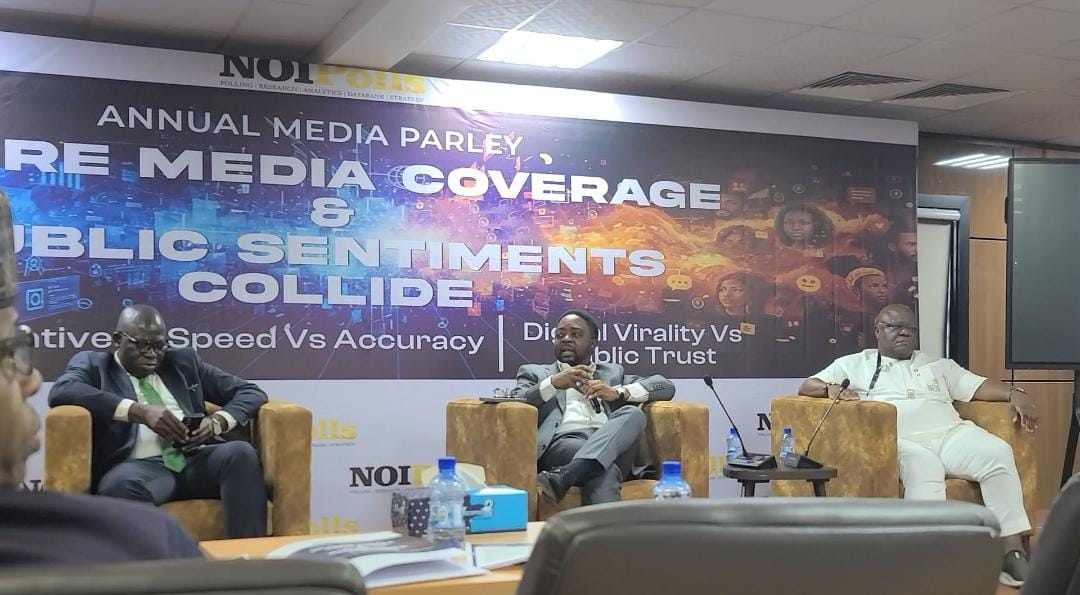
The engagement, being the first edition of NOIPolls annual media parley held in Abuja, brought together journalists, academics and communication experts to examine the intersection between data, media narratives and public trust in the digital age.
Speaking at the event, the chief executive officer of NOI Polls, Chike Nwangwu, said the theme of the parley, “Where Media Coverage & Public Sentiments Collide: Data vs Narrative Speed vs Accuracy Digital Virality vs Public Trust,” reflected the challenges confronting journalism in an era of rapid information dissemination.
According to him, the speed at which information spreads through digital platforms has increased the need for accuracy and credibility in media reporting.
“In an era where information travels faster than ever before, a single headline, tweet or viral video can shape opinions and national conversations within minutes,” he said.
Nwangwu emphasised that credible public opinion data plays a crucial role in democratic governance and policy-making.
“We believe that public opinion is a cornerstone of democracy and effective policy-making. When we capture the authentic voices of everyday people, we empower decision-makers to make evidence-based decisions,” he said.
He noted that while research institutions generate data, the media serves as the bridge between data and the public.
“You are the ones who transform numbers into stories, insights into narratives and conversations that reach millions of citizens,” he added.
Also speaking, a communication scholar at Baze University, Abiodun Adeniyi, said journalism is undergoing significant transformation due to globalisation and technological change.
According to him, despite these changes, journalists must remain committed to the core principles of the profession.
“Journalists must continue to uphold the truth, no matter the pressure,” he said, while urging media practitioners to counter misinformation and maintain professional standards.
During a panel discussion, television journalist and host on Channels TV, Seun Okinbaloye, raised concerns about what he described as the erosion of journalistic standards.
“The foundations of our business and our practice as journalists have been eroded, and if we are in the same room, we should tell ourselves the truth,” he said.
Okinbaloye warned that the increasing reliance on social media as a source of information, combined with the race for speed in breaking news, is undermining verification and credibility in the media industry.
“Verification is disappearing. Social media has become the source of information and speed has now become a major problem of our practice,” he noted.
He also cautioned against journalists injecting personal opinions into news reporting, stressing that the role of journalism is to present verified facts to the public.
“Our job is not to sentence people on television, radio or on the front pages of newspapers. Our responsibility is to hold the government accountable,” he added.
Okinbaloye further warned that the media industry could face greater challenges ahead of the 2027 Nigerian general election, with the likely rise in misinformation, disinformation and attacks on journalists.
Participants at the parley stressed the need for stronger collaboration between research institutions and the media to ensure that news reporting remains grounded in credible data and evidence.
We’ve got the edge. Get real-time reports, breaking scoops, and exclusive angles delivered straight to your phone. Don’t settle for stale news. Join LEADERSHIP NEWS on WhatsApp for 24/7 updates →
Join Our WhatsApp Channel