
Energy experts have warned of an extended period of severe energy supply disruptions as the world runs out of oil.
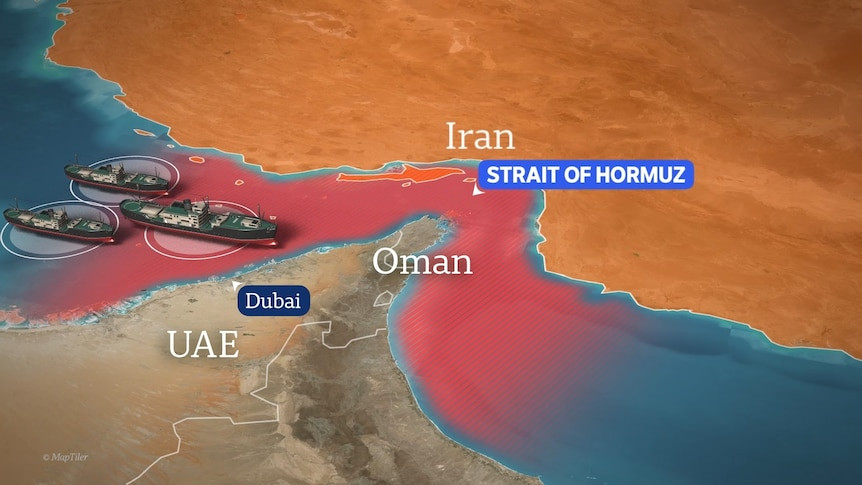
They expressed concern about the likelihood of a global crude shortage, which is becoming increasingly likely as the Strait of Hormuz remains almost completely blocked. Analysts are no longer modelling for a swift end to the war between the United States, Israel, and Iran.
Kpler reported earlier this month that the cumulative loss of oil supply in the Middle East since February 28 had reached 782 million barrels as of May 8 and was on track to reach 1 billion barrels by the end of the month. In daily output terms, the picture looks no better.
Saudi Arabia is losing over 3 million barrels daily; Iraq is producing 2.88 million barrels daily less; Iran is at 1.69 million barrels daily; and Kuwait has suffered a decline of 1.75 million barrels daily.
With so much production offline, the most sensible option is to tap reserves. Estimated at record highs, the world’s oil stocks were cited as a big reason for predictions of a severe glut that could exceed demand by almost 4 million barrels daily, according to the International Energy Agency (IEA). But that was before the war began.
Now, the IEA is warning that demand for oil will exceed supply this year.
In its latest monthly report, the IEA said it expected global oil supply to fall by some 3.9 million barrels per day over the current year, which is far less than the actual supply loss from the Middle East.
The IEA estimates a daily loss of 10.5 million barrels. Yet while supply falls by 3.9 million barrels daily, which may prove an optimistic scenario, demand would only fall by 420,000 barrels daily, according to the International Energy Authority.
“You can only decrease consumption so much, and when inventories run out, they are going to run out,” Ellen Wald, senior fellow at the Atlantic Council’s Global Energy Centre, told the Wall Street Journal this week. “At some point, the market is going to collide, and prices are going to shoot up.”
This echoes the warning issued earlier this month by Aramco’s chief executive, who said global onshore fuel inventories were depleting at a record pace. These inventories are “the only buffer that is available today”, Amin Nasser said, as quoted by the Financial Times, but they are “materially depleted”.
JP Morgan’s commodity analysts also joined the chorus of warnings, saying that by next month, commercial oil inventories in, per the FT, the developed world could “approach operational stress levels”, meaning supply loss could become a lot less manageable than it is now.
“Our conclusion is that one way or another the strait reopens in June,” JP Morgan’s Natasha Kaneva said, as an end to the war would be the only way the world avoids the shortage scenario.
If that does not happen, “The next phase of this shock may look less like a traditional crude spike and more like a refining and end-user fuel crisis,” the bank’s head of global commodities strategy said, noting that only a “clear, credible announcement, ratified and confirmed by both sides” would calm markets.
Adding to the pessimism, Aramco’s Nasser noted in recent comments that traders may be overestimating the availability of oil in storage. Not all the barrels counted as in storage are actually accessible, he said. In fact, only a fraction of it is accessible. “The rest is locked up in pipeline fill, minimum tank levels and other day-to-day operational constraints.” There are also limits to how much oil one can draw from storage each day. “In Europe and the US, the maximum you can pull out from there is 2mn barrels a day,” Aramco’s chief executive said.
According to Kpler, inventory drawdowns are moderate for now.
The firm estimated cumulative draws from onshore storage at 60 million barrels since late March, leaving 3 billion barrels still in storage, or whatever fraction of that volume is accessible.
Yet the longer the supply outage in the Middle East continues, the more barrels would need to be drawn from storage, while there is no supply to replenish them in a timely manner.
In other words, the storage cushion will get thinner
if the war continues beyond this month.
We’ve got the edge. Get real-time reports, breaking scoops, and exclusive angles delivered straight to your phone. Don’t settle for stale news. Join LEADERSHIP NEWS on WhatsApp for 24/7 updates →
Join Our WhatsApp Channel