By JIBRIL MOHAMMED NABIL, IBRAHIM OBANSA, AZA MSUE, ADEBAYO WAHEED, Nnamdi Mbawike, Francis Okoye, Abdullahi Olesin, ABU NMODU, SOLA OJO, KABIR WURMA, ACHOR ABIMAJE
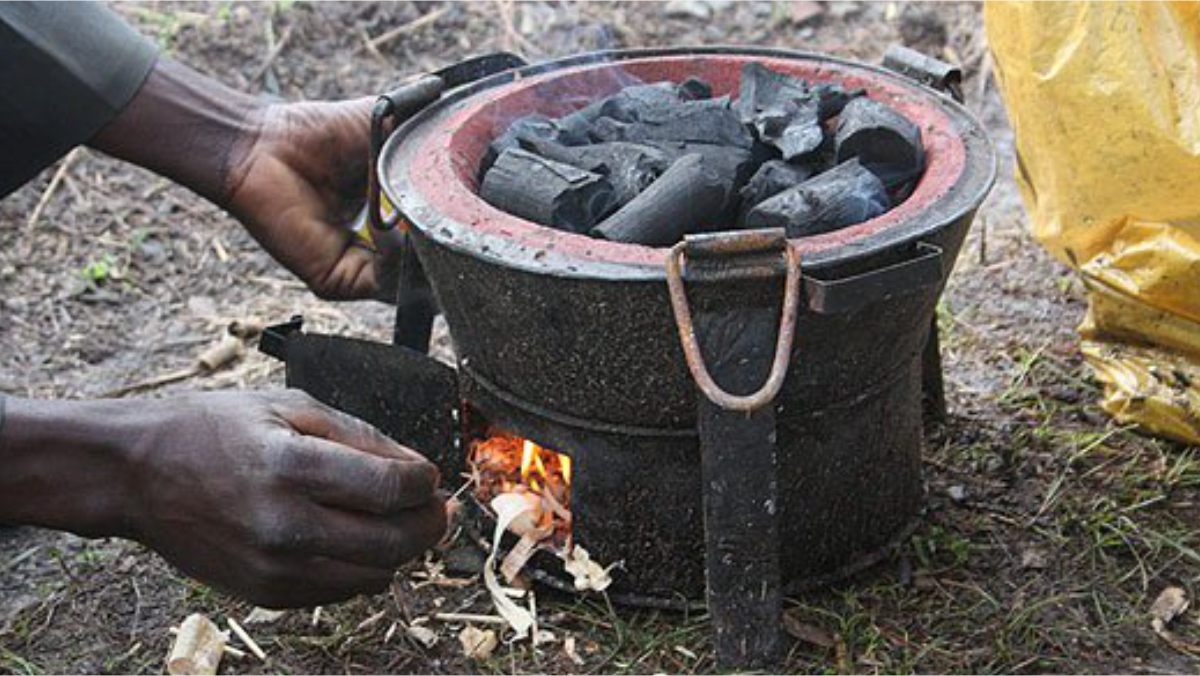
Rising cooking fuel prices are forcing households across Nigeria to abandon cooking gas in favour of cheaper alternatives such as charcoal, firewood and sawdust, LEADERSHIP Friday reports.
Findings across several states show that families and small-scale food vendors are increasingly struggling to afford cooking gas, adding to the financial pressure caused by rising food, accommodation, transportation and other living costs.
The Nigerian Midstream and Downstream Petroleum Regulatory Authority reported that the average price of cooking gas rose to N1,500 per kilogramme in October 2026, following an 18 per cent increase in September compared with the corresponding period in 2025.
I Can No Longer Afford Charcoal – Yobe Civil Servant
In Damaturu, Yobe State, residents said economic hardship had forced them to adjust their cooking habits.
A civil servant, Alhaji Dala Mohammed, of Gwange Ward, said the rising cost of charcoal had also made it difficult for his household to maintain its previous cooking routine.
“I can no longer afford charcoal because the price has gone up, and you need to buy enough to prepare meals. Before, I used to buy charcoal worth N500, which would last for two days, but that is no longer possible,” he said.
Similarly, Hajiya Adama Suleiman said she had switched from cooking gas to charcoal because of the rising cost of refilling her cylinder.
A cooking gas seller in Damaturu also confirmed a decline in patronage, saying many customers had reduced the quantity of gas they purchased or stopped patronising his outlet.
In Lokoja, Kogi State, families and commercial food sellers have also resorted to charcoal and sawdust. A market survey revealed that cooking gas sells for N1,400 per kilogramme at Egoja Gas Station, while some other outlets charge N1,450.
A resident, Kaka Isah, said she last bought cooking gas five months ago when it sold for between N900 and N1,050 per kilogramme. Persistent increases had since forced her to switch to charcoal.
Food vendors Aisha Nasiru, who operates at Paparanda Square, and Nana Yusuf, at Ganaja Junction, said they had also switched to charcoal and sawdust to reduce operating costs.
In Benue State, residents have similarly abandoned cooking gas for charcoal and firewood.
A Katsina-Ala-based resident, Kwaghbee Shima, told our correspondent that he bought cooking gas for N1,900 per kilogramme and a bag of charcoal for N7,000.
“Even the cost of firewood is rising because of high transportation costs,” he said.
A Makurdi-based firewood seller at Akpehe Road, Wurukum, who identified herself as Mama Francis, said transportation costs had forced sellers to increase their prices.
“Before, we were selling three or four pieces of firewood for N100, but now we tie three or four pieces for N300. If we increase the quantity, it goes for N500 and N1,000,” she said.
She added that she used cooking gas mainly to warm food but relied on firewood or charcoal when preparing meals for more than five people because gas had become too expensive.
In Oyo State, cooking gas prices range from N1,200 to N1,300 per kilogramme at retail outlets, while some gas plants sell at about N1,500. Residents said prices had sometimes risen to N1,700 during supply shortages and festive periods.
The increases have forced families and small food vendors in Ibadan and other parts of the state to ration gas or turn to charcoal and kerosene.
In Enugu State, cooking gas sells for N1,400 per kilogramme at gas stations, while retailers charge between N1,500 and N1,700.
A resident of Kenyatta Street, Mr Obiinna Okpara, said his household had switched to charcoal because it was cheaper.
In Maiduguri, Borno State, Mohammed Haruna said the price of a standard 12.5kg cylinder of cooking gas, which sold for about N9,000 two years ago, had increased to between N18,000 and N21,000.
He said the rising cost had forced his household to abandon buying a full cylinder and purchase smaller quantities instead.
His wife recently bought 10kg for N15,000, which he said was quickly consumed.
“What makes the situation more frustrating is that the gas does not last as long as it used to. We also experience cases of blockage in our cooking gas equipment, which some people attribute to the quality of the gas being sold,” he said.
Haruna said his household now spends approximately N30,000 monthly on cooking gas, describing the expenditure as excessive for an average Nigerian family.
Another resident, Abdullahi Ali, said he had abandoned cooking gas and switched to charcoal because the cost of refilling his cylinder had become unbearable.
In Ilorin, Kwara State, two housewives interviewed by our reporters said charcoal was cheaper than gas and kerosene.
“With N200, one can buy charcoal to prepare food. This is not possible with either gas or kerosene, which is on the higher side,” Hajiya Aisha Balogun, a pepper seller, said.
A charcoal seller, Mrs Ramat Musa, confirmed increased sales because of rising demand.
In Niger State, a housewife, Rahmat Abubakar, said many households had returned to firewood despite being aware of its health implications.
“Naturally, it is a common thing around here to use firewood for cooking, even though firewood and charcoal are costly too, but they are more affordable than cooking gas.
“It is even more difficult because a kerosene stove is not an easy option, as kerosene is also costly. We are aware of the health implications of using firewood, but it is the easiest way for now,” she said.
However, a gas station operator, Aliyu Umar, said patronage had remained unchanged despite the price increases.
In Kebbi State, a housewife, Malama Ummi, said the price of a bundle of firewood had increased from N100 to N250, adding to the difficulty of preparing daily meals for her family.
A firewood vendor, Mubarak Sani Dangana, said he now had to go into the forest to obtain enough bundles for sale, rather than buying them along the roadside as he previously did.
A student of the Federal University Birnin Kebbi, Sani Ibrahim, said students who used cooking gas on campus now paid N1,450 per kilogramme, up from N1,390.
In Jos, Plateau State, cooking gas sells for N1,600 per kilogramme, forcing more households to switch to charcoal, firewood and sawdust.
A housewife in Dadin Kowa, Mrs Rhoda Usaman, said even charcoal and firewood had become increasingly expensive.
A charcoal and firewood seller in Bukuru/Kugiya Market, Deborah Pam, said a bag of selected charcoal now costs between N12,000 and N13,000, compared with N10,000 previously, while three pieces of firewood sell for between N500 and N700.
LEADERSHIP Friday’s findings also revealed that some households had switched to sawdust for cooking and boiling water for bathing.
The growing reliance on charcoal and firewood raises concerns about household air pollution, respiratory health risks and environmental degradation, particularly as increased demand for traditional fuels could accelerate deforestation.
Transporters Seek CNG, Electric Vehicle Subsidies
Meanwhile, the rising cost of transportation is also forcing Nigerians to reconsider non-essential journeys.
The Chairman of the National Union of Road Transport Workers (NURTW), Bus Long Journey, Kakuri Branch, Kaduna, Comrade Yakubu Lawal, has urged the Federal Government to extend its subsidised transport initiative through Compressed Natural Gas (CNG) and electric vehicles to more operators.
Lawal’s appeal followed President Bola Tinubu’s October 1 declaration on plans to subsidise transportation through CNG-powered and electric vehicles.
Speaking when LEADERSHIP visited the park on November 2, 2026, he said economic hardship had reduced patronage, with his branch sometimes loading only three buses daily despite the size of the park.
He disclosed that the fare from Kaduna to Port Harcourt had increased from N30,000 to N35,000, while lamenting that his branch lacked CNG-powered buses despite the Federal Government’s initiative.
He said some union members had been offered opportunities to benefit from the programme but expressed concern that it had yet to reach a significant number of operators at the branch level.
Lawal urged the federal government to extend the initiative to more commercial transport operators, particularly those serving interstate routes, to reduce fares and improve passenger patronage.
A passenger, Ngozi, said travelling from Kaduna to Aba, Abia State, could require at least N100,000 for transportation alone.
“Some of us even prefer to send money to our loved ones rather than travel if it is not compulsory,” she said.
However, the Kaduna State Government, through the Kaduna State Transport Authority (KSTA), continues to provide free intercity CNG buses to residents.
We’ve got the edge. Get real-time reports, breaking scoops, and exclusive angles delivered straight to your phone. Don’t settle for stale news. Join LEADERSHIP NEWS on WhatsApp for 24/7 updates →
Join Our WhatsApp Channel