The federal government has restated its resolve to take full responsibility for the health of Nigerians amid growing concerns over changing patterns in global health financing.
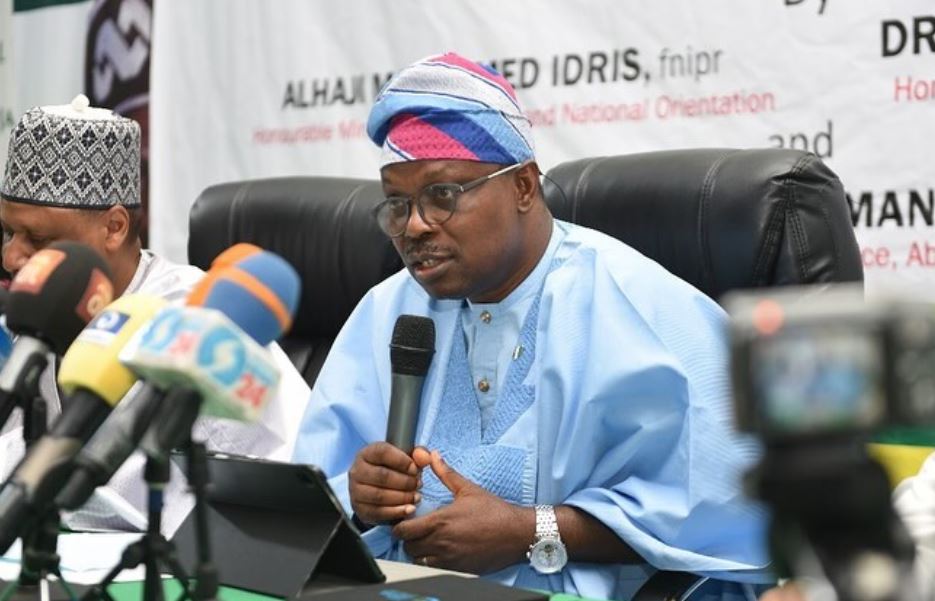
Minister of State for Health and Social Welfare, Dr. Iziaq Adekunle Salako, made this known in Abuja while receiving the Ambassador of Spain to Nigeria, Felix Costales Artieda, who led a delegation on a courtesy visit to the ministry.
Dr. Salako said the evolving landscape of global health funding is a legitimate concern for Nigeria, but emphasised that the country must strengthen its leadership role in determining its health priorities.
“We also realise that we cannot be dependent on anybody for the health of our citizens. We must take responsibility, and we must be in the driver’s seat for the health of our citizens,” the minister said.
He explained that the administration of President Bola Ahmed Tinubu is implementing major sector-wide reforms under the National Health Sector Renewal Investment Initiative, built on four transformative pillars designed to reposition Nigeria’s health system.
He added that the visit creates an opportunity for both countries to revisit and activate the Memorandum of Understanding (MoU) signed in 2022, particularly in areas such as technology transfer, which aligns with the Presidential Initiative on Unlocking the Healthcare Value Chain (PVC).
According to him, Nigeria has also made progress in addressing obstetric fistula and gynecological conditions by establishing specialized institutions and providing free treatment as well as social reintegration for affected women.
“On our side, we will do everything possible to promote this partnership. It is important that we do things more efficiently,” Salako added.
Speaking on behalf of the Spanish delegation, Mr. Anton Leis, Director of the Spanish Agency for International Development Cooperation, highlighted ongoing collaborations with global partners including UNFPA, UNICEF and the European Union to combat female genital mutilation, eradicate polio, and strengthen Nigeria’s medical products industry. He noted that Spain has contributed 1.1 million euros to these efforts so far.
Mr. Leis also commended Nigeria’s sector-wide approach (SWAp), describing it as a strong coordination model anchored on “one plan, one budget, one implementation.”
He said the agency is further working with the National Institute for Pharmaceutical Research and Development (NIPRD), NAFDAC, and the Resilient Initiative for Unlocking the Healthcare Value Chain to promote health efficiency and support ongoing reforms.
In her welcome remarks, Permanent Secretary of the ministry, Daju Kachollom, noted that Nigeria and Spain share a long-standing partnership, reinforced by MoUs signed in 2022 and 2025.
We’ve got the edge. Get real-time reports, breaking scoops, and exclusive angles delivered straight to your phone. Don’t settle for stale news. Join LEADERSHIP NEWS on WhatsApp for 24/7 updates →
Join Our WhatsApp Channel