
The federal government has unveiled fresh plans to transform some of Nigeria’s most notorious informal settlements, including Makoko in Lagos and Gishiri in Abuja, as part of a broader urban renewal drive aimed at modernising cities and improving living conditions for millions of residents.
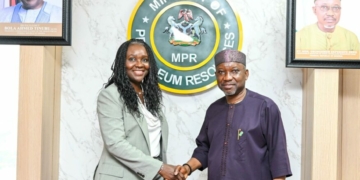
Minister of Housing and Urban Development, Muttaqha Rabe Darma, disclosed this on Friday in Abuja while receiving the leadership of the Nigerian Institute of Town Planners (NITP), led by its national president, Dr Ogbonna Chime.
Darma said the Tinubu administration was determined to tackle the growing challenge of slums and unplanned settlements across the country, stressing that communities in Lagos, Kano, Port Harcourt and the Federal Capital Territory would be prioritised under a new urban development framework being prepared by the ministry.
According to him, the government’s intervention would focus on upgrading existing settlements rather than displacing residents, with emphasis on making such communities safer, more habitable and economically viable.
The minister also disclosed that the Federal Government would revisit the long-abandoned Urban and Regional Planning Law enacted in 1992, lamenting that more than three decades after its passage, the legislation had yet to be fully implemented.
He explained that the Ministry of Housing and Urban Development would work closely with the newly created Ministry of Regional Development to fashion out strategies for full implementation of the law, which experts believe is critical to addressing Nigeria’s chaotic urban expansion and infrastructure deficit.
Darma further reaffirmed the government’s commitment to prioritising indigenous professionals in the execution of projects within the built environment sector, describing the policy as a deliberate move to boost local expertise, create jobs and strengthen technical capacity nationwide.
“The Ministry has already trained about 2,000 young Nigerians in different built environment skills, and many of them are already applying the knowledge across the country,” he said.
On manpower shortages within the ministry, the minister urged professionals to embrace innovation and artificial intelligence, noting that technological advancement would increasingly shape the future of urban planning and public service delivery.
He maintained that professionals who adapt to emerging technologies would remain relevant, calling for continuous training and upskilling among practitioners in the sector.
Earlier, NITP President, Dr. Ogbonna Chime, urged the Federal Government to fully implement the 1992 Urban and Regional Planning Law, describing it as a crucial step towards restoring order to Nigeria’s rapidly expanding cities.
Chime also called for stronger support for urban development initiatives, increased engagement of indigenous town planning consultants in government projects, replacement of retired professionals in the ministry, and improved funding for regulatory bodies to strengthen standards within the sector.
He added that the institute was ready to partner with the ministry in addressing the country’s mounting urbanisation challenges and invited the minister to the institute’s 60th anniversary and 57th International Conference scheduled for October in Lagos.
We’ve got the edge. Get real-time reports, breaking scoops, and exclusive angles delivered straight to your phone. Don’t settle for stale news. Join LEADERSHIP NEWS on WhatsApp for 24/7 updates →
Join Our WhatsApp Channel