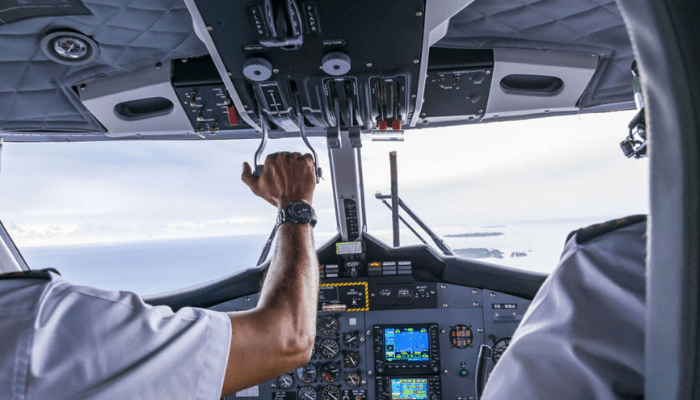
A severe shortage of serviceable aircraft in Nigeria’s aviation sector has triggered an unprecedented spike in airfares as the yuletide travel season approaches, LEADERSHIP has learnt.
Latest data from CH-Aviation reveals that Nigeria ranks among the countries with the highest number of grounded aircraft globally. Of the 123 aircraft recorded in the country, 79 are grounded, leaving only 44 active, a staggering 64.2 per cent grounding rate. Hong Kong follows closely, with 151 out of 244 aircraft grounded.
Airlines such as Air Peace, United Nigeria, Aero Contractors, among others, all have their aircraft abroad for repairs and maintenance.
Industry experts say the situation has created a widening capacity gap that is already distorting domestic ticket prices and travel patterns.
A recent visit to Murtala Muhammed Airport Terminal 2 (MMA2) revealed that airlines have significantly increased fares, even on routes traditionally considered short or low-cost.
Routes such as Asaba and Benin, which take roughly 40 minutes by air, now attract fares previously seen only on long-haul international flights.
A return ticket to Asaba on Air Peace, departing on December 26, 2025, and returning on January 4, 2026, is priced at N715,000. The same trip on Aero Contractors costs N501,000.
This surge is replicated on other high-demand Southeastern and South-south routes. For destinations such as Owerri, Uyo, Enugu, Anambra, Port Harcourt, and Calabar, return fares typically range from N700,000 to N800,000, depending on the booking date.
These corridors account for up to 90 per cent of passenger traffic during the festive period, making them the most sensitive to pressure from capacity shortages.
Increasing insecurity on major interstate highways has prompted more Nigerians to abandon road travel for air transportation, even for shorter distances traditionally covered by road.
This migration of passengers to the skies is expanding domestic air travel demand at a pace that airlines are struggling to keep up with, mainly because most carriers are operating below their required capacity.
Many Nigerian airlines, already stretched thin by operational challenges, lack sufficient aircraft to meet the growing demand. This shortage worsens during peak periods, such as the Christmas and New Year holidays, resulting in frequent delays, cancellations, and passenger overloads.
Air Peace, which operates the most extensive domestic network, appears to be the hardest hit. The sudden withdrawal of its four leased aircraft has further strained its operations ahead of the high-travel season. Additionally:
Thirteen of its aircraft are reportedly at maintenance facilities abroad. Several others are grounded as Aircraft On Ground (AOG).
Though the airline recently received a B737-800 aircraft on dry lease, industry sources say this addition is unlikely to close the emerging capacity gap sufficiently.
A source also hinted at speculation that some airlines may be “blocking seats” to create artificial scarcity and drive up fares. However, industry leaders strongly dispute this.
President of the National Association of Nigerian Travel Agents (NANTA), Yinka Afolami, dismissed suggestions that airlines are deliberately blocking seats.
He attributed the fare surge entirely to genuine capacity shortages, compounded by the massive demand during the festive season.
“I am just worried about the capacity of the airlines to cope with the huge travel demand. We know what they have been going through with equipment. I don’t think they are blocking seats. It is just that they don’t have enough capacity for this. Demand is just way more than supply.” He said.
Also lending his voice, the chairman of Dees Travels and Tours Investment Limited, Daisi Olotu, corroborated Afolami’s position, adding that many travellers booked far ahead of the festive season, restricting the availability of lower-priced fares.
He emphasised that the primary challenge confronting local airlines is not a lack of market demand but the overwhelming operational burden that limits their fleet availability. He stressed that Nigerian carriers operate far below the fleet size required for reliable scheduling.
“When one aircraft goes AOG, the entire schedule collapses, leading to cancellations, delays, and passenger protection,” he explained.
With nearly two-thirds of Nigeria’s aircraft grounded, the country faces one of its most acute aviation capacity crises in recent years. The effects are immediate—skyrocketing fares, scarce seats, and mounting pressure on airlines.
As the yuletide season approaches, passengers are bracing for higher costs and potential disruptions, while airlines are scrambling to stretch their limited fleets to meet surging demand.
For now, industry watchers warn that unless grounded aircraft are returned to service and MRO constraints addressed, Nigeria’s domestic aviation sector will continue to operate under intense strain, especially during major travel seasons.
We’ve got the edge. Get real-time reports, breaking scoops, and exclusive angles delivered straight to your phone. Don’t settle for stale news. Join LEADERSHIP NEWS on WhatsApp for 24/7 updates →
Join Our WhatsApp Channel