
The federal government has said it is advancing plans to revive moribund textile factories and the Ajaokuta Steel Company as part of efforts to strengthen Nigeria’s industrial base and drive economic growth.
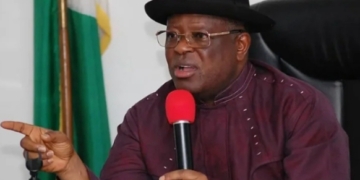
Minister of state for Industry, Senator John Enoh, disclosed this during an interview on Channels Television on Tuesday, saying the Tinubu administration was implementing the National Industrial Policy (NIP) to boost manufacturing, create jobs and support its ambition of building a $1 trillion economy.
Speaking on efforts to revive the textile industry, Enoh said the government was working to restore the cotton, textile and garment value chain through partnerships with investors and development agencies.
“We are working on the Cotton, Textile and Garment Industrial Transformation Programme. We are reconnecting cotton growers, textile manufacturers and garment producers because that has been the missing link,” he said.
The minister revealed that discussions were also ongoing with investors interested in transforming abandoned textile factories into industrial parks.
“We are in touch with development and investment partners that are interested in investing. We hope that within the next few weeks, the necessary agreements will be concluded. They are interested in establishing industrial parks in many of those moribund textile factories,” he added.
On the long-delayed Ajaokuta Steel Company project, Enoh said negotiations with an international consortium were progressing, expressing optimism that the engagement would produce positive outcomes.
“There is no meaningful industrialisation without steel. Conversations are ongoing, and in the next few days I will be meeting with an international consortium that is interested in Ajaokuta. We are optimistic these engagements will yield positive results,” he said.
The minister described industrialisation as central to the federal government’s economic agenda, stressing that increased production remained essential to sustainable economic growth.
“We cannot build a one-trillion-dollar economy without production. You can put fiscal and monetary policies in place, but production remains the key to economic growth,” Enoh stated.
He noted that the National Industrial Policy, launched in February, is Nigeria’s first comprehensive industrial policy in decades and includes an implementation framework with clearly assigned responsibilities and quarterly performance reporting.
According to him, the government aims to increase the industrial sector’s contribution to Nigeria’s Gross Domestic Product (GDP) to 25 per cent by 2030.
“Our aspiration is that by 2030, industry’s contribution to GDP should rise to about 25 per cent. Every industrialised nation has a strong manufacturing base, and that is the direction Nigeria is taking,” he said.
Enoh added that the government was promoting value addition to reduce dependence on raw material exports, while expanding manufacturers’ access to affordable long-term financing through institutions such as the Bank of Industry.
He also said the Nigeria First Policy was being implemented to encourage the patronage of locally manufactured goods, while efforts were underway to reduce energy costs for manufacturers.
“Energy accounts for about 40 per cent of manufacturers’ operating costs. That is why we are working on practical solutions that will make power more affordable and reliable for industry,” the minister said.
We’ve got the edge. Get real-time reports, breaking scoops, and exclusive angles delivered straight to your phone. Don’t settle for stale news. Join LEADERSHIP NEWS on WhatsApp for 24/7 updates →
Join Our WhatsApp Channel