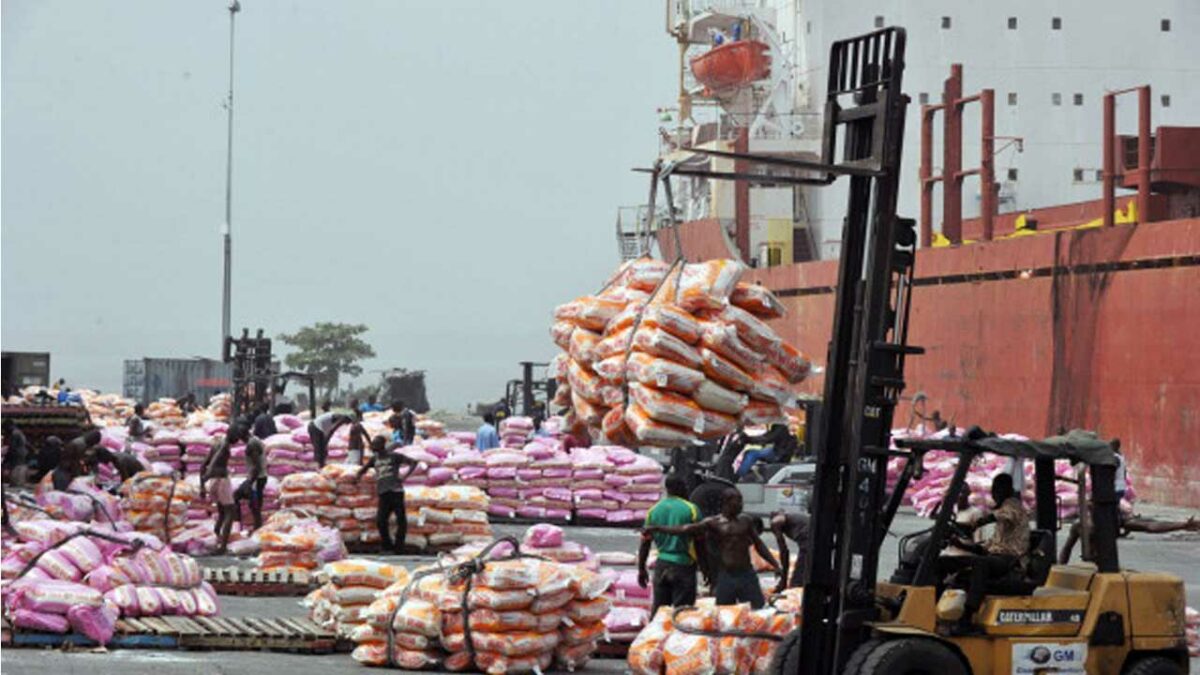
Nigeria’s food and beverage imports hit a four-year peak in 2025, reaching N7.65 trillion—the highest since 2022—largely fueled by the federal government’s 2024 import waiver policy aimed at tackling soaring food inflation above 40 per cent.
Data from the National Bureau of Statistics (NBS) shows that the country spent N7.65 trillion importing food and beverages from other nations in 2025.
The NBS figures reveal a 63 per cent jump from N2.86 trillion in 2022. The policy eased inflation pressures but spiked the import bill to N6.58 trillion in 2024, hurting local farmers and straining foreign exchange reserves.
The surge was driven by the 2024 import waiver policy that the Nigerian government announced to edge against one of the country’s highest food inflation rates on record – over 40 per cent.
While the policy helped combat food inflation, it caused losses for farmers and increased food import bill to N6.58 trillion in 2024.
In 2023, Nigeria spent N3.83 trillion on food imports, with the figure peaking in 2025 to mark the highest level within the period.
Of the imported food commodities in 2025, about N1.34 trillion was used for importing food for household consumption and roughly N2.09 trillion was spent importing food for industrial purposes. The 2025 household consumption bill is more than double the amount expended for the same purpose in 2022 – N529.4 billion.
According to experts, no nation can survive entirely on importation. Recent data from the United Nations Comtrade show that Nigeria spent roughly N51 billion on rice import in 2024, just when the import waiver policy was kicking off. Today, many rice mills have shut down due to inability to compete with rising costs of production and low market.
One miller who spoke on the basis of anonymity said the market became saturated with imported rice, which was cheaper than locally produced rice, forcing millers to sell at a loss.
“It was a disaster. The cost of production is high, so there was no way we could sell at the same price as imported rice,” the miller told BusinessDay.
“We were forced to sell our rice at lower prices, thereby running into huge losses. Several mills have shut down and people have lost their jobs as a result,” the Anambra rice miller, said.
Further analysis of the NBS data highlights that Africa’s most populous nation expended over N4 trillion importing processed food in 2025, more than 100 percent surge when compared to only about N1.4 trillion spent for the same reason in 2022.
Across the country, farmers are still struggling to pay back loans collected from banks due to poor sales that left many with losses in millions of Naira. The Bank of Agriculture noted at a recent conference that over 70 per cent of farmers are yet to repay loans acquired from the bank.
President of the Nigeria Agribusiness Group (NABG), Ibrahim Kabiru, said the policy was introduced without considering the purchasing power of Nigerians and how it will impact farmers.
“The reason we are seeing a rise in import is because of the import waiver policy. This allowed massive importation of food commodities without much thought of how it will affect farmers,” Kabiru said.
However, as a way forward, he said the Guaranteed Minimum Price scheme for farmers should be encouraged with full swing, as it will enable farmers ramp up production while also making profit.
The scheme, announced in October 2025, is a government-backed floor price policy designed to protect producers from price volatility, ensuring they sell key crops—such as maize, rice, and soy—above production costs, particularly during harvest gluts. It is a stabilisation tool aimed at curbing losses, encouraging continued cultivation, and ensuring food security.
He also urged for a state of emergency on farm inputs like fertilisers as prices have doubled in the last one year. “The government should put a state of emergency on inputs like fertiliser to avoid a repeat of what we are seeing today,” he said.
We’ve got the edge. Get real-time reports, breaking scoops, and exclusive angles delivered straight to your phone. Don’t settle for stale news. Join LEADERSHIP NEWS on WhatsApp for 24/7 updates →
Join Our WhatsApp Channel