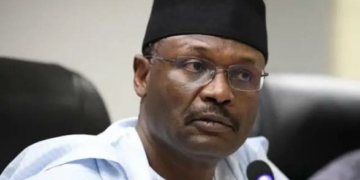
Managing director of the Nigerian Film Corporation, Dr Ali Nuhu, has described film as one of the country’s strongest tools for global influence, diplomacy and economic growth.
At the opening of the 15th Zuma International Film Festival in Abuja, Nuhu said the 2025 edition was designed to strengthen partnerships, deepen cultural exchange and expand opportunities across the creative value chain.
He said the festival’s theme, “Storytelling for Global Influence: Film as a Soft Power and Economic Force,” reflected the growing international impact of Nigerian and African narratives.
“Our stories are shaping global conversations and opening doors for new collaborations.
“Film is not just entertainment; it is diplomacy, heritage and an economic strategy.”
Nuhu added that the festival had been carefully curated to drive investment, co-productions and capacity-building through masterclasses, exhibitions, free screenings and the Zuma Film Awards.
Director-General of the National Film and Video Censors Board, Dr Shaibu Husseini, said the Nigerian film industry had already conquered the domestic and continental space and must now push for deeper global penetration.
“The time has come for us to begin to talk about how we will conquer the world,” he said.
He emphasised that cinema should be viewed as “soft power and an economic force,” praising the organisers for sustaining the festival despite current challenges.
The Iranian Ambassador to Nigeria, Gholamreza Mahdavi Raja,highlighted cinema’s role in connecting cultures, noting Iran’s participation with two films and an educational webinar.
“Our films represent the creativity of Iranian storytellers, and we are proud to share with Nigeria,” he said.
Also, China’s Cultural Counsellor, Yang Jianxing, described the festival as a “powerful stage” for international collaboration.
He announced the screening of two Chinese documentary films, including an 8K production shot from space by Chinese astronauts.
Meanwhile, Obi Asika, who represented the Minister of Art, Culture, Tourism and the Creative Economy, Hannatu Musa Musawa, praised Nollywood’s legacy of innovation and disruption.
He said the government was committed to unlocking more opportunities for Nigerian storytellers across film, literature, music and visual arts.
He also called for proper documentation of Nollywood’s evolution, warning that its achievements must not be forgotten or rewritten.
“How did we go from VHS tapes in 1991 to a billion-dollar industry in 2025 with minimal government support?” he asked. “These stories must be recorded.”
We’ve got the edge. Get real-time reports, breaking scoops, and exclusive angles delivered straight to your phone. Don’t settle for stale news. Join LEADERSHIP NEWS on WhatsApp for 24/7 updates →
Join Our WhatsApp Channel