Manufacturers are being forced to divert scarce capital from expansion and job creation into self power generation due to Nigeria’s high energy costs, with Coleman Wires and Cables alone investing more than $20 million in gas powered electricity to keep its operations running.
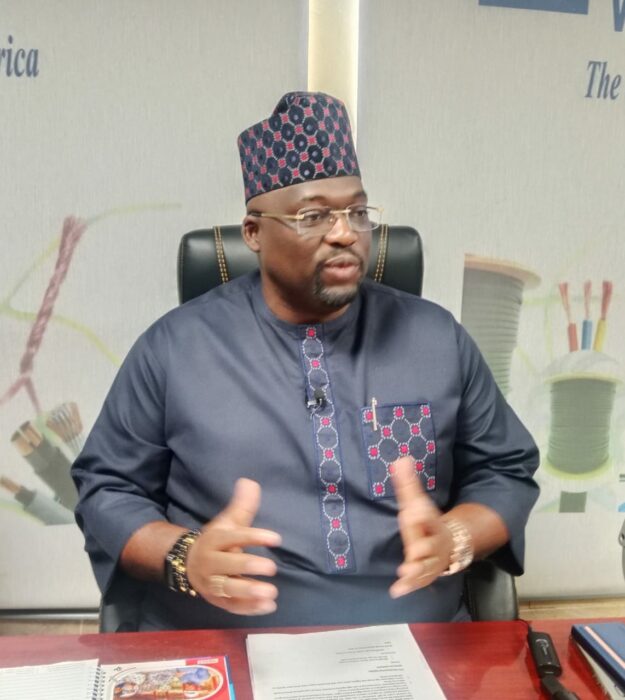
Managing director of Coleman Wires and Cables, George Onafowokan, said the huge investment underscores the enormous burden manufacturers face despite government efforts to reform the power sector.
According to him, the company would have preferred to channel the investment into expanding production capacity and creating thousands of additional jobs rather than generating its own electricity.
“Coleman alone has invested more than $20 million in gas-powered electricity generation. Instead of investing that amount solely in machinery that could create thousands of additional jobs, manufacturers are forced to spend heavily on self-generation and then pay about $8.70 per unit for gas,” he said during an interview.
Onafowokan, however, commended the Federal Government for decentralising electricity generation and opening the sector to greater private sector participation, saying the reforms were steps in the right direction.
He argued, however, that manufacturers investing heavily in captive power plants should not be subjected to some of the highest gas prices in Africa. “That pricing simply does not make economic sense for a country that is one of Africa’s largest gas producers,” he said.
He urged the Federal Government to reduce gas prices for manufacturers to about $3.50 per unit, describing the move as an investment in industrial growth rather than a subsidy. According to him, lower energy costs would enable manufacturers to expand production, improve competitiveness in export markets and create more employment opportunities.
“Reducing manufacturers’ energy costs would encourage expansion, increase production, create more jobs and improve Nigeria’s competitiveness in export markets,” he said.
Beyond energy reforms, Onafowokan called on the Federal Government and the Central Bank of Nigeria (CBN) to strengthen development finance institutions to provide long term, affordable funding for manufacturers, agriculture and small businesses.
He said while the CBN had done a commendable job in stabilising the economy, it should work with the Ministry of Finance to recapitalise the Bank of Industry (BOI) to enable it provide patient capital for productive sectors.
“The CBN has done a commendable job, but it must also become a catalyst for industrialisation. I am not suggesting that the CBN should return to directly funding every sector, but together with the Ministry of Finance, it should recapitalise development finance institutions, especially the Bank of Industry, just as government is recapitalising the Bank of Agriculture,” he stated.
The Coleman boss also expressed concern over rising lending rates at the BOI, warning that development finance institutions should not operate like commercial banks. He maintained that manufacturing, agriculture and trade should remain priority sectors because of their strong capacity to create jobs and drive economic growth through value addition.
We’ve got the edge. Get real-time reports, breaking scoops, and exclusive angles delivered straight to your phone. Don’t settle for stale news. Join LEADERSHIP NEWS on WhatsApp for 24/7 updates →
Join Our WhatsApp Channel