Recently, President Bola Tinubu received a delegation of traditional rulers from Oyo State at the Presidential Villa in Abuja. What he said to them was unremarkable in isolation. What it reveals about the deeper logic of Nigerian governance, when held to the light, is worth an editorial.
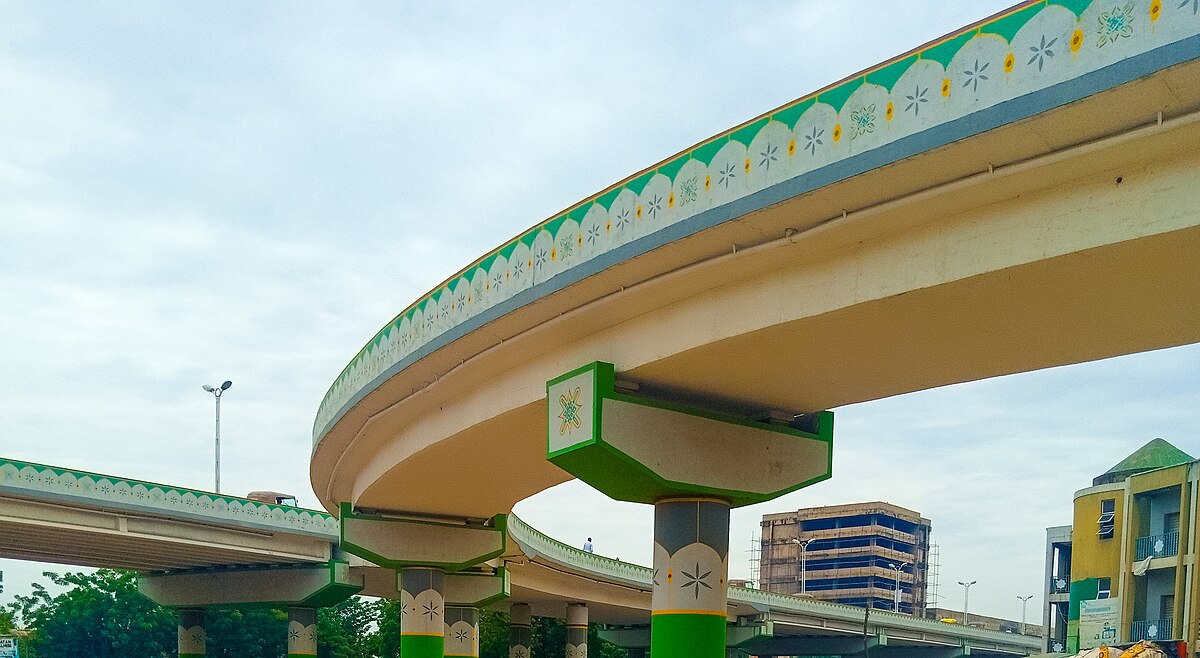
Speaking to the monarchs, Tinubu criticised state governors for spending public funds on flyovers in areas with little vehicular traffic, rather than channelling resources into road networks that would improve security response and residents’ quality of life. “They are taking four to five times their money,” the president said of governors’ expanded FAAC receipts since the removal of the petrol subsidy in May 2023. “Nobody is borrowing money to pay salaries now. Pensioners are receiving their pay, and they should do more instead of building flyovers where there is no numeric traffic — build roads and artery networks that will enhance the quality of life and the accessibility of security agencies to penetrate those areas.” He urged the traditional rulers to carry the message directly to their governors. It was a reasonable message. It is also, coming from where it does, one that demands to be examined from more than one direction.
On its merits, the criticism is sound. The politics of infrastructure in Nigeria has long been the politics of visibility. A flyover photographs well. It has a ribbon, a plaque, a minister’s name, a commissioning ceremony. It occupies the front page and the evening news. A rehabilitated rural road to a farming community in Kebbi does not. A stocked primary health centre in a village in Borno does not. A functional borehole in a public school in Plateau does not. A covered drain in a flood-prone neighbourhood of Owerri does not. These projects are unglamorous, their beneficiaries are often voiceless, and their political returns are modest. So they are deferred, delayed, or abandoned in favour of the structure that can be photographed from a helicopter and named after a sitting executive.
The flyover is therefore not merely a civil engineering choice. It is a political communication strategy. And the president is right that it is the wrong one — or at minimum, the wrong one in the wrong places, funded at the wrong scale, at a time when citizens across every state in this federation are enduring a cost-of-living emergency that no ribbon-cutting has addressed.
The FAAC dimension sharpens the indictment considerably. Since the removal of the petrol subsidy in May 2023, monthly allocations to states have risen substantially. States that once depended on federal bailouts to meet their payroll now receive multiples of their previous transfers. That windfall creates an obligation commensurate with its scale. If revenue has quadrupled and citizens’ conditions have not measurably improved — if primary health centres remain unstocked, rural roads remain impassable, public school classrooms remain without chairs, and flooding returns every rainy season to the same neighbourhoods — then the question of where the money went is not impertinent. It is the central question of democratic accountability. A state assembly that does not ask it is not a legislature. It is an ornament.
ActionAid Nigeria, responding to the president’s remarks, urged governments to move from prestige to purpose — directing public funds toward education, healthcare, water and sanitation, food security, climate resilience, and social protection. It also called for a review of non-essential expenditure, including luxury vehicle acquisitions, oversized foreign delegations, and excessive official travel that consumes public resources without reaching citizens. That broadening of the frame is necessary. The flyover debate, taken in isolation, risks becoming a conversation about concrete rather than a conversation about choices. The concrete is merely the most visible symptom of a deeper disorder: public money spent to serve political aesthetics rather than public need.
There is, however, a candour that a responsible editorial cannot omit. The president’s criticism of governors carries an obvious irony. The Federal Government is not itself immune to the logic of visible prestige. Federal projects have been selected and commissioned on grounds of political theatre as often as any state flyover. The argument from Abuja lands more convincingly when it is accompanied by federal example. And federalism, properly understood, means that governors answer to their state assemblies, their auditors-general, and their citizens — not primarily to the presidency. Tinubu’s remarks are a useful public nudge. They are not a substitute for the institutional accountability mechanisms that most states have allowed to atrophy.
The test we propose is simple and should be standard. Before any major capital project is approved, four questions must be answerable in public: What specific problem does this project solve? What evidence shows it is more urgent than the available alternatives? What are the full procurement details and total lifecycle cost? And what public need was deferred because this project was chosen? A government that cannot answer those questions before breaking ground is not managing a development budget. It is distributing patronage in concrete form.
A flyover that resolves a genuine traffic crisis is infrastructure. A flyover built where there is no significant traffic, while the nearest health centre lacks a generator and the nearest road to a farming community dissolves into mud every rainy season, is a monument to misplaced priorities. Nigeria, at this moment of acute economic strain and eroding public trust, can afford neither the monument nor the governing culture that produces it.
We’ve got the edge. Get real-time reports, breaking scoops, and exclusive angles delivered straight to your phone. Don’t settle for stale news. Join LEADERSHIP NEWS on WhatsApp for 24/7 updates →
Join Our WhatsApp Channel