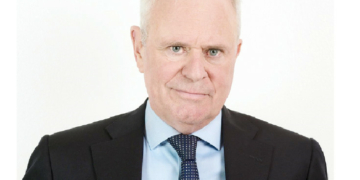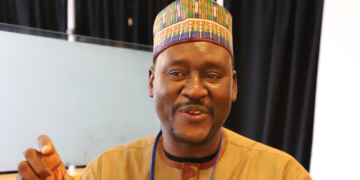
The Nigerian Institute of Animal Science was established 18 years ago. How has the Institute fared in fulfilling its mandate of regulating animal husbandry practices for increased productivity?
Thank you very much. The Nigerian Institute of Animal Science was established by the National Assembly Act of 2007, later amended in 2015. Since then, we have been delivering our mandate, which is to professionalise animal production and animal science practice in Nigeria. The goal is to ensure that the country derives maximum benefit from animal agriculture, as livestock production is a significant pillar of the economy and drives food security, employment, and agricultural transformation, as seen elsewhere.
Our first focus was on the human resource aspect, identifying, registering, and certifying animal scientists to professionalise the sector. To date, approximately 2,964 members have been registered as professional animal scientists. At our most recent induction, 252 new members were added to the register.
We also recognise professionals who may not have a first degree in animal science but have significant experience in livestock production. Such individuals, with backgrounds in zoology, biology, or other related sciences, receive additional training and are then registered as associate animal scientists. We currently have over a hundred in that category. That’s part of our strategy to strengthen human capacity for the industry.
How well-funded is the Institute?
Funding has been a significant constraint. As a government agency, we rely on appropriations by the National Assembly. But, like many others, we face two problems: inadequate allocations and delayed releases.
Our work involves regulation and enforcement, which are cost-intensive. Activities such as farm inspections, certification, and monitoring feed mills require logistics and transportation. Without sufficient financial resources, it’s challenging to meet those obligations effectively.
Sometimes we stretch ourselves to make things work. We also appeal to our members in private practice for support in certain areas. But to be honest, for an agency contributing to national food and nutrition security, the current level of funding is far below what is required.
You may recall the Maputo Declaration, which recommends that African countries dedicate at least 10 percent of their national budgets to agriculture. Nigeria has not yet achieved that. As the continent now transitions to the Kampala Declaration with the same target, there is an urgent need for political will.
That is why we commend President Bola Ahmed Tinubu for creating the Federal Ministry of Livestock Development. It’s the first time in over 60 years that livestock will receive dedicated attention at the ministerial level.
How is the Institute working with the ministry to move farmers and herders away from open grazing towards ranching and other modern practices?
We have to start by asking why herders move their animals across long distances. The answer is simple: in search of food and water. Over the years, it has also become a cultural practice. But today, open grazing is no longer sustainable.
The solution lies in fodder production, that’s cultivating grass and other plants that livestock can feed on. If we can grow these in large quantities, we can feed animals in one location and significantly reduce movement. It’s about knowledge, planning, and infrastructure.
The institute, through its position papers, has proposed practical steps, including establishing fodder banks, improving water supply systems, and supporting herders in settling in designated areas. The new Ministry of Livestock Development has demonstrated its readiness to implement these measures.
What steps has the institute taken so far to deepen teaching and research in animal science in Nigerian tertiary institutions?
Before NIAS was established, animal science was already taught in Nigerian universities, mainly under the Faculties of Agriculture. Since 2007, we have complemented the National Universities Commission (NUC) through resource verification and course accreditation.
The Act empowers us to verify that universities offering animal science have the right personnel, teaching farms, and research facilities. We also ensure that students gain practical experience through industrial training, which now lasts from six months to one year, depending on the institution. The idea is to produce graduates who are technically competent and industry-ready.
We collaborate closely with universities to align their curricula with the modern requirements of the livestock industry. This partnership has helped bridge the gap between theory and practice, ensuring that students are better prepared to contribute meaningfully to the economy after graduation.
Nigeria is presently performing below its potential in livestock production. What are the steps being taken, with the livestock ministry, to ensure that Nigeria becomes a significant exporter of livestock products in the coming years?
The truth is that we are not yet self-sufficient in livestock production. Our population is growing rapidly, but production systems have not kept pace with this growth. When you look at poultry, dairy, and beef production, you’ll see huge gaps between demand and supply.
However, the potential is enormous. Nigeria has abundant land, a favourable climate, and a large youth population. With the right investment, technology, and management, we can easily bridge the gap and even produce a surplus for export.
But it has to be deliberate. You can’t achieve it by accident. We need clear national strategies, supportive policies and long-term funding frameworks to develop the sector. Livestock is not just about rearing animals; it is a serious business that must be approached with professionalism and planning.
Farms targeting export must be designed for that purpose from the start, in terms of hygiene, feed quality, and processing facilities. The international market is large but highly regulated. Products must meet global standards for tenderness, water content, and safety.
The role of NIAS is to provide those regulatory frameworks. We are working to align local practices with international benchmarks. When you produce with quality assurance from farm to table, the market will naturally open. That is the direction we are pursuing as an institute.
The government, private sector, and research institutions must work together as partners.
What message do you have for Nigerians about livestock production and its broader economic value?
We want Nigerians to know that livestock production is a veritable economic activity, if you do it right. Just like in any other business, we should view it as a business, and it is one of the largest businesses. The value chain is enormous.
We’ve got the edge. Get real-time reports, breaking scoops, and exclusive angles delivered straight to your phone. Don’t settle for stale news. Join LEADERSHIP NEWS on WhatsApp for 24/7 updates →
Join Our WhatsApp Channel