
Founder of Empower Her Sustainable Development Initiative in Africa, Charlene Charmwakat Makai, has said her organisation works to empower women and girls through education and skills acquisition to make them economically self-sufficient.
Through education, skills acquisition and mentorship, the non-profit organisation works to dismantle barriers such as illiteracy, poverty and financial dependency which hinder women’s socio-economic progress.
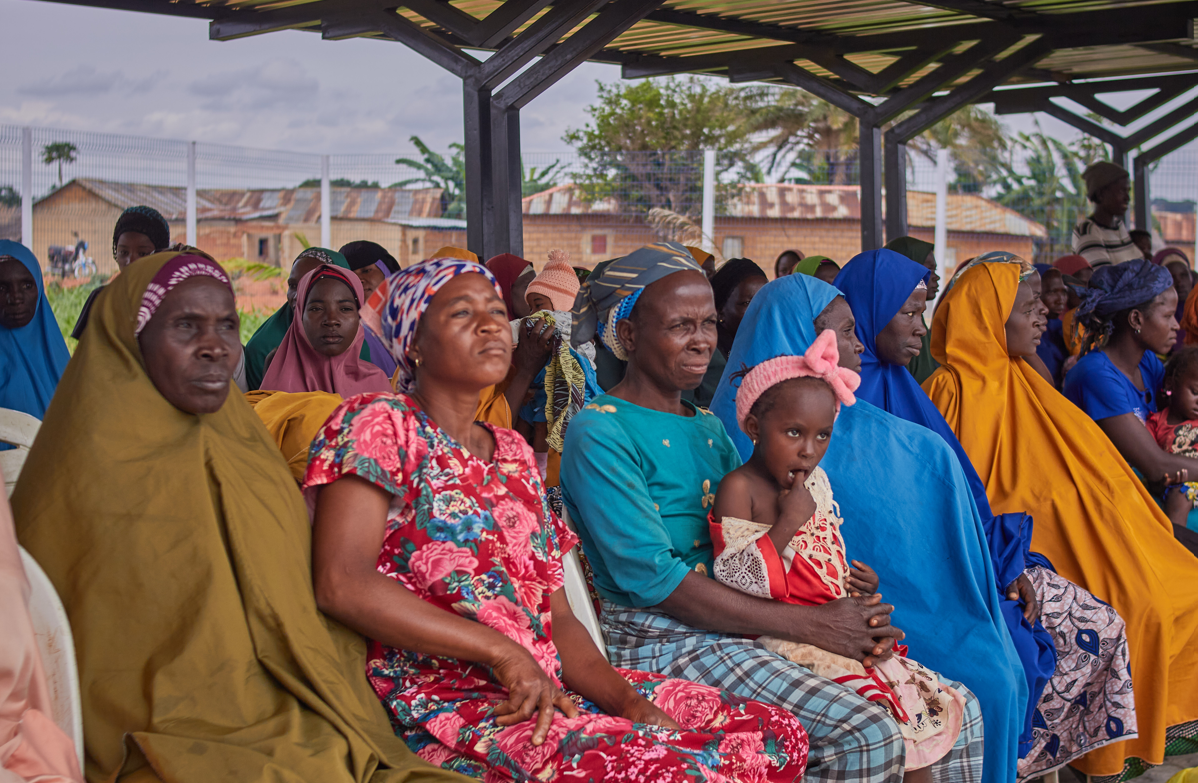
Makai stated this during an outreach programme in Kayache village community in Kuje Area Council of the Federal Capital Territory (FCT) in Abuja, yesterday.
“We go around rural communities. Almost every September, we do a massive school enrolment programme where we enrol vulnerable out-of-school girls and pay their tuition,” Makai said.
She said poverty remains a critical cause of early marriage, as many parents cannot afford school fees and other hidden charges.
“What we do is to educate the parents and also help them to pay some of this tuition. But as an NGO, we cannot do it all. Government needs to come in,” she said.
Makai called for accountability and enforcement mechanisms to ensure every child is in school, noting that free education exists only on paper due to hidden charges.
“You cannot address early marriage without addressing lack of education. They work hand in hand,” she added.
The Assistant Director of Social Welfare at Kuje Area Council and Gender Desk Officer, Mr Emmanuel Musa Magaji, warned that early child marriage is punishable by law and has serious health and social consequences for girls.
“From the inception of my work as a social worker, this community is not new to us. There have been cases of all forms of violence against children, of which early girl-child marriage is one of the challenges,” Magaji said.
He explained that by law, a girl must attain 18 years before marriage, adding that early marriage exposes girls to diseases and deprives them of education and future opportunities.
According to him, the council has advised parents to allow their daughters to remain in school, stressing that an educated girl child would become economically useful to her family.
“When the girls are educated and gainfully employed, they can also be supportive to their parents,” he said.
He identified poverty as a major driver of early marriage and urged parents to engage in petty businesses and encourage their daughters to acquire vocational skills such as tailoring and catering after school hours.
Similarly, the Programme Officer of the Centre for Information Technology and Development (CITAD), Ms Yesmin Salako, disclosed that research conducted under CITAD’s Girl-Led Action Project showed a school dropout rate of about 30 per cent in the community due to teenage pregnancy and early marriage.
Salako said CITAD has been working in the community for almost 15 years, empowering women through Village Savings and Loan Associations (VSLAs), agroecological farming, and vocational training to make them financially independent.
“When parents are able to fend for their children, the children are able to go to school, which will reduce the rate of school dropout, teenage pregnancy and early marriage,” she said.
She said CITAD has also trained community leaders, Imams and Pastors on Gender-Based Violence to enable them to monitor and protect young girls in the community.
A resident and mother of three, Mrs Esther Danladi, appealed to the government to support women in the community who are struggling to educate their children through farming and petty businesses.
“We are women; we are farming; we are doing small businesses to take care of our children. We don’t have support in this community. If government can help us, we need help to help our children,” she said.
Another resident, Frank A., lamented that many girls in the community were forced into marriage due to their parents’ inability to further their education.
He said some men deceive parents with promises to educate the girls after marriage, only to abandon them.
“Some of us cannot fend for ourselves, let alone another person. And you know how hard marriage is nowadays,” he said.
He noted that mothers bear most of the responsibility for their children’s education in the community and called on the government and organisations to provide mentors to sensitise parents to the dangers of early marriage.
“All the responsibility is on the heads of the mothers. We need the government or any organisation that can offer hope to my community,” he said.
The stakeholders called on the government to make basic education truly free and affordable, enforce child rights laws and support rural families with economic empowerment programmes to end early marriage and keep girls in school.
We’ve got the edge. Get real-time reports, breaking scoops, and exclusive angles delivered straight to your phone. Don’t settle for stale news. Join LEADERSHIP NEWS on WhatsApp for 24/7 updates →
Join Our WhatsApp Channel