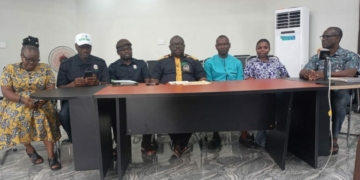
A non-governmental organisation, the New Dawn for Women and Community Intervention Initiative (NEWOMCII), has been launched in Abuja, focusing on bridging socio-economic gaps affecting women and youth across Nigeria.
The unveiling ceremony brought together traditional rulers, government officials, and development partners, all of whom underscored the importance of structured, community-driven interventions to address inequality and unlock grassroots potential.
At the event, the founder and chairman of NEWOMCII, Bolaji Raji, said the initiative was conceived as a direct response to the untapped capacity within local communities, particularly among women and young people.
Raji noted that while talent and enterprise exist at the grassroots, the absence of enabling infrastructure and support systems continues to limit opportunities for growth and productivity.
“We saw the gap and the need,” he said. “Across our communities, many women and young people possess immense potential but lack access to the tools and structures required to succeed.”
He explained that NEWOMCII is designed to complement government programmes by providing practical, demand-driven solutions rather than duplicating existing efforts. According to him, the organisation aims to catalyse sustainable empowerment through targeted interventions.
From concept to implementation Unlike many advocacy-focused organisations, Raji disclosed that NEWOMCII has already spent about ten months implementing pilot programmes, refining its operational model, and building community-level engagement before its official launch.
This early groundwork, he said, has helped shape a strategy anchored on four core pillars: agribusiness, arts and creative enterprise, skills development, and broader community interventions.
He emphasised that empowering women remains central to the organisation’s mission, noting that inclusive growth at the household level often translates into broader community development.
“When women are empowered, families thrive, and communities progress. This is not just a belief; it is a proven pathway to sustainable development,” he said.
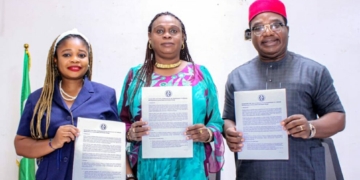
The launch also featured the unveiling of the organisation’s published works, signalling its transition from a developmental phase into a more structured national intervention platform.
Early impact and expansion plans
In her welcome address, the National Coordinator of NEWOMCII, Saadati Bokane Adamu, highlighted the organisation’s early achievements, particularly in rural communities.
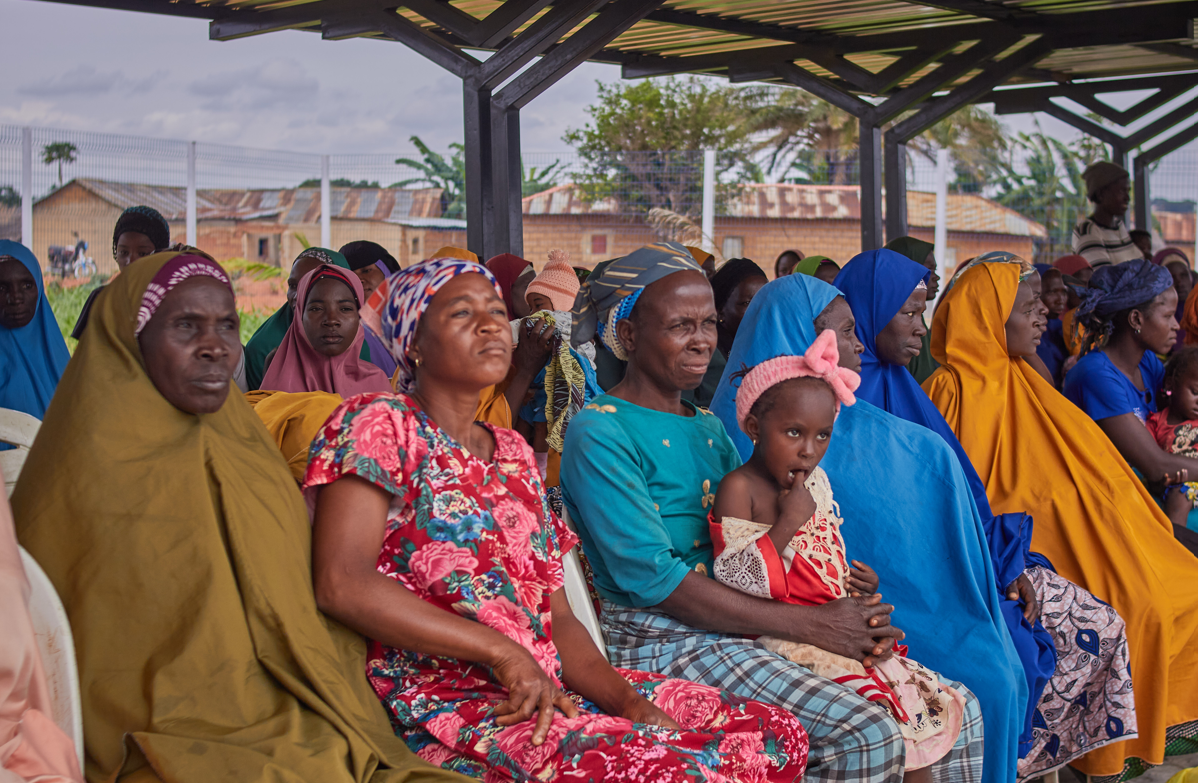
She noted that within a relatively short period, the initiative has impacted several women’s groups by improving livelihoods and creating access to opportunities.
“This platform allows us to showcase our success stories, articulate our vision, and build the partnerships needed to scale our interventions,” she said.
Adamu expressed optimism about expanding the initiative’s reach nationwide, adding that collaboration with stakeholders would be critical to achieving nationwide impact. “We appreciate the support we have received and look forward to working with partners across sectors to deepen our impact on women and communities,” she added.
Delivering the first keynote address, Tupee Enid Taylor, Managing Partner at Liberty Law Firm, Monrovia, emphasised the central role of women in driving economic and social transformation.
The former Liberian First Lady noted that despite their contributions, many women—particularly at the grassroots—remain constrained by systemic barriers, including limited access to finance, inadequate infrastructure, and restrictive social norms.
“Across Africa, we understand a simple truth: when a woman is empowered, her family is strengthened, and her community prospers,” she said.
Taylor argued that the challenge facing many African economies is not a lack of enterprise among women, but rather a lack of access to the resources and support systems required to scale their efforts.
“What we see is not a lack of activity. Women are working, creating, and building. But without the right support, these efforts cannot reach their full potential,” she added.
In the second keynote address, Director-General of the National Institute for Policy and Strategic Studies (NIPSS), Ayo Omotayo, described women as a critical component of national development.
Represented by Zubairu Jide Attah, Omotayo called for a shift in how women are perceived in policy and development discourse.
“We must move from seeing women as vulnerable to recognising them as a source of strategic human capital,” he said.
According to him, investing in women should be viewed not merely as a social intervention but as a high-yield economic strategy with significant returns for society.
“When we invest in a woman, we are making an economic investment that can exceed many traditional revenue sources,” he added.
Omotayo also urged NEWOMCII to sustain its momentum and expand its footprint across Nigeria, warning against complacency after the initial launch.
“Do not let the momentum of this launch fade. The real work begins now,” he said.
The launch of NEWOMCII comes at a time when policymakers and development experts are increasingly emphasising grassroots empowerment as a critical pathway to inclusive growth.
Nigeria’s large youth population and persistent gender inequality challenges have made targeted interventions essential for unlocking productivity and reducing poverty.
Participants at the launch broadly agreed that collaboration would be key to the initiative’s success. With stakeholders ranging from traditional institutions to international partners in attendance, the event served as a platform for building alliances.
For NEWOMCII, the challenge now lies in translating its vision into measurable impact at scale. Its focus on practical interventions—rather than purely advocacy—positions it to address immediate needs, particularly in skills development and economic inclusion.
With its formal launch, NEWOMCII says it has signalled its readiness to operate as a national player in Nigeria’s development landscape. Its emphasis on empowering women and youth aligns with broader global and regional priorities on inclusive growth and sustainable development.
While expectations are high, stakeholders say the organisation’s early field experience provides a foundation for scaling its interventions.
We’ve got the edge. Get real-time reports, breaking scoops, and exclusive angles delivered straight to your phone. Don’t settle for stale news. Join LEADERSHIP NEWS on WhatsApp for 24/7 updates →
Join Our WhatsApp Channel