Once vibrant attractions where families gathered to marvel at wildlife, many of Nigeria’s zoos have fallen into neglect, with dwindling animal populations, crumbling facilities and, in some cases, statues replacing the live animals visitors pay to see. From Port Harcourt to Calabar and Yola, the decline of these zoological gardens reflects years of poor maintenance, inadequate funding and dwindling public patronage. A LEADERSHIP Sunday investigation examines how the country’s once-promising wildlife attractions lost their glory, the challenges threatening those still operational and the prospects for their revival. Bukola Ogunsina, Richard Ndoma, Anayo Onukwugha, Jibril Mohammed Nabil and Adebayo Waheed Report
Imagine visiting a zoo expecting to see live wild animals, only to find replica statues locked in their enclosures. Let that sink in.
Nigeria has about 11 officially recognised state-owned zoos and zoological gardens. Several have either been handed over to private organisations or universities due to disrepair and disuse.
Zoos and zoological parks provide opportunities for people to see wild animals, sometimes in settings designed to resemble their natural habitats. However, a viral video this year of a family’s visit to a zoo in Yola, Adamawa State, drew public attention to the deteriorating state of some of these facilities.
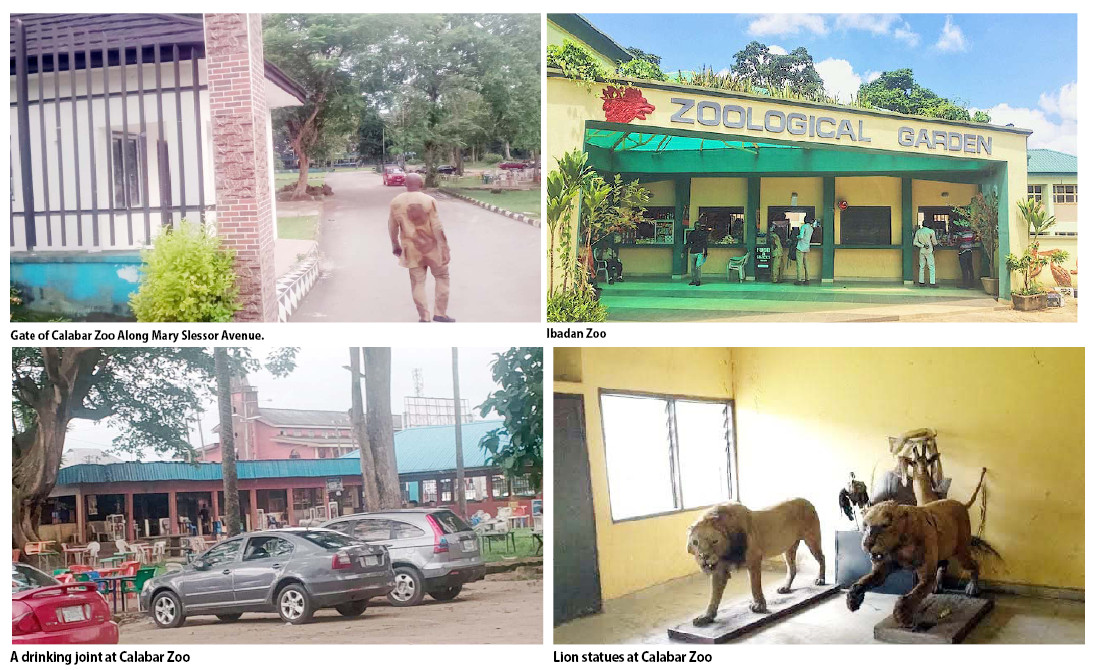
The family, reportedly visiting a privately owned zoo, was taken aback when, after purchasing tickets, they were shown animal statues in enclosures instead of the live animals they had expected to see.
A similar experience was reported at the state-owned Port Harcourt Zoo in Rivers State, where an unidentified man who had hoped to see a lion found only its statue in an enclosure.
LEADERSHIP Sunday investigated the state of some zoos across the country and found a mixed picture of decay, dwindling animal populations, funding constraints and, in a few cases, efforts to sustain or revive the facilities.
Port Harcourt Zoo: A Shadow of Its Former Self
At the Port Harcourt Zoo in Rivers State, owned by the state government, LEADERSHIP Sunday found a facility that had been moribund. Even though Spiff, the first military governor of the old Rivers State, the zoo underwent renovation works that began during the administration of former Governor Nyesom Wike. The current administration has since completed the renovation.
Although skeletal services are still being provided to keep the remaining animals alive, the once-vibrant zoo, which used to generate revenue for the state, has become a shadow of its former self.
The facility previously housed a wide variety of animals, including apes, monkeys, alligators, grasscutters, lions, pigeons, parrots, pangolins, turtles, gorillas and giraffes. However, its animal population has dwindled considerably.
During its recreational period, it observed that vegetation had overrun parts of the facility, with trees encroaching on several cages. Only a few animals remained, including monkeys, a giant tortoise, a medium-sized alligator, a few pigeons, a turtle and a peacock.
When contacted, the Permanent Secretary of the Rivers State Ministry of Culture and Tourism, Freddy Ndigbara, declined to comment on the zoo’s condition or the government’s plans for its revival.
However, a senior government official, who spoke on condition of anonymity, told our correspondent that visitor numbers had declined considerably in the absence of the government providing skeletal services to keep the remaining animals alive, adding that the animals had been trained to interact with humans.
The official also said the administration of Governor Siminalayi Fubara was keen to complete the project. He expressed hope that the state government would soon introduce more animal species and build a three-star hotel to accommodate tourists.
Calabar Zoo: A Lost Attraction
The Calabar Zoo, once a major attraction in Cross River State during the 1970s and 1980s, no longer exists as a functioning zoological garden.
Experts have attributed the decline of zoos across the country to high operating costs, insecurity and changing public attitudes towards wildlife.
Speaking with LEADERSHIP Sunday, the Zonal Project Manager for the South-South and South-East at the Nigeria Conservation Foundation (NCF), Mr Emmanuel Owan, described the challenges facing zoos as “enormous and multifaceted”.
According to him, a zoo is an ex-situ wildlife management facility that allows people who cannot visit the wild to see animals they might otherwise encounter only in their natural habitats.
He noted that lions, for instance, are hardly found in Cross River State, making a zoo an important place for residents to see such animals.
However, he said the cost of keeping wild animals had become prohibitive.
“You need a huge amount of money, a huge amount of funds to be able to keep them. In terms of feeding, in terms of care, not just the animals, but even those who are caring for those animals,” Owan stressed.
He identified insecurity as another major factor affecting patronage, noting that leisure travel had become increasingly difficult for many Nigerians.
“People don’t travel a lot for leisure. Moving from one part of the country to another is a challenge, both financially and in terms of security. So naturally, people usually avoid where there is a large gathering,” he said.
Owan added that some animals do not breed successfully in captivity, although they can reproduce naturally in the wild.
Recalling his childhood visits to the former Calabar Zoo, he said it once housed a variety of wildlife.
“We used to have chimps, gorillas. But today, apart from the fact that the zoo no longer exists, I visited it when we were kids. In the 70s, in the 80s, I saw royal pythons, crocodiles, chimps,” he added.
On the state of zoos nationwide, he lamented that many had closed while those still operating were experiencing declining animal populations.
“It is quite challenging now. If you go across Nigeria, most of the zoos we used to have are closed, and the ones that are even there, the animal population is reducing gradually,” he said.
He linked the decline in patronage to the economic hardship facing families, explaining that many people would rather spend their limited resources on food than on recreational activities. Others, he said, could simply watch wildlife programmes on television.
Owan said he was unaware of any concrete plans to sustain zoos amid the prevailing economic and security challenges.
He added that Cross River State’s prospects for wildlife conservation now depended largely on protected areas such as Cross River National Park, which still harbours African elephants and the critically endangered Cross River gorilla. He estimated the gorilla’s global population at between 250 and 300.
The Chairman of the Cross River State Forestry Commission, Dr George Oben-Etchi, acknowledged the absence of a functioning zoo in the state.
“We still have no zoo, apart from the deer ranch,” he admitted, while promising to engage the governor on the possibility of reviving the facility.
“We already have a location where we can start the zoo. The things we need may have vanished, but of course we can always bring them back. The location of the former zoo is a strategic place,” Oben-Etchi stated.
He acknowledged that families had limited recreational options and said a zoo would provide a welcome addition. However, he gave no timeline for its revival, despite describing the project as a priority.
A Ghanaian tourist, Miss Abena Kwame, who visited the site, expressed disappointment at its condition.
“My experience at Calabar Zoo is a disappointment. I am shocked that such a beautiful and serene atmosphere that looks like a typical rainforest has suddenly turned into a drinking spot, with very few donkeys seen masticating grasses,” she said.
She urged the Cross River State Government to partner with wildlife organisations to restore the zoo, enabling children to see animals such as chimpanzees, pangolins, monkeys, pythons, crocodiles and gorillas in person rather than only in books and on television.
“Notwithstanding the fact that the economy is harsh, reviving the zoo can create another avenue for the government to generate revenue and boost the economic well-being of the state,” she remarked.
Yobe Zoo: From Wildlife Facility To University Farm
Some zoos and zoological parks have been repurposed or handed over to universities.
In Yobe State, for instance, the site of the former Yobe State Zoo was handed over to the Faculty of Agriculture at Yobe State University.
Established during the administration of the state’s pioneer governor, the late Bukar Abba Ibrahim, the zoo was allowed to deteriorate. Poor maintenance and declining public awareness have raised questions about its current status and revenue-generating potential.
The facility was originally established to provide recreational services and generate revenue for the state. However, its deteriorating condition has left some residents unaware of its existence, prompting calls for its rehabilitation and productive use.
An official working at the zoo, who spoke on condition of anonymity, said animals,, including elephants, lions, hyenas, crocodiles and ostriches, had been brought to the facility during Ibrahim’s administration.
He attributed its deterioration to poor maintenance, noting that the structures that had previously housed the animals had become overgrown with grass.
The official said the absence of sustained maintenance had undermined the facility’s usefulness, adding that a comprehensive rehabilitation plan was needed.
He disclosed that the site had been allocated to Yobe State University’s Faculty of Agriculture, which had proposed using part of the area for agricultural activities and developing another section into a recreation centre.
According to him, the university farm currently supports practical training in collaboration with the Faculty of Agriculture and the Industrial Training Fund (ITF), particularly in agriculture, poultry farming and livestock production.
The proposed recreation centre could also host social events, including weddings, while creating opportunities for businesses such as food and refreshment outlets.
The official said the initiative could generate revenue, create business opportunities and provide funds for the facility’s maintenance.
However, he said the university management lacked detailed information about the zoo’s current operations and had not received the relevant contact details of those responsible for its management.
He stressed the need for proper planning, clearly defined management responsibilities, and regular maintenance to prevent further deterioration and ensure the site’s sustainable use.
Meanwhile, some residents of Damaturu said they knew little about the zoo or its activities.
Malam Usman Mohammed Nasoro said he had not visited the facility since it was established during the administration of the late Bukar Abba Ibrahim.
“I have never visited the place since its creation during the administration of the late Bukar Abba Ibrahim, and I have never heard people talking about it. I know there used to be animals in the zoo, but I do not know what is happening there now,” he said.
Similarly, Hajiya A’isha Sa’id, who said she had lived in Yobe for 11 years, expressed surprise when she learnt about the zoo.
“I have been to many places in Yobe, especially Damaturu, but I have never heard of the zoo,” she said.
Their accounts underscore concerns about the facility’s visibility and public engagement, reinforcing calls for the authorities to clarify its current status and consider ways to restore its recreational and revenue-generating potential.
University Of Ibadan Zoo: A More Promising Picture
Unlike several state-owned facilities, the University of Ibadan Zoological Garden (UI Zoo) remains operational and open to the public.
During a visit, LEADERSHIP Sunday observed that the zoo housed mammals, birds, reptiles and amphibians, including lions, giraffes, ostriches, crocodiles, green monkeys and hyenas. It also features a taxidermy museum containing preserved animal specimens.
Speaking with our correspondent, an attendant, Babatunde Olayiwola, said visitors frequently praised the zoo for its quiet campus environment, close-up views of animals, clean grounds and value as a recreational and educational attraction.
However, he said some reviews highlighted funding constraints, the need for a wider variety of animals and the physical condition of certain enclosures.
According to him, the zoo’s major challenges included visitor satisfaction, infrastructure issues, the absence of iconic species, financial pressures, worker dissatisfaction, and the costs of animal welfare and feeding.
On animal care, Olayiwola said the zoo managed five animal sections: carnivores, herbivores, reptiles, large birds and primates. Each section, he explained, required specialised care, with the zoo relying heavily on the university’s veterinary infrastructure for clinical support.
The Veterinary Teaching Hospital, University of Ibadan, serves as the primary healthcare provider for the zoo, while animals receive specialised attention from experts in small- and large-animal internal medicine, surgery, and pathology.
“The VTH includes dedicated units for Wildlife and Zoological Garden Medicine,” he noted.
On efforts to sustain the facility, Olayiwola said the zoo relied on institutional support, conservation advocacy and public engagement programmes to maintain its operations, improve visitor satisfaction and promote wildlife protection.
He said the Animal Protection Organisation of Nigeria (APCON) actively inspected the grounds, while broader national and international support was needed to upgrade ageing infrastructure and expand the animal collection.
He also said the zoo managed animal population health and species representation through strategic exchanges with other facilities, including the exchange of individual primates and herbivores.
According to Olayiwola, the garden operated structured initiatives such as “Friends of the Zoo”, animal-adoption schemes featuring display branding, and programmes that encouraged private individuals and student volunteers to contribute funds or donate animals.
He added that management was planning to improve the visitor experience through revised pricing and access arrangements, better ambience and amenities, museum enhancements and changes to operating hours.
The zoo was also promoting wildlife conservation and education through academic and research partnerships, guided tours, awareness campaigns and the hosting of international conservation events, he said.
Abuja Zoo: Funding Challenges Persist
In the Federal Capital Territory, LEADERSHIP Sunday spoke with the Manager of the Children’s Park and Zoo, Abuja, Alhaji Aminu Muhammad, who attributed the deterioration of zoos across the states largely to a lack of commitment and funding.
“It’s a lack of passion. All the state-owned zoos are actually going into extinction because the governors of the state-owned zoos are not able to fund them in terms of animal collection and other activities required to run the zoos, which involve animal collection, training qualified staff and others,” he said.
He added that several state-owned facilities were struggling to remain operational or had ceased to exist, citing Enugu Zoo, Owerri Zoo and Ogba Zoo as examples.
“The Jos Wildlife Park and Zoo, if you look at it, it is only in recent days that they started doing something; it was gone. The Kano zoo is still having problems even as of now,” he pointed out.
“The problem is the lack of passion of the governors of those states that own the zoos,” he reiterated.
Asked about the challenges facing the Abuja Zoo, Muhammad identified inadequate funding as the major constraint.
“There’s no funding to support a lot of projects that we need to do. Abuja zoo is a new zoo,” he said, pointing to the need to introduce more animals and provide additional facilities.
Meanwhile, information gathered in Adamawa State indicates that the moribund zoo in Yola is being converted into an amusement park.
In Borno State, the state-owned zoo is undergoing renovation after animals were swept away by floods in 2024.
The state-owned Enugu Zoological Garden, located in the Government Reserved Area (GRA), was closed several years ago, and its site has since been redeveloped into a high-end residential area.
We’ve got the edge. Get real-time reports, breaking scoops, and exclusive angles delivered straight to your phone. Don’t settle for stale news. Join LEADERSHIP NEWS on WhatsApp for 24/7 updates →
Join Our WhatsApp Channel